
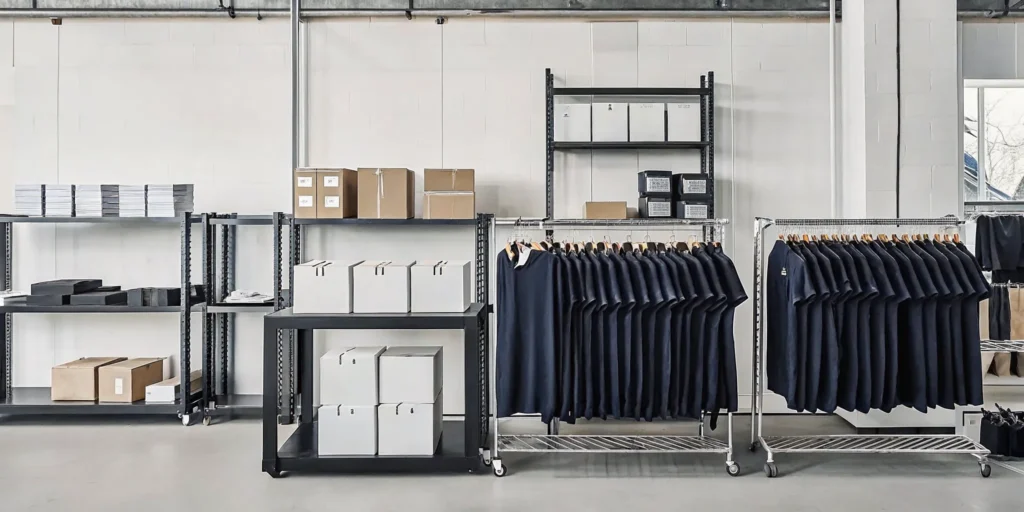
One late welcome kit can turn a polished merchandise program into a support-ticket scramble. Distributed teams expose every weak handoff, from stock counts to customs paperwork.
Talk to Brand Vessel about promotional product fulfillment that connects storage, kitting, shipping, and customs support before your next launch.
Promotional product fulfillment is the coordinated process of storing branded merchandise, tracking inventory, assembling kits, packing orders, and shipping them to each recipient. For distributed programs, it connects company-store orders, quality control, custom packaging, domestic delivery, global distribution, and returns under one accountable partner. The right model can serve one remote employee today and thousands of event attendees tomorrow without forcing internal teams to manage warehouse work. It also protects continuity during fast-moving campaigns through accurate stock data and reorder planning, since a reorder point system triggers replenishment before inventory runs out. For cross-border programs, in-house customs brokerage further reduces delays, compliance work, and the number of vendors involved at every destination.
The real question is not whether a partner can ship boxes, but whether it can run the entire program without dropped handoffs. The next section, What promotional product fulfillment really includes, shows exactly which capabilities belong under one roof. The path begins here:
What promotional product fulfillment really includes
Promotional product fulfillment is the full process of moving branded merchandise from production to the people who need it. For enterprise and distributed teams, that process covers far more than placing products in boxes. It links storage, stock planning, kitting, packing, shipping, and delivery into one managed flow.
Each part affects the next. Poor stock records can delay a kit, while weak packing choices can raise shipping costs or damage items. A sound program gives marketing and HR teams a clear view of inventory, orders, and delivery status.
Storage and inventory planning
Fulfillment starts with organized storage and accurate stock records. Teams need to know which items are available, where they sit, and when to order more. Forecasts should reflect planned events, new hires, seasonal demand, and ongoing company store orders.
Inventory planning also helps teams balance two risks: running out of key items and holding more stock than they can use. Reorder points, regular counts, and clear product records support that balance. They also help managers make sound choices before a large campaign or employee launch.
- Receive and check incoming merchandise
- Store products by item, size, color, or program
- Track stock levels, orders, and reserved inventory
- Plan replenishment around known demand
Kitting, packing, and domestic shipping
Kitting brings separate items together for a set purpose, such as onboarding, an event, or a client gift. The work may include picking products, checking sizes, adding printed materials, and placing each item in custom packaging. Packing then protects the kit and prepares it for the chosen carrier.
Domestic shipping turns each approved order into a trackable delivery. A fulfillment team must confirm addresses, select service levels, print labels, and handle exceptions. These steps should work for one remote employee as well as a coordinated shipment to many offices.
Global delivery and one connected program
International delivery adds documents, duties, import rules, and handoffs between carriers. Customs brokerage helps companies evaluate and manage imports, as the University of Pittsburgh purchasing guidance explains. When customs support is separate from fulfillment, teams may spend more time resolving gaps between providers.
The pieces work best as one program because stock choices shape kits, and kit design shapes packing and shipping. Brand Vessel acts as a strategic merchandise partner by connecting these functions through its storage, logistics, kitting, and fulfillment services. That connected model gives enterprise teams one clear path from stored inventory to domestic or global delivery.
Why distributed teams make merchandise logistics harder
More destinations, more points of failure
A single office gives a merchandise team one delivery point and one main deadline. Distributed teams replace that simple handoff with home addresses, branch offices, event venues, and onboarding groups. Each destination may need a different item mix, carrier, label, or delivery date.
Those variables raise the risk of missed shipments, wrong sizes, and incomplete kits. Address changes and split shipments can also create extra work after orders leave the warehouse. Effective enterprise merchandise programs connect inventory, kitting, packing, and shipping in one clear process.
- Remote employees need accurate home addresses and individual tracking.
- Multiple offices may need different quantities, sizes, and arrival dates.
- Events require firm deadlines because late merchandise has little value.
- New-hire groups can change as start dates and headcounts shift.
- International recipients add customs forms, duties, and local delivery rules.
Timing that shapes brand experience
Branded merchandise often supports a shared moment, even when recipients are far apart. A welcome kit should arrive near a new hire’s first day. Event materials must reach the venue before setup. Campaign gifts should land within the planned launch window.
Timing gaps can weaken that experience. One employee may open a complete kit while another waits for a missing item. The merchandise is the same, but the brand moment is not. Good planning accounts for pick time, kit assembly, carrier transit, and likely delays.
International shipping adds another layer. Customs brokerage helps manage imports, compliance, and duties during cross-border distribution. The University of Pittsburgh’s import guidance shows why customs support is a distinct part of global logistics.
Administrative work across every program
As destinations grow, internal teams must manage more data and more exceptions. Someone needs to collect addresses, confirm sizes, protect personal details, answer tracking questions, and fix failed deliveries. Separate spreadsheets and vendor emails make it harder to see which orders need action.
The load also spans departments. Marketing may own campaign goals, HR may manage onboarding lists, and finance may review shipping costs. Without one workflow, each handoff can create delays or duplicate work.
Promotional product fulfillment becomes harder when inventory must serve several programs at once. An event order can reduce stock needed for employee gifts or new-hire kits. Clear inventory records and approval rules help teams assign available items. This process can prevent a shortage from affecting delivery.
How inventory planning keeps programs moving
Inventory planning keeps branded merchandise ready without tying up too much budget in slow-moving stock. For marketing and HR leaders, the goal is simple: have the right items available when employees, clients, or event teams need them. A clear plan also gives stakeholders time to approve replacements before a popular item sells out.
Forecasts and reorder points
Forecasting starts with past orders, but it should also reflect what comes next. Review company store sales by item, size, color, location, and month. Then add known demand from hiring plans, events, campaigns, and employee milestones. This view helps teams separate steady demand from short bursts that could distort the plan.
A reorder point sets the stock level that triggers a new purchase. It should account for average demand, supplier lead time, and a buffer for delays or demand spikes. Set the trigger early enough to allow production, decoration, receiving, and quality checks. Industry guidance on reorder point systems also notes that they help prevent stockouts.
ABC analysis and stock visibility
ABC analysis sorts inventory by value and importance, so every item does not get the same level of oversight. A items may include premium apparel, onboarding kit parts, or products with long lead times. B items need routine checks, while C items can often use simpler controls. This order helps teams focus review time where a shortage or surplus would cause the most harm.
Stock visibility turns that plan into daily action. A useful dashboard should show on-hand units, reserved stock, open purchase orders, recent order pace, and expected receipt dates. It should also flag size gaps, low-stock items, and products that have stopped moving. Shared access helps marketing, HR, and fulfillment teams act from the same numbers.
- Check high-priority items each week.
- Review forecasts before major campaigns and hiring waves.
- Set a clear owner for reorder approvals.
- Plan a path for aging or retired merchandise.
Company stores as demand signals
A company store connects real order activity to inventory decisions. Store data shows what people choose, where demand comes from, and which options are often unavailable. Leaders can use those signals to refine assortments, adjust reorder points, and plan the next purchase. Integrated company store activity can connect store orders with storage, kitting, and distribution work.
Global programs need another planning layer because imports, duties, and transit steps affect available stock. The University of Pittsburgh explains that customs brokerage services can help evaluate and manage imports. Teams should factor those steps into reorder timing rather than treating international demand like a domestic shipment.
What is the difference between kitting, packing, and fulfillment?
Kitting, packing, and fulfillment are related warehouse tasks, but each controls a different part of the recipient experience. Kitting decides what goes together. Packing protects and presents those items. Fulfillment manages the full path from stored inventory to final delivery.
Kitting builds the intended set
Kitting combines separate products into one planned set before an order ships. A new-hire kit might pair a branded shirt, notebook, bottle, and welcome card. This stage controls item selection, size rules, insert placement, and assembly checks. Those details ensure each recipient gets the right mix.
A kit can be complete yet still miss the mark if the items feel random or arrive in the wrong order. Clear assembly rules make the set feel planned. Custom packaging can also add impact, especially when every item and insert supports one message.
| Function | What it controls | Why it matters to the recipient experience |
|---|---|---|
| Kitting | Item mix, assembly, and inserts | Creates a complete, intentional set |
| Packing | Protection, presentation, and labels | Prevents damage and shapes the unboxing moment |
| Fulfillment | Inventory, orders, shipping, and delivery | Gets the correct package to the correct person |
Packing protects and presents
Packing starts after the kit or single item is ready to ship. It selects the box, protective fill, seals, and shipping label. Good packing keeps products secure during transit. It also shapes what recipients see when they open the package.
For branded merchandise, the outer box and inner layout should match the purpose of the shipment. A client gift may need a polished reveal. An event restock may need simple cartons that staff can count and open fast. Each choice balances protection, cost, and presentation.
Fulfillment manages the full journey
Fulfillment is the broad process that contains both kitting and packing. It connects inventory storage, order intake, picking, assembly, packing, shipping, tracking, and issue handling. Strong promotional product fulfillment keeps these steps tied to one order record. That link reduces mix-ups across recipients, locations, and campaigns.
For global orders, fulfillment can also include customs paperwork and brokerage. The University of Pittsburgh’s importing guidance notes that customs brokers can help evaluate and manage imports. This work affects whether a carefully packed kit reaches its recipient without avoidable border delays. A partner with integrated Branded Merchandise Services & Company Stores can coordinate storage, logistics, kitting, fulfillment, and global distribution under one program.
The practical difference is scope: kitting creates the set, packing prepares it for transit, and fulfillment runs the operation around both. Brand Vessel’s customer-service-first merchandise model connects these tasks with storage, logistics, and global distribution. Keeping them coordinated helps the final delivery match the original campaign plan.
How to build a promotional product fulfillment workflow
A strong promotional product fulfillment workflow connects program goals to every item, order, and shipment. Start with the recipient experience, then work backward through inventory, packing, delivery, and reporting. This approach helps teams set clear rules before orders reach the warehouse.
Program goals and operating rules
Define what the program must achieve and who will receive the merchandise. A new-hire kit has different timing, contents, and address needs than an event giveaway. Segment recipients by use case, region, eligibility, and delivery deadline.
Next, assign an owner for approvals, budget, inventory decisions, and issue handling. Document these roles alongside service targets and escalation paths. A partner that provides integrated promotional product fulfillment services can connect merchandise, storage, kitting, and shipping under one plan.

- Set goals and recipient segments. Name the business goal, expected order types, eligible groups, key regions, and required arrival dates. Define success measures before selecting products or shipping methods.
- Map ordering and approval rules. Decide who may order, how they access the program, and which requests need approval. Set spending limits, address checks, and rules for rush orders.
- Plan inventory and replenishment. Forecast demand by item, campaign, and recipient group. Set reorder points, safety stock, and a clear plan for aging or unused merchandise.
- Write kit and packing rules. List each kit component, quantity, size rule, insert, and packaging requirement. Add a quality check for item accuracy, decoration, presentation, and address labels.
- Choose shipping service levels. Match delivery speed and tracking needs to each order type. Set cutoffs for standard, rush, event, and replacement shipments, then define how exceptions are handled.
- Prepare for international delivery. Confirm item restrictions, values, duties, and required documents before launch. Customs brokerage helps teams manage imports and compliance, as described in the University of Pittsburgh importing and exporting guidance.
- Review reports and improve. Track order volume, inventory levels, shipping status, delivery issues, and cost by program. Use regular reviews to adjust stock, kit rules, and service levels.
Launch checks and useful reporting
Test the workflow with a small set of real orders before a full launch. Include several recipient types, one address correction, a replacement, and an international shipment when relevant. The test should show whether approvals, picking rules, tracking messages, and support handoffs work as planned.
After launch, review reports on a set schedule and give each metric an owner. Watch for stockouts, slow-moving items, missed ship dates, delivery exceptions, and repeat support questions. These signals show where the workflow needs a clearer rule or a different service level.
Keep changes controlled. Record each update, who approved it, and when the new rule takes effect. This makes the workflow easier to scale across teams, campaigns, and regions without losing consistency.
How should companies handle global promotional product delivery?
Global delivery should start before a kit is packed. Each destination may have its own import rules, tax process, carrier limits, and document needs. A sound promotional product fulfillment plan maps those needs by country, product, and recipient type. That early work helps teams choose practical items and set clear delivery expectations.
Country and recipient requirements
Start by confirming where each parcel will go and who will receive it. A shipment to an employee may need different details than one sent to an office. Collect complete addresses, local phone numbers, and recipient names before release. Confirm whether the recipient can accept the parcel and pay any charges due at delivery.
Next, review each item against the destination country’s rules. Product materials, intended use, and declared value can affect how customs treats a shipment. Teams should also check carrier limits before approving the final kit. If an item creates needless import risk, replace it before packing begins.
- Validate recipient data and address format.
- Check product and carrier limits by destination.
- Decide who will pay duties and import taxes.
- Set a clear process for failed delivery attempts.
Customs documents and landed costs
International parcels need clear, accurate customs documents. The item description should state what the product is, not rely on a vague label such as “gift.” Records should also match the packed contents. Consistent details help the broker, carrier, and customs office review the shipment without avoidable questions.
Companies should decide how import duties and taxes will be handled before launch. That choice affects budgets and the recipient experience. No employee or client should learn about an unexpected charge at the door. A useful plan assigns responsibility for charges and explains what happens when customs requests more information.
Customs brokerage brings these tasks into the wider shipping plan. The University of Pittsburgh’s import guidance describes customs brokerage as help with evaluating and managing imports. For merchandise programs, that support can connect documents, compliance checks, and duties with the delivery schedule.
The value of in-house customs brokerage
A separate broker, warehouse, and carrier can create extra handoffs. Every handoff is another place for product data or delivery details to drift. In-house customs brokerage keeps customs questions closer to the team managing inventory, packing, and distribution. It also gives one team a fuller view when an issue needs action.
Brand Vessel pairs in-house customs brokerage with global distribution and broader promotional product fulfillment services. This model supports a single path from stored merchandise to cross-border delivery. Companies can manage country rules, shipping documents, duties, and recipient needs as parts of one program.
Before launch, run a small test shipment to each key market. Review its documents, tracking events, charges, and delivery result. Use those findings to adjust the plan before sending at scale. This step gives teams a practical view of the recipient experience and any country-specific friction.
What to look for in a fulfillment partner
A strong promotional product fulfillment partner should manage the full merchandise cycle, not just boxes and shipping labels. Start by testing its knowledge of branded goods, apparel, decoration, storage, kitting, company stores, and delivery. One accountable partner can reduce handoffs and keep the brand experience consistent.
Merchandise quality and kitting control
Ask how the partner selects products, checks decorated apparel, and fixes quality issues before an item ships. Good teams understand how fabric, print method, embroidery, placement, and packaging affect the finished result. They should also explain who approves samples and how they track each production step.
Kitting requires the same care. Ask for the written process used to confirm item counts, sizes, inserts, addresses, and packaging rules. The partner should show how it handles damaged goods, missing pieces, and last-minute changes without losing control of the full batch.
- Review samples of apparel, decoration, packaging, and finished kits.
- Confirm quality checks happen before goods enter inventory and before kits ship.
- Ask who owns errors, replacements, rush requests, and status updates.
Inventory, stores, and reporting
Inventory visibility should be clear enough for daily decisions. Look for reports that show stock on hand, reserved units, open orders, low-stock items, and shipment status. A reorder point system can trigger orders when inventory falls below a set level, which helps prevent stockouts.
A company store should connect ordering with the same inventory and fulfillment operation. Test user access, approval rules, budget controls, product limits, and reporting before launch. Relevant promotional product fulfillment services should cover storage, stores, kitting, and distribution as one connected workflow.
Request a sample dashboard and a regular report. The data should answer simple questions without a manual warehouse check. It should also help marketing and HR teams see order volume, popular items, remaining stock, and delivery issues.
Shipping reach and responsive service
Confirm the partner can support both domestic and global shipping at the scale your program needs. Ask about carrier options, address checks, tracking, returns, delivery exceptions, and service levels. Then test how quickly the team answers a real planning question.
International delivery adds customs documents, duties, and import rules. The University of Pittsburgh’s import guidance notes that customs brokers help evaluate and manage imports. Ask whether brokerage is handled in-house or passed to another vendor, and learn who resolves border delays.
Responsive service ties every criterion together. Choose a team that gives clear owners, useful updates, and direct answers when plans change. Before signing, run a small pilot that tests ordering, inventory updates, kit accuracy, reporting, delivery, and issue handling.
Frequently Asked Questions
What is included in promotional product fulfillment?
Promotional product fulfillment can include receiving, warehousing, inventory tracking, order processing, picking, custom kitting, packing, shipping, returns, and reporting. Programs may also connect a company store to inventory and order workflows. For international deliveries, the scope can extend to export documents, duties, customs clearance, and brokerage. Confirm service levels, order cutoffs, storage terms, and reporting before selecting a provider.
What are the benefits of using a 3PL for promotional product fulfillment?
A 3PL gives distributed merchandise programs shared storage, trained fulfillment staff, shipping systems, and inventory controls without requiring an internal warehouse. This structure can support changing order volumes and destinations while keeping fulfillment under one operating process. Strong providers also use forecasting and reorder points to prevent stockouts. The Advertising Specialty Institute explains that reorder points trigger purchases when inventory falls below a set threshold.
How do you manage international distribution for promotional products?
International promotional product distribution requires accurate recipient data, suitable carriers, complete customs documents, and clear responsibility for duties and taxes. Teams should also plan around destination rules, transit times, and restricted products. A customs broker can evaluate imports and manage cross-border requirements, as described by the University of Pittsburgh. Centralized tracking helps teams identify delayed shipments and communicate with recipients.
Why is efficient fulfillment important for promotional products?
Efficient fulfillment helps branded merchandise arrive when an event, onboarding date, campaign, or employee milestone makes it relevant. It also reduces avoidable rush shipping, stockouts, duplicate orders, and manual coordination across distributed teams. Accurate inventory records and clear order tracking protect the program budget and recipient experience. The Advertising Specialty Institute notes that shorter lead times improve timely delivery and customer satisfaction.
Ready to simplify distributed merchandise fulfillment?
Without a coordinated fulfillment plan, scattered inventory, repeated shipping questions, and last-minute requests can consume your team’s time across every campaign. Delaying the work also keeps each location dependent on manual fixes when merchandise needs change or demand increases. Starting now gives your team room to define workflows, prepare inventory, and solve delivery gaps before the next important launch with less daily friction.
Ready to create a reliable process for every recipient and location? Contact Brand Vessel to plan your distributed merchandise fulfillment program and set clear next steps for storage, shipping, and program support. An early conversation can help your team identify priorities and begin building a plan around your actual distribution needs.