
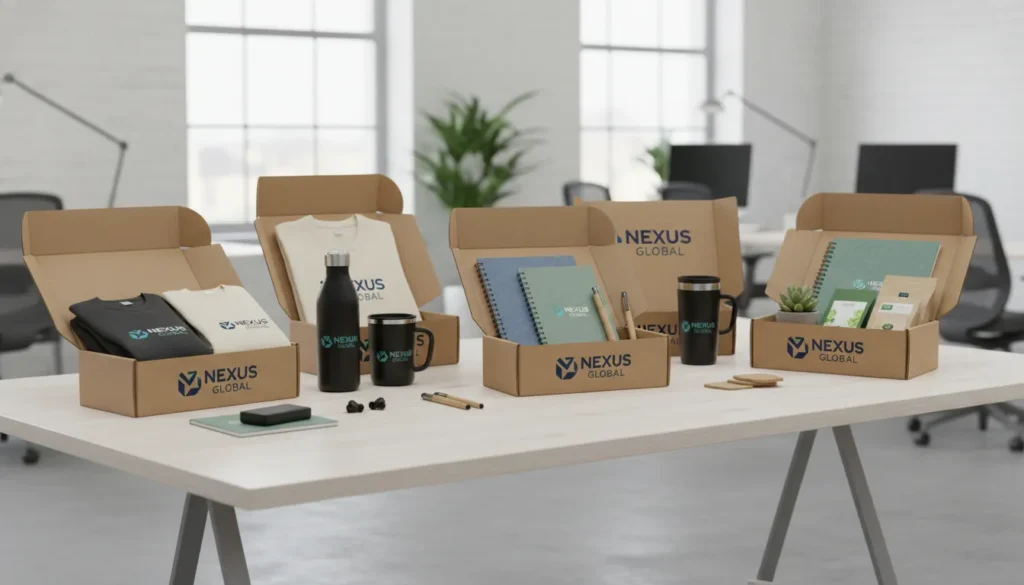
Remote swag fails when it arrives late, fits poorly, or feels disposable. Useful, well-timed gifts make distributed employees and clients feel seen without adding another logistics project for your team.
Corporate swag ideas for remote and hybrid teams work best when each gift serves a clear moment, recipient, and delivery plan. For onboarding, send premium everyday items that help a new hire connect with the company before their first week begins and feel prepared from day one. For appreciation, choose useful merchandise and a personal note, since meaningful recognition supports employee motivation and retention, according to Larimer County Human Resources. After events, use polished follow-up kits; for sales enablement, send relevant gifts that reinforce a meeting instead of creating clutter. For executive gifting, prioritize quality, fit, presentation, and reliable global fulfillment over a crowded box of forgettable logo items sent at the right moment.
The right choice is not one universal box; it is the gift that fits the relationship, timing, and delivery needs. Next, Corporate swag ideas by remote and hybrid team moment maps each occasion to practical choices your recipients can use. The path begins with:
Corporate swag ideas by remote and hybrid team moment
The best corporate swag ideas start with a moment, not an item. A new hire needs a welcome that eases first-week friction. A remote employee marking a milestone needs recognition that feels personal, not like leftover stock. The moment sets the item, message, delivery date, and level of care.
This approach keeps a program useful across remote and hybrid teams. Brand Vessel is a boutique enterprise provider that connects design and kitting through customized merchandise solutions. It also supports stores and delivery. Teams can plan for the recipient and occasion, rather than buy disconnected products.
Onboarding and appreciation
Onboarding kits should help someone join the team and start work with ease. Consider a soft layer, drinkware, desk tool, and a short welcome card. For remote hires, confirm address and size before packing. For hybrid hires, send the kit before day one or place it at their workspace.
Appreciation gifts need a different tone. A work anniversary or project launch calls for fewer, better-chosen pieces. Add a note tied to the achievement. Recognition can support morale, retention, and motivation, according to Larimer County’s employee recognition guidance. The gift should mark real work, not replace direct thanks.
Events and sales conversations
At events, an item must travel well and earn use after the badge comes off. Choose a packable tote, notebook, charger, or light outer layer for the setting. Ship remote attendee kits before a virtual session. For in-person events, plan refill stock and pack-out before the booth opens.
Sales enablement is more focused. A useful prospect kit can support a planned meeting, product demo, or customer workshop. Keep branding restrained and include a clear note from the account team. Delivery should land near the conversation, not weeks after it.
Executive gifting and fulfillment fit
Executive gifts call for close curation, clean packaging, and accurate recipient details. A premium travel piece, home-office object, or refined food-and-drink set can suit the relationship. Before sending, check gift policies, dietary needs, and destination limits. A trusted merch partner can manage details without making the gift feel generic.
The planning brief below keeps each moment tied to a practical use case, delivery detail, and audience need.
| Team moment. | Best-fit items. |
|---|---|
| New hire onboarding. | Layer, tumbler, desk tool. |
| Employee appreciation. | Premium daily-use gift. |
| Hybrid or virtual event. | Tote, notebook, charger. |
| Sales enablement. | Focused meeting kit. |
| Executive gifting. | Curated premium set. |
For kitting, add a welcome card, personal note, session insert, account-team message, or refined packaging. For fulfillment, plan arrival dates, home and venue routing, address review, and shipment tracking.
Shape each kit for the audience and delivery path. The right item is only one part of a useful program.
Timing, packing, inventory, and recipient care decide whether the moment feels considered.
What should go in a remote employee onboarding kit?
A remote onboarding kit should help a new hire start work, feel welcomed, and use the items after week one. For distributed teams, that means useful goods, a personal welcome, and a shipping plan that works across home addresses. These corporate swag ideas are built for real workdays, not a one-time unboxing photo.
Recognition matters at the start of an employee’s experience. Larimer County’s human resources guidance says employee recognition improves morale, retention, and motivation. A kit can support that welcome when it feels chosen for the person, not packed with filler.
Useful items for the first week
Begin with a small set of items that fit a home desk and a hybrid commute. Premium apparel should be easy to layer, with subtle branding and a clear size selection step. Add drinkware and a notebook because both belong in a daily work routine.
A practical starter mix includes a premium hoodie, quarter-zip, or jacket in the employee’s chosen size. Add an insulated tumbler or water bottle, a quality notebook with a pen, and one desk essential such as a cable organizer, laptop stand, or tech pouch. Finish the kit with a printed welcome card and a brief note signed by the employee’s manager.
The manager note does a different job than the merchandise. It can name the role, welcome the employee to the team, and share one first-week detail. Brand Vessel’s customized merchandise solutions can bring apparel, drinkware, print pieces, and desk goods into one planned kit.
Packaging that works with IT setup
A welcome box may arrive beside a laptop, monitor, or security key. Keep branded goods separate from managed devices unless the IT team approves a combined shipment. A labeled inner pack helps route equipment, protect drinkware, and keep paper goods neat.
Before packing, confirm size, shipping address, start date, and any country or carrier limits. Give IT a simple packing list when devices or accessories are included. Avoid loose confetti or bulky filler. It can hide cables, damage equipment, or leave extra cleanup at a home desk.
Direct delivery for distributed hires
Remote and hybrid onboarding needs a repeatable delivery process. Kitting combines the chosen items, size details, card, and packing rules before each box ships. Direct-to-employee fulfillment sends each prepared kit to the new hire. Office managers do not need to repack boxes.
A practical program also makes reorders and address checks simple for People Ops. Working with a trusted merch partner gives teams one place to plan the kit, presentation, and delivery flow as hiring needs change.
Corporate swag ideas employees actually use
Useful appreciation starts with a simple test: would an employee choose this item without a logo? Among corporate swag ideas, that test favors lasting comfort and daily function over a desk full of small trinkets. Recognition can support morale, motivation, and retention, according to Larimer County’s employee recognition guidance.
The right item also reflects care in the details. Soft hand feel, sturdy construction, restrained branding, and packaging that arrives intact all matter. For a distributed team, practical gifts create a shared moment without requiring everyone to meet in one place.
What gets used after delivery?
Start with clothing employees can keep in rotation: midweight fleece, packable outerwear, and premium tees in easy colors. Keep the mark subtle and choose fabrics that hold their shape after repeated washing. A wearable piece should look right on a commute, in a video call, or on a weekend walk.
Daily tools can be just as welcome. Try sustainable drinkware, charging cables, compact tech organizers, travel pouches, or a small wellness kit with useful items. For remote staff, a laptop stand, task light, or desk mat solves a need they can see each workday.
Avoid filling a kit with many low-use extras. One strong layer and one daily tool often communicate more care than a box of throwaway pieces. Fewer items also leave room for better fabric, finish, and presentation.
Choice, fit, and timing
Apparel becomes a weak gift when sizing is a guess. Ask for sizes through a secure form or let employees select their size in a private shop. Include a broad size range, unisex guidance, and clear garment measurements so each person can choose with confidence.
Choice should go beyond size. A simple credit or curated menu can offer fleece, drinkware, tech gear, or home-office goods at a similar value. This keeps appreciation personal while protecting the brand standards set by your team.
If the team has different roles, shape the menu around where work happens. Field staff may use outerwear and travel gear, while desk-based employees may value charging gear and a stable stand. Both groups get a practical choice instead of a generic giveaway.
Match the gift to the calendar and location. Outerwear fits a cool-weather launch, while insulated bottles, packing cubes, and travel pouches work well around summer travel. Regional options help global staff receive items suited to their climate.
Delivery for remote and hybrid teams
Remote employee gifting depends on smooth delivery. Collect a preferred shipping address only for fulfillment, share delivery timing, and plan for address changes or returned parcels. A managed customized merchandise solutions program can coordinate selection, kitting, and shipment for teams in many locations.
Use appreciation gifts at moments employees can connect with: onboarding, work anniversaries, project milestones, or seasonal thank-yous. Then learn from the next order. Track selected categories, size exchanges, delivery issues, and repeat requests to refine the program around real use.
How can swag make event follow-up more memorable?
Event swag works best when it continues a conversation, not when it fills a tote bag. For hybrid events, plan a shared thread across the pre-event kit, booth item, and post-event mailer. Each touch should point to the event topic, next step, or useful recap.
That approach turns corporate swag ideas into a follow-up plan. A remote guest can receive the same key item as an attendee who visits the booth. Both can recognize the recap email, landing page, or meeting invite as part of one experience.
A sequence built around the event
Start before the event with a small kit for registered guests, speakers, or key accounts. Include an agenda card, a practical item, and a short welcome note. For online guests, the package gives the event a physical place in their workday.
At the booth, choose one quality giveaway that fits the message and travels well. Good options include useful drinkware, a well-made notebook, or premium apparel for select guests. A QR-card insert can lead to session slides, a demo request, or a recap page.
Follow-up gifts with a reason
Send post-event mailers only when there is a clear reason to follow up. A speaker gift can thank a contributor, while a recap gift can support a conversation started at the booth. When a gift recognizes participation, it feels planned rather than random.
That intent matters. Larimer County’s HR guidance explains that employee recognition can improve morale, retention, and motivation. In an event program, a thoughtful thank-you item can serve as recognition without becoming a sales pitch.
- Pre-event kit: agenda card, note, and one useful item.
- Booth handout: compact giveaway paired with a QR-card insert.
- Remote attendee mailer: the core item sent to a home or office address.
- Recap gift: reserved for speakers, customers, or strong conversations.
Quality and delivery planning
A gift is easier to keep when it is made for regular use. Pick quality apparel with simple branding, or sustainable products with clear product details. Brand Vessel’s customized merchandise solutions can connect item choice, kitting, and delivery across in-person and remote audiences.
Build one item set that can work at the booth and through the mail. It helps the audience receive a consistent message. It also keeps packaging, inventory, and recap planning aligned before addresses arrive.
Fulfillment is part of the experience. Collect mailing details through a secure process, confirm apparel sizes before ordering, and set deadlines for each shipment wave. A company store platform can help recipients select items after the event, which limits guesswork on fit and location.
Use swag as sales enablement, not just decoration
Gift tiers matched to buyer context
Swag can support a sale when it helps the recipient do something useful. For prospects, that may mean a simple desk kit before a scheduled demo. For active accounts, it can mean a thoughtful renewal or launch kit. The goal is not more logo exposure. It is a useful, timely touch that fits the account conversation.
Start with tiers based on the relationship and moment. Use a light tier for qualified prospects and a team tier for buying groups. Reserve a premium tier for key accounts or renewals. An AE could send a notebook and drinkware set before a workshop. An AM could mark a product milestone with a refined desk kit.
- Prospect tier: one useful item and a short note tied to a booked meeting.
- Buying-team tier: matching work essentials for a scheduled demo or planning session.
- Account tier: a tailored kit for an important launch, renewal, or shared milestone.
Trigger-based sends for the revenue team
A gift is easier to manage when the send follows a clear trigger. Prospects might receive a compact kit after a discovery call is booked. They should not receive one after a cold email. AEs can align a demo kit with a hands-on session. Customer success teams can send a welcome pack after kickoff.
Recognition works best when it is tied to a real contribution or event. Larimer County’s employee recognition guidance links recognition with morale, motivation, and retention for employees. That principle can guide customer-facing sends. Name the milestone, then choose items that suit it.
For account-based marketing, coordinate sends across marketing, sales, and service. A target account may receive a pre-demo desk set. An engaged buying team may later receive a workshop kit. This approach keeps the program relevant. It avoids treating every contact as the same opportunity.
Measures that guide the next send
Choose corporate swag ideas that recipients can use at work or while traveling. A demo kit might pair a clean notebook, cable organizer, and insulated bottle. A renewal kit could include a quality layer and a thank-you card. The card can name the shared work. Keep branding restrained, so each item has value on its own.
With customized merchandise solutions, teams can plan approved kits, packaging, and delivery around each trigger. Track the trigger, recipient role, shipment status, accepted meetings, renewal conversations, and account notes. Review which kits prompt a meaningful next step. Then adjust the item mix and timing.
Executive gifting should feel curated, not expensive for its own sake
Executive gifts carry more weight than a standard event giveaway. A gift for a client leader, board member, or senior hire should reflect how the relationship works. In remote and hybrid business, it may be the only physical brand touchpoint that person receives. The aim is not a high price tag; it is care, fit, and usefulness.
A restrained product edit
Start with a small set of items that earns a place in a workday or trip. Tasteful apparel can mean a well-made quarter-zip, jacket, or soft knit layer in a neutral shade. Premium desk goods may include a bound notebook, refined pen, charging tray, or insulated drinkware. Travel pieces, such as a compact organizer or durable weekender, suit leaders who move between offices.
Local goods and products made with lower-impact materials can add meaning without making the gift feel busy. Choose them because they fit the person or the occasion, not as a claim stamped on a box. Recognition can support morale, motivation, and retention, according to Larimer County’s employee recognition guidance. For executives and VIPs, that recognition feels stronger when the item is chosen with restraint.
For a restrained edit, start with apparel that has soft structure, neutral colors, subtle decoration, and useful sizing options. Pair it with durable desk goods for a home office or company workspace. Add compact travel items with clean materials and easy packing. Local or sustainable products can work well when they have a clear reason for inclusion.
Personal touches without loud logos
Personalization should show attention, not ownership. Initials on a notebook, a short card from an account lead, or a selected color can make the gift personal. A bright oversized logo can undercut that feeling, especially when a recipient will use the item outside work. Use tonal marks, small embroidery, or unbranded premium goods when discretion matters.
Branding can be more visible when the gift marks an internal milestone or shared team moment. It should stay quiet for a new executive relationship, a major client thank-you, or a sensitive VIP occasion. Among corporate swag ideas, the better executive choice is often the piece a person would have selected on their own.
Presentation and delivery at distance
Remote and hybrid relationships add a practical test: can the gift arrive intact, polished, and on time? Confirm the recipient’s preferred address, apparel size, dietary limits, and shipping region before selecting the assortment. Then use protective packaging with a clean reveal, a brief note, and no excess filler. A premium item loses its effect in a damaged or cluttered box.
Executive gifting works better as a managed program than as purchases from several sources. Brand Vessel’s customized merchandise solutions combine creative direction, kitting, store support, and fulfillment for distributed recipients. This integrated service helps teams keep quality and presentation consistent across office, remote, and hybrid relationships.
Plan a modest choice set for repeat gifting, with options for apparel, desk use, travel, or local taste. This gives a recipient room to choose while protecting the brand standard. It also keeps future appreciation moments consistent, without making every relationship feel identical.
How do you send swag to remote employees without creating chaos?
Remote swag works best as a repeatable program, not a string of one-off shipments. Start with a clear occasion, build one approved kit, and route each order through a single system. The steps below turn corporate swag ideas into deliveries that People Ops teams can track and employees can receive with ease.
Plan the program
-
Define the audience and moment. Decide who receives the kit and why, such as new hires, work anniversaries, or a team launch. Recognition can support morale, motivation, and retention, according to Larimer County human resources guidance. Set a budget, delivery window, and approval owner before selecting products.
-
Select useful, on-brand items. Choose a small set of quality pieces that suits the workday and the occasion. A new hire kit might pair apparel with a drink vessel and desk item. Keep decoration clean and confirm packaging before production, so the unboxing feels consistent across locations.
-
Collect sizes and shipping details safely. Use one secure form or store checkout flow for names, apparel sizes, addresses, and country details. Give employees a deadline and a way to correct errors. Limit access to the team handling fulfillment, then set a clear rule for deleting address data.
Fulfill each order
-
Kit and check every package. Assemble the approved items, insert the correct note, and confirm size, decoration, and packing slip. A simple checklist catches missed pieces before a parcel leaves the facility. For large programs, use the same quality check for every batch and destination.
-
Ship directly to each employee. Send packages from fulfillment to home addresses instead of moving boxes through the office. A company store platform can centralize choices, approvals, inventory, and order status. For global teams, plan customs forms, duties, restricted items, and local carrier handoffs before launch.
Track and improve
-
Monitor delivery from one dashboard. Keep tracking numbers, delivery states, returns, and replacements in one record. Set alerts for delayed or failed deliveries and name one support contact. This approach keeps employees from chasing several vendors when an address changes or a package is lost.
-
Gather feedback and refine the next kit. After delivery, ask which items were useful, what fit poorly, and whether shipping went smoothly. Share the findings with your customized merchandise solutions partner. Then adjust product mix, size ranges, stock levels, and shipping rules before the next remote send.
A managed process keeps remote gifting personal without asking internal teams to manage cartons, spreadsheets, and carrier issues. With set products, secure data collection, direct shipping, and delivery feedback, a program can support new hires and distributed teams in many locations.
Frequently Asked Questions
What is good corporate swag?
Good corporate swag is useful, well-made merchandise matched to a specific moment and audience. For remote and hybrid teams, that often means comfortable apparel, durable drinkware, practical desk items, travel accessories, or a thoughtful kit. Branding should be subtle enough for everyday use. Choose fewer, better items and plan sizing, delivery, and storage before ordering.
What should be in a new hire swag box?
A new hire swag box should support the first week of work and create a clear welcome. Common choices include a quality shirt or hoodie, reusable bottle, notebook, laptop accessory, welcome note, and simple setup guide. For distributed employees, confirm size, address, shipping restrictions, and start date first. Keep the kit practical, inclusive, and easy to replenish for future hires.
What corporate gifts do employees actually use?
Employees tend to use gifts that fit their routines, such as quality apparel, drinkware, backpacks, desk accessories, or work-from-anywhere essentials. Appreciation also matters beyond the item itself. Larimer County’s employee recognition guidance notes that recognition can improve morale, motivation, and retention. Match the gift to the recipient and occasion, and avoid low-quality items that quickly become clutter.
How do you send swag to remote employees?
To send swag to remote employees, collect approved addresses and size preferences through a secure form, then set a shipping window around the relevant milestone. Centralized kitting and fulfillment can keep packaging consistent across locations. For international recipients, check customs limits, duties, and restricted materials before shipping. Provide tracking details and a simple process for damaged parcels, sizing exchanges, or address corrections.
Ready to build a corporate swag program that works?
When swag choices are rushed, teams can end up with scattered items that miss the moment and create extra coordination work. Waiting also makes it harder to plan thoughtful onboarding, appreciation, event follow-up, sales support, and executive gifts on a useful schedule. Starting now gives your team time to align each use case with branded merchandise people will value and receive at the right time.
Ready to start a corporate swag project with a clear plan for every audience and occasion? Start your project with Brand Vessel to request a program built around your team, brand standards, delivery needs, and key dates. Share your priorities now so planning can begin before your next welcome, recognition, event, or gifting need arrives.