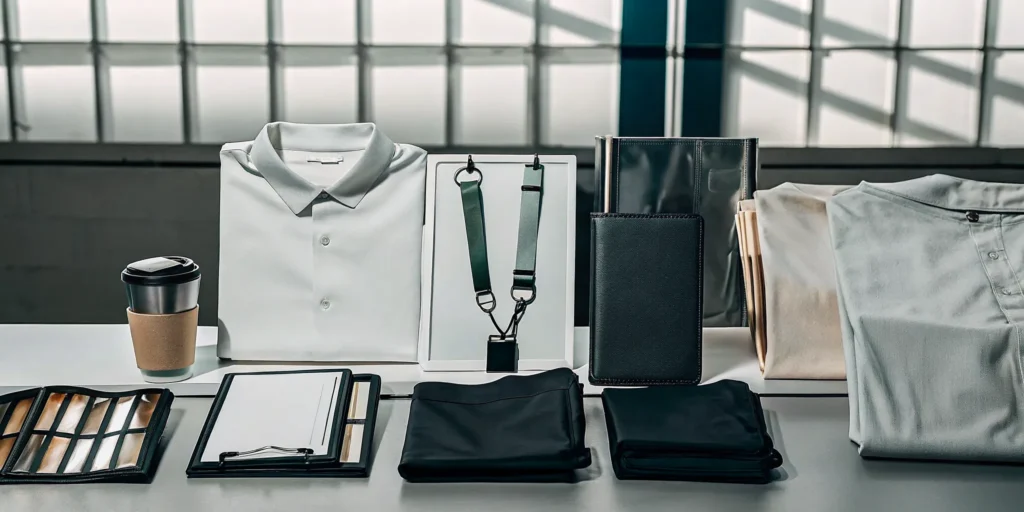
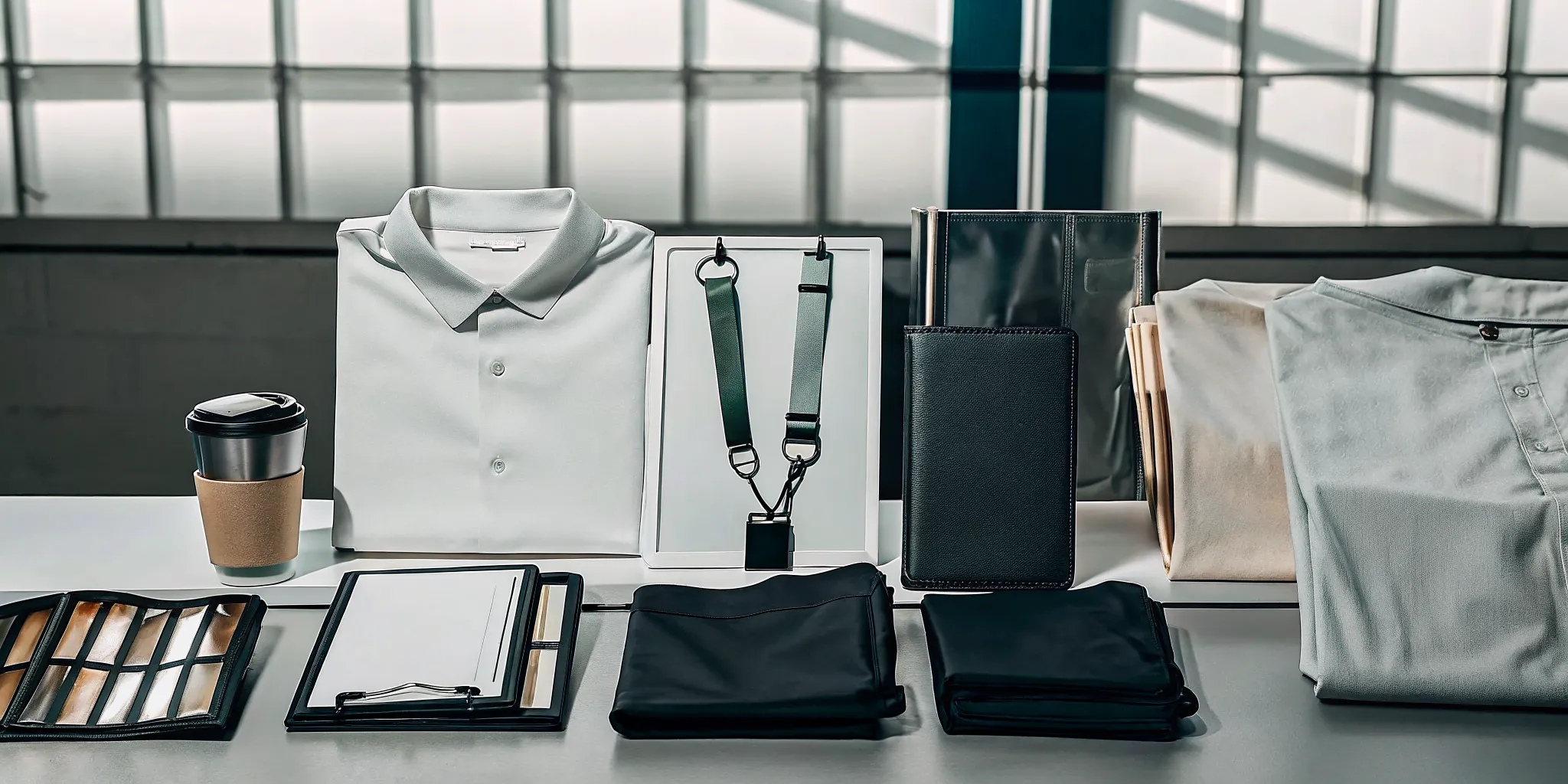
A booth full of random giveaways creates clutter, not a memorable event experience. The strongest kits give every item a job before the first box ships.
Ready to build your branded event kit? Start a project with Brand Vessel.
Discover our Branded Merchandise Services & Company Stores for comprehensive event merchandise support from sourcing to global fulfillment.
Branded event kits are coordinated sets of merchandise, display materials, printed pieces, and packaging built around a clear event goal. They can include staff apparel, booth assets, attendee gifts, product samples, and follow-up pieces, based on what each audience needs to receive. For trade shows, conferences, and product launches, a strong kit helps staff look prepared, gives attendees useful takeaways, and keeps the brand consistent. It should match its audience and setting, then move through sourcing, kitting, shipping, on-site distribution, and measurement as one carefully planned program. A trade show budget should also account for giveaways, transport, booth costs, and venue fees when setting ROI benchmarks, according to the U.S. Department of Commerce.
Choosing products is only one part of the job; the harder question is what the kit must do for attendees, staff, and the business. Start with What branded event kits should accomplish, then use those goals to guide every item and delivery decision. Here is how.
What branded event kits should accomplish
Branded event kits are planned sets of useful merchandise, printed materials, and event tools built around one clear purpose. They may support a trade show, conference, product launch, or hybrid event. Unlike a bag of random swag, each item should help shape the attendee experience before, during, or after the event.
A clear job for every item
Start with the event goal, audience, setting, and desired next step. Utah State University’s event planning guide recommends linking the event’s audience, content, timing, place, and purpose to the organization’s wider strategy. The kit should follow that same logic.
At a trade show, the job may be to draw attention, support booth conversations, and give qualified prospects a useful reminder. At a conference, the kit may help attendees navigate sessions and take notes. For a product launch, it can frame the story, make the product easier to try, and support follow-up.
That goal should guide every item choice. A practical tote can carry event materials, while a well-made apparel piece can extend the experience after attendees leave. Clear printed instructions or a simple card can direct people to a demo, meeting, product page, or next step.
A consistent attendee experience
A strong kit should make the brand feel consistent at each touchpoint. Colors, decoration, packaging, and messaging need to work together without making every item look the same. The result should feel planned, useful, and right for the people receiving it.
Context matters as much as appearance. An executive roundtable may call for a smaller, tailored set. A large conference may need simple items that staff can hand out fast. Remote attendees may need kits shipped before the event, with clear directions about when to open or use each piece.
Trade shows can help companies show their offers, build awareness, and reach a wider network, according to the U.S. International Trade Administration. Branded event kits should support those goals through useful touchpoints. They should not compete with the booth team or distract from the main message.
Reliable delivery and useful follow-up
The attendee experience depends on what happens behind the scenes. Items must arrive on time, in the right quantities, and at the correct locations. Teams also need a plan for storage, assembly, on-site distribution, leftover stock, and shipping to remote or global guests.
Integrated comprehensive event merchandise services can connect item selection with kitting, fulfillment, company stores, and global logistics. That approach helps keep the kit consistent across locations. It also gives event teams one system for tracking inventory and handling late requests.
Success measures should match the kit’s assigned job. Teams can track booth visits, booked meetings, demo use, follow-up actions, or item demand. These signals show which parts helped the experience and which should change before the next event.
How far ahead should you plan trade show swag kits?
Start planning branded event kits as soon as the event date, audience, and delivery sites are firm. Large events often need a longer runway than the kit itself suggests. The schedule must cover decisions, production, packing, freight, and time to fix problems.
Build the kit schedule into the wider event plan rather than treating merchandise as a late add-on. Utah State University’s event planning guide suggests allowing four to six months for event planning. The right lead time depends on event size and venue needs.
A practical planning sequence
Work backward from the date each kit must arrive, not the first day of the show. This approach protects setup time and makes ownership clear. Use one schedule for all products, packaging, approvals, packing lists, and destinations.
- Define the audience, kit purpose, quantity, budget, delivery sites, and firm arrival date.
- Set the creative direction, choose products, confirm stock, and approve artwork before ordering begins.
- Approve decoration methods, samples, custom packaging, inserts, and any attendee-specific kit versions.
- Complete production, then send every item and package component to the kitting location.
- Assemble a test kit, check item counts and presentation, then pack the full order.
- Book freight, confirm receiving rules, track each shipment, and keep contingency stock ready.
Where timelines often expand
Creative reviews and product choices can take longer when many teams must approve them. Custom-made goods, special decoration, and printed packaging add more steps than in-stock items. A sample round may also reveal color, fit, or packing issues that need correction.
Freight needs its own buffer after packing is complete. Venue docks may have set receiving windows, labeling rules, or storage limits. International events also add customs paperwork and border timing.
Brand Vessel’s comprehensive event merchandise services bring sourcing, kitting, fulfillment, global distribution, and customs support into one plan. One linked schedule helps teams spot delays before those delays affect the event.
Adjusting for event complexity
A single conference shipment is usually simpler than a product launch sent to staff, media, and customers. For a launch, lock the reveal date and confidential artwork before production. Then map each audience to the right kit version and delivery date.
Multi-location events need a destination-level plan. Record local contacts, quantities, addresses, receiving hours, and backup kits for each site. Ship early enough to verify receipt before teams travel. Keep a small reserve at the kitting hub for loss, damage, or last-minute guests.
Schedule a final readiness check before freight leaves. Confirm packed quantities, tracking numbers, venue instructions, and the person responsible for on-site distribution. This check turns the timeline into a working control tool, not just a target date.
What products should go in a branded event kit?
A useful kit starts with the person receiving it, not a list of popular products. Segment attendees by role, needs, and likely use after the event. Then match each group with a clear event goal and delivery moment.
Audience-based product choices
Build a simple attendee map before choosing products for branded event kits. A new prospect, featured speaker, employee, and top client should not receive the same mix. Each group has a different reason to engage with the brand.
- General attendees: practical drinkware, notebooks, lanyards, and badges that support the day.
- Booth visitors: compact tech accessories or useful desk items tied to a clear interaction.
- Speakers and partners: polished apparel or a small premium set that recognizes their role.
- Launch guests: premium launch gifts that connect directly to the new product or message.
Audience segments also help teams avoid giving every item to every person. That keeps the experience focused and makes managing branded merchandise easier across groups, budgets, and event locations.
Products for each event moment
Product choice should support the purpose of the event. Utah State University’s event planning guide recommends defining the audience, content, timing, location, and purpose. Use those same points to decide what belongs in each kit.
For check-in, lanyards, badges, and a slim notebook make sense because attendees can use them right away. During a long conference day, drinkware and charging accessories can support comfort and access. Apparel works better when sizing is collected early and the piece suits the setting.
- Before the event: a mailed preview kit can build interest and share key details.
- At check-in: give items that help attendees move through the venue.
- At the booth: tie the product to a demo, conversation, or follow-up action.
- After a launch: send a premium gift to key guests with useful follow-up content.
Usefulness after the conference
The strongest product mix still has a role after the schedule ends. A well-made bottle, wearable layer, notebook, or tech accessory can stay useful at work. Avoid items that only make sense inside the venue unless they serve a clear event need.
Review each choice for usefulness, packability, size needs, and delivery method. Also consider whether different groups need separate inserts or product mixes. Brand Vessel’s comprehensive event merchandise services connect custom products with kitting, fulfillment, and global logistics for a more controlled program.
Should you ship branded event kits before the event or hand them out on site?
The right distribution model depends on the event goal, attendee location, and the moment when the kit should make an impact. Custom packaging supports each model, but it should fit the shipping route and handoff process. A sturdy mailer works for home delivery, while a compact handled box is easier to carry at a venue.
Build the distribution choice into the event master plan instead of treating it as a last-mile detail. Utah State University’s event planning guide recommends a master plan that covers venue details, logistics, and equipment. That same plan should name kit owners, delivery dates, storage needs, and backup stock.
Distribution model comparison
Use the table below to compare the main ways to deliver branded event kits. Each option can work well when its limits match the event format.
| Distribution model. | Main pros. | Best uses. | Operational watchouts. |
|---|---|---|---|
| Ship before the event. | Builds anticipation and supports remote access. | Virtual events, VIP guests, and distributed teams. | Address quality, delivery timing, and returned parcels. |
| Hand out on site. | Creates a shared moment and avoids home shipping. | Trade shows, conferences, and employee meetings. | Venue storage, staffing, pickup flow, and leftover stock. |
| Send after meetings. | Supports follow-up and rewards clear actions. | Sales meetings, demos, and qualified leads. | Consent, address capture, and prompt fulfillment. |
| Segment by attendee group. | Makes contents more relevant and controls spend. | Mixed audiences, tiered guests, and global events. | Accurate lists, kit labels, and version control. |
Custom packaging by delivery route
Packaging should protect the contents without adding needless bulk or slowing the handoff. For pre-event shipping, choose a box that can handle parcel movement and arrives ready to open. On-site kits need clear labels, easy stacking, and a shape attendees can carry through the venue.
Post-meeting kits can use packaging that continues the conversation after a useful sales or learning session. Segmented kits need a clear visual code so staff can spot each version fast. Brand Vessel’s comprehensive event merchandise services connect custom merchandise, kitting, fulfillment, and logistics under one plan.
Match the unboxing order to the delivery moment. A pre-event kit may place an agenda or welcome card on top. An on-site kit should give attendees fast access to items they will use right away.
Operational controls for fewer surprises
Start with a clean attendee list and assign each kit version a simple code. Then connect that code to the recipient, delivery route, and event date. This step helps teams avoid giving a speaker kit to a general attendee or sending duplicate packages.
- Confirm addresses and attendee groups before kits enter fulfillment.
- Set a cutoff date for late registrations and list changes.
- Reserve backup kits for damaged parcels, walk-ins, and event staff.
- Track shipped kits and record all on-site handoffs.
- Plan how leftover items will return, stay in storage, or support follow-up.
A hybrid plan often fits events with both in-person and remote guests. Ship kits to remote attendees, stage labeled inventory at the venue, and hold follow-up stock for key meetings. Teams that are managing branded merchandise should also document approvals, inventory owners, and reorder rules before the event.
How Brand Vessel supports kitting, packing, and fulfillment
One partner from product choice to packed kit
Brand Vessel brings branded merchandise, custom apparel, company stores, storage, logistics, kitting, and fulfillment into one connected program. That setup gives event teams one partner for the work between choosing products and placing finished kits in recipients’ hands.
The process starts with the event goal, audience, location, and delivery plan. A clear plan matters because event logistics involve many linked roles and details. Utah State University’s event planning guide recommends a master plan to keep each part on track.
Brand Vessel can then help select custom apparel and merchandise that fit the audience, event, and brand. Its team can coordinate product sourcing, decoration, inventory, and kit assembly through its comprehensive event merchandise services. For teams that want to see how finished merchandise programs translate into brand moments, Brand Vessel’s project work shows the same emphasis on creative execution and operational detail. This joined approach reduces handoffs and helps teams keep branding consistent across every item.
Flexible kitting and packing workflows
Not every recipient needs the same kit. Brand Vessel can support kit versions for speakers, employees, clients, prospects, or event staff. Each version can follow its own item list, packing order, inserts, labels, and destination rules while staying part of one program.
Company stores add another way to manage demand. Teams can offer approved products through a controlled store, then connect orders with stored inventory and fulfillment. This model works for planned event drops, ongoing team needs, and post-event requests without forcing staff to manage boxes or order records by hand.
Packing is also a brand touchpoint. Item placement, apparel folds, inserts, and packaging should make the kit easy to open and use. Brand Vessel manages these details as part of the kitting workflow, rather than treating packing as a last step after products arrive.
Shipping support for local and global events
Finished branded event kits may need to reach one venue, many offices, or individual homes. Brand Vessel supports in-house shipping and global distribution, so teams can plan delivery around the event format. Storage and inventory support also make it easier to hold extra kits or send replacements when needs change.
International shipments bring added paperwork and border steps. Brand Vessel’s in-house customs brokerage helps manage that part of global distribution. Teams gain one point of contact across merchandise, packing, freight, and customs, which makes status checks and issue handling more direct.
This end-to-end support is useful when a campaign includes several events or recipient groups. Brand Vessel can help map the right merchandise, kit format, inventory plan, and shipping route for each one. Teams ready to scope a program can start a project with the delivery needs already in view.
Turn event kits into post-event follow-up
A branded event kit should keep working after attendees leave the booth. Treat each scan, request, and meeting note as a signal for the next useful touchpoint. This approach connects branded event kits to follow-up instead of treating them as one-time giveaways.
Kit signals and useful data
Start by linking each kit or insert to a clear audience segment, campaign, event, and owner. A QR code can lead to a product guide, demo request, resource hub, or reorder page. Use a distinct code for each segment so the response reveals which message drew interest.
Combine scan data with registration details and staff notes, but keep the record focused on useful context. Note the attendee’s role, stated need, product interest, and promised next step. This creates a practical handoff for sales and marketing without asking the attendee to repeat the same conversation.
Federal trade show guidance recommends setting return-on-investment benchmarks when budgeting for a trade show. Use those benchmarks to choose follow-up measures before the event. Track scans, meetings requested, samples mailed, reorders, and qualified opportunities against the event goal.
Segmented messages and handoffs
Build follow-up around what happened, not a single email sent to every attendee. Send product details to people who asked technical questions. Send meeting recaps to contacts with active projects, and a useful resource to scanners who did not speak with the team.
Keep the message tied to the kit. Reference the item, QR destination, or conversation so the contact understands why the note arrived. For teams managing branded merchandise across several events, consistent tags make later review and handoff easier.
Replenishment and post-event mailers
Follow-up also includes the physical side of the program. Review what staff used, what attendees requested, and which pieces need replenishment before the next event. Return useful booth assets to inventory, and remove dated inserts before they reach another audience.
For high-fit contacts, prepare a post-event mailer that answers a known need rather than sending a generic second kit. It might pair a requested sample with a short recap and a direct next step. Brand Vessel’s comprehensive event merchandise services can connect kitting, fulfillment, company stores, and global logistics for this work.
Close the loop with a short event review. Compare follow-up outcomes with the original event goal, then update kit quantities, QR destinations, and segment rules. Save strong meeting notes and unanswered questions for the next campaign plan.
Frequently Asked Questions
How do you plan a timeline for branded event kits?
Start with the event date and work backward through delivery, packing, production, artwork approval, product selection, and budgeting. Build in time for samples, revisions, and shipping delays. A broader event plan may require four to six months, according to Utah State University’s event planning guide. Confirm the specific lead time for every custom item before ordering.
How can you customize branded event kits for different attendees?
Group attendees by role, location, interests, or stage in the customer journey. Keep a few core items consistent, then vary apparel sizes, printed messages, product samples, or gifts by group. Use registration details to guide each version, and collect only the information needed for fulfillment. Label each kit clearly so the correct package reaches the intended attendee.
What is the best way to handle shipping for event kits?
Create a shipping plan that lists destinations, delivery deadlines, recipient contacts, package contents, tracking numbers, and backup inventory. Send venue-bound kits early enough for receiving teams to process them. Confirm storage rules and handling fees with the venue first. For international events, account for customs documents, duties, and extra transit time. Centralized kitting and fulfillment services can simplify multi-location distribution.
How do you measure the success of branded event kits?
Choose measures that match the event goal before selecting kit items. Useful measures include kits delivered, booth visits, qualified leads, meetings booked, product trials, social mentions, and follow-up conversions. Compare these outcomes with the full event cost, including giveaways, booth fees, travel, and shipping. The U.S. Department of Commerce recommends setting return-on-investment benchmarks when preparing for a trade show.
Can I use branded event kits for virtual conferences?
Yes. Branded event kits can give virtual attendees a shared, physical connection to the conference. Choose practical items that support the agenda, such as a workbook, apparel, product sample, or session supplies. Collect addresses and size preferences during registration, set an early response deadline, and ship before the event. Include digital alternatives for late registrants or attendees in locations where delivery is limited.
Ready to Start Your Branded Event Kit Project?
Waiting too long can shrink merchandise choices and leave your team managing rushed approvals, packing problems, and avoidable delivery risks before the event begins. Starting now gives you time to select useful items, confirm brand details, set accurate quantities, and coordinate deliveries around every important event milestone. Early planning also helps you resolve gaps, prepare for changes, and protect a consistent attendee experience without creating last-minute work for your internal team.
Do not let a tight timeline decide what your audience receives or how smoothly your kits arrive at the right destinations.
Start a branded event kit project
Use that conversation to discuss your goals, timeline, kitting, fulfillment, and delivery needs with Brand Vessel.
{“@context”:”https://schema.org”,”@type”:”Article”,”headline”:”Branded Event Kits for Trade Shows”,”image”:”https://zleague-public-prod.s3.us-east-2.amazonaws.com/article_images/a707fad6-6186-4847-a244-2c9e49471f71/branded-event-kits-for-trade-shows-and-launches-514893.webp”,”keywords”:”branded event kits”,”author”:{“@type”:”Organization”,”name”:”Brand Vessel”},”publisher”:{“@type”:”Organization”,”name”:”Brand Vessel”},”datePublished”:”2026-06-10″,”dateModified”:”2026-06-10″}{“@context”:”https://schema.org”,”@type”:”FAQPage”,”mainEntity”:[{“@type”:”Question”,”name”:”How do you plan a timeline for branded event kits?”,”acceptedAnswer”:{“@type”:”Answer”,”text”:”Work backward from delivery through production approvals packing and shipping”}},{“@type”:”Question”,”name”:”How can you customize branded event kits for different attendees?”,”acceptedAnswer”:{“@type”:”Answer”,”text”:”Segment recipients by role location interest and journey stage”}},{“@type”:”Question”,”name”:”What is the best way to handle shipping for event kits?”,”acceptedAnswer”:{“@type”:”Answer”,”text”:”Plan destinations deadlines contacts tracking backup stock and customs needs”}},{“@type”:”Question”,”name”:”How do you measure the success of branded event kits?”,”acceptedAnswer”:{“@type”:”Answer”,”text”:”Track delivery booth visits leads meetings trials mentions and conversions”}},{“@type”:”Question”,”name”:”Can I use branded event kits for virtual conferences?”,”acceptedAnswer”:{“@type”:”Answer”,”text”:”Yes ship useful physical items before the virtual event begins”}}]}