
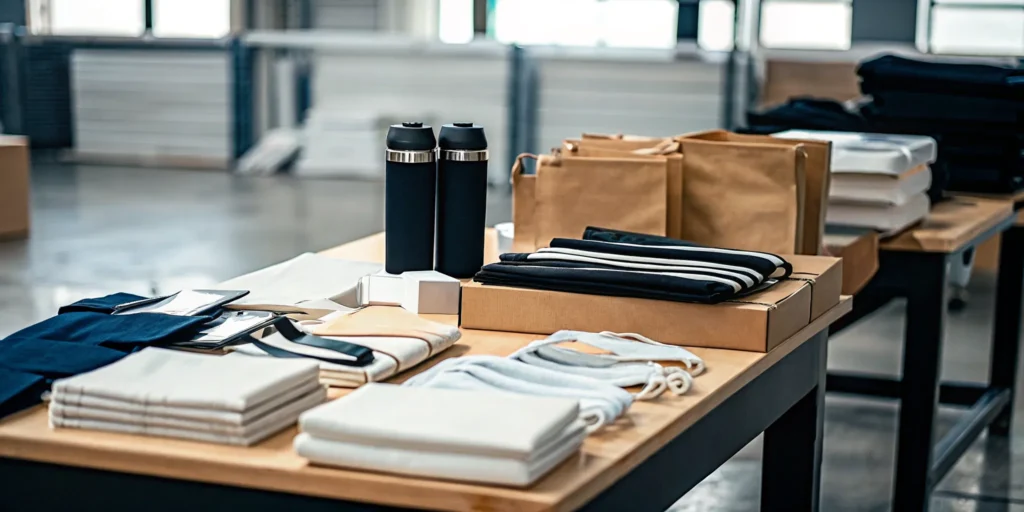
Merchandise waste starts long before an unwanted tote reaches the trash. It begins with oversized orders, short-lived apparel, and disconnected fulfillment decisions that leave teams storing products nobody needs.
Start a sustainable corporate merchandise program with Brand Vessel.
Sustainable corporate merchandise reduces waste by choosing durable, useful products and producing only the quantities people are likely to use. Strong programs combine quality apparel, reusable items, demand planning, kitting controls, and fulfillment data so branded merchandise stays valuable instead of becoming excess inventory.
The key question is not which item looks greenest in a catalog, but how every program decision prevents avoidable waste without losing brand impact. Sustainable corporate merchandise starts with program design, where goals, audiences, quantities, and distribution rules shape every product choice. This approach follows a proven waste principle: prevent waste at its source instead of managing it after creation, as the EPA explains. Here’s how.
Sustainable corporate merchandise starts with program design
A clear purpose before product choice
Waste reduction begins with the program brief, not with a catalog search. A useful brief defines why the merchandise exists, who should receive it, and what action or feeling it should support. That focus keeps teams from buying items only because they look sustainable. It also gives product, quantity, and delivery choices a shared purpose.
The same logic appears in the EPA’s guidance on preventing pollution at the source rather than managing it after creation. For merchandise, prevention means planning demand before placing an order. When the goal is clear, teams can remove items that add little value or duplicate something recipients already own.
Audience, cadence, and ordering controls
Start with real audience groups, not one broad recipient count. A new hire may need a practical welcome kit, while an event guest may need one useful item. Map each group to the events, campaigns, and milestones planned across the year. This calendar reveals repeat needs and helps prevent rushed, disconnected orders.
Ordering windows turn that calendar into a working plan. Set a forecast date, an approval deadline, a production window, and a final quantity check for each order. For global teams, include delivery timing and destination needs before choosing products. Brand Vessel’s merchandise program services connect these planning choices with company stores, kitting, fulfillment, and distribution.
Explore our full range of Branded Merchandise Services & Company Stores to see how these planning choices connect with company stores, kitting, fulfillment, and distribution.
Budget governance should make tradeoffs visible before anyone places an order. Assign an owner for each budget, and set limits for teams, events, or recipient groups. Use simple approval rules for new products, rush fees, and quantities above the forecast. A lower unit price is not a saving if extra units sit unused.
- Purpose and intended recipient
- Event cadence and expected demand
- Order window and approval owner
- Budget cap and quantity limits
- Storage, kitting, and delivery needs
.
.
.
.
.
Metrics that guide the next order
Success metrics should reflect the purpose set in the brief. Choose a few signals, such as claim rate, inventory left after an event, repeat use, or cost per recipient. Track order volume against actual distribution, not just the number of items purchased. Compare demand with the forecast so the next order starts with better evidence.
Review results after each campaign and at set points during the year. Keep a record of items that moved, stalled, or needed costly rush shipping. Examples of corporate merchandise work can also help teams set practical standards for future briefs. These reviews make sustainable corporate merchandise an ongoing program rather than a series of one-off giveaways.
A strategic merchandise partner can help connect the brief, budget, order windows, and results. Instead of reacting to each request, the partner can spot overlap and plan shared inventory across teams. Brand Vessel helps clients design these connected programs, then supports the logistics needed to carry them out.
Choose products people will actually keep
The most sustainable corporate merchandise is useful, well made, and suited to the people receiving it. A durable item can stay in use instead of becoming clutter after one event. Start with the recipient’s daily routine, then choose a product that fits the brand and that routine.
Quality before quantity
Fewer, better items often make a stronger program than a large mix of disposable giveaways. Check seams, zippers, lids, handles, print quality, and care needs before placing an order. Samples help teams judge how each item looks, feels, and works outside a product listing.
This quality-first approach also supports waste prevention. The EPA describes pollution prevention as stopping waste at its source through choices such as product and process changes. For merchandise teams, that principle starts with avoiding items that are unlikely to last or get used.
Materials matched to the use
Material labels matter, but they do not tell the whole story. rPET, organic cotton, recycled totes, reusable drinkware, and biodegradable options each suit different needs. Compare the material, expected lifespan, decoration method, care instructions, and end-of-use path before choosing.
- Use durable apparel for teams that will wear it often, with a fit and weight suited to their work.
- Choose recycled totes when recipients have a clear reason to carry them more than once.
- Select reusable drinkware with secure lids, easy cleaning, and a size that fits daily routines.
- Reserve biodegradable items for cases where their disposal needs are clear and realistic.
.
.
.
.
A broad custom merchandise catalog can help teams compare practical options before narrowing the list. Ask suppliers for clear material details and product samples. Avoid choosing an item only because its label sounds sustainable.
A clear brand and recipient fit
A useful product should also make sense for the company giving it. Choose colors, decoration, and packaging that feel consistent with the brand. Subtle decoration may make apparel and drinkware easier to use in more settings, which can support longer use.
Before approving a product, test it with a small group from the intended audience. Ask whether they would use it, how often, and what they would change. Brand Vessel’s customer-service-first team can help translate that feedback into practical choices before production begins. Reviewing past corporate merchandise work can also help teams see how product choices support different programs without relying on a generic swag list.
The final choice should pass a simple test: recipients need it, the item performs well, and the design fits the brand. If any part fails, keep looking. A lower item count with a clear purpose is better than excess merchandise with no lasting role.
How do demand planning and company stores reduce waste?
Demand planning and company stores reduce waste by replacing broad guesses with confirmed choices, real order windows, and measured reorder points. Teams buy closer to actual need, capture size and location data, and pause slow-moving items before they become excess stock.
Demand planning helps teams buy merchandise based on a clear use case, known audience, and expected need. It replaces large speculative orders with planned buying cycles and measured reorders. For sustainable corporate merchandise, this approach helps prevent extra items from becoming stale, outdated, or unwanted.
Demand signals before purchase
A useful forecast starts with real program data. Marketing teams can review event calendars, campaign plans, past order volume, and stock left after similar launches. HR teams can use hiring plans, employee locations, apparel size data, and participation rates from past programs.
- Match each item to a defined audience and planned distribution date.
- Set an order window so employees or event teams can confirm demand.
- Separate steady-use items from short-term campaign merchandise.
- Track stock by item, size, location, and program owner.
.
.
.
.
This process makes waste easier to spot and manage. The EPA guidance on business waste reduction notes the value of tracking waste amounts, costs, and benefits. Teams can apply that same discipline to leftover merchandise and future buying plans.
Ordering windows and inventory thresholds
Ordering windows create a set period for people to choose an item, size, or delivery location before production begins. The team then orders against confirmed demand, with a small buffer for new hires or late requests. This is often safer than guessing which products or apparel sizes people will want.
Inventory thresholds add control after the first order. A reorder point can reflect lead time, average use, and planned events. The program should also set a maximum stock level, so a popular item does not trigger an oversized purchase.
For example, an enterprise marketing team may reserve core items for regular field events. It can place campaign-specific orders only after regional teams confirm attendance. This keeps evergreen stock available while limiting dated merchandise tied to one message or launch.
Employee choice and reorder logic
A company store lets employees select merchandise they are more likely to use. It can offer approved options while controlling budgets, branding, and access by team or region. Choice also gives HR better demand data than sending the same item to every employee.
For a new-hire program, HR might offer a choice between apparel, a drinkware item, or a work accessory. The store records each selection and size before fulfillment. Future reorders can follow actual use instead of a fixed kit built on assumptions.
- Reorder core items when stock reaches a set minimum.
- Pause slow-moving items and review why demand changed.
- Retire dated products before placing another purchase order.
- Use store data to adjust the next buying window.
.
.
.
.
These controls work best when ordering, storage, stores, and fulfillment share one plan. Brand Vessel’s merchandise program services connect those parts, while its corporate merchandise work shows how programs can stay useful and on brand.
Start a company store and fulfillment plan with Brand Vessel.
Compare low-waste merchandise choices by use case
Match the item to the moment
Start by matching each item to a clear job, audience, and delivery plan. A useful item with a known recipient is less likely to sit in storage or become waste. This approach follows the EPA’s broader principle of preventing pollution at the source instead of managing it after creation.
Sustainable corporate merchandise should also fit the length and purpose of each campaign. An onboarding kit may support daily work for years, while a trade show item must earn limited suitcase space. The right choice balances expected use, product life, brand fit, and shipping needs.
Use-case comparison
The table pairs five common programs with practical product choices and controls. These are starting points, not fixed bundles. Teams can review the corporate merchandise work to see how different audiences and brand needs can shape a program.
. . . . . . . . . . . . . . . . . . . .
| Use case. | Lower-waste product choice. | Program control. | What to avoid. |
|---|---|---|---|
| Employee onboarding. | Durable backpack, bottle, or core apparel sized to the recipient. | Collect sizes and addresses before ordering. Replenish core items in small runs. | Large preset kits with items that do not support daily work. |
| Client gifts. | One useful, high-quality item selected for the client. | Confirm recipient details and preferences before fulfillment. | Generic bundles with filler products and excess packaging. |
| Trade shows. | Compact reusable item tied to the event message. | Set quantities from registration and past pickup data. Track remaining stock. | Unplanned bulk orders of low-use giveaways. |
| Recruiting. | Quality apparel or work-ready item for qualified candidates. | Use tiered distribution based on the recruiting stage. | Giving every visitor the same full kit. |
| Internal culture campaigns. | Optional apparel, reusable desk goods, or a choice-based reward. | Use preorders or a company store. Retire campaign stock on a set date. | Guessing sizes, colors, or demand across the company. |
Controls that reduce excess
Product selection is only one part of a lower-waste plan. Demand planning, choice-based ordering, and stock reviews keep purchasing close to actual need. A company store can also let recipients choose an item, size, or color before the order moves to fulfillment. Teams can also review Brand Vessel’s company store example to see how curated choices can support controlled ordering.
Kitting and shipping rules matter as well. Group items only when the bundle serves one clear purpose, and remove extra layers that do not protect the goods. Brand Vessel’s merchandise program services connect product planning with kitting, fulfillment, storage, and distribution.
Set a simple measure for each use case before launch. Track claimed items, remaining stock, reorder timing, and recipient feedback. Those signals help the next campaign buy fewer unused items while keeping the products people value.
Use kitting and fulfillment controls to prevent overproduction
Overproduction often starts when teams order for uncertain demand, then ship the same items through several vendors. Strong fulfillment controls change that pattern by tying each order to a clear use, audience, and delivery plan. The EPA’s pollution prevention guidance supports this source-first approach: stop waste before it exists instead of managing it later.
One inventory view
Centralized warehousing gives program owners one view of stock across campaigns, offices, and employee groups. That view helps teams use items already on hand before placing another order. It also shows slow-moving sizes or products early, while there is still time to adjust the plan.
Set a reorder point for each item, plus a maximum stock level based on its planned use. Review inventory before every event, onboarding push, or seasonal campaign. Brand Vessel’s merchandise program services bring company stores, storage, kitting, fulfillment, and distribution into one connected process.
- Track stock by item, size, color, location, and campaign.
- Release new orders only after checking available and reserved units.
- Flag aging stock for reuse in a suitable future kit.
- Retire weak items before they create a larger surplus.
.
.
.
.
Kits built to real demand
Kitting turns separate products into a planned set for a known recipient or group. Build kits after demand is confirmed, rather than assembling every possible version in advance. This keeps extra products available for other uses and limits leftover completed kits.
Use a standard kit as the base, then add role-specific or regional items only when needed. Batch similar orders together and choose packaging that fits the contents. These controls can reduce duplicate handling, avoid redundant shipments, and keep excess packing materials out of the process.
Past corporate merchandise work can also guide decisions about kit size, item mix, and practical decoration. The goal is not to repeat an old program. It is to learn which choices gave recipients useful products without creating avoidable stock.
Planned global distribution
Global programs need a delivery plan before production begins. Map recipient locations, delivery dates, customs needs, and local restrictions first. Then decide whether one batch shipment, regional stock, or direct delivery creates the clearest route with the least waste.
Customs brokerage should be part of that plan, not a late fix after kits are packed. Clear product details and destination data help teams choose suitable items before ordering. They also lower the risk of delayed goods becoming unusable after an event passes.
Review shipment results alongside inventory after each campaign. Compare what was ordered, packed, delivered, returned, and left in storage. Those findings sharpen the next forecast and make sustainable corporate merchandise a managed system, not a product label.
Build a repeatable sustainable swag strategy
A sustainable corporate merchandise program needs clear rules, reliable data, and one owner. Product choices matter, but purchasing and distribution controls often decide how much goes unused. The EPA describes source prevention as stopping pollution before it is created. Enterprise teams can apply that idea by ordering with care from the start.
Begin with a standard process that every department can follow. Shared rules make budgets easier to manage and keep one team from ordering items another team already holds. They also give leaders a clear record of demand, stock, and waste.
A six-step operating plan
Use the following cycle for every campaign, event, and ongoing employee program. It creates a shared process for marketing, HR, procurement, and operations.
- Audit spend and leftover inventory. Review past orders, unit costs, storage fees, and items still on shelves. Record which products moved quickly and which became surplus.
- Define each audience and use case. Separate employee onboarding, recruiting, client gifts, events, and recognition programs. Set a clear purpose and expected recipient count for each group.
- Choose durable, useful items. Favor products people can use often and keep for years. Check material details, decoration quality, care needs, packaging, and likely replacement rates before approval.
- Set firm order rules. Create minimum stock levels, reorder points, approval limits, and campaign end dates. Use small test orders when demand is unclear, then reorder from actual use data.
- Centralize storage and distribution. Keep inventory counts, fulfillment requests, and shipping records in one system. Combine kits where practical and release stock based on real requests, not broad guesses.
- Review performance and adjust. Track distribution, leftover units, repeat requests, damage, and cost per recipient. Use the findings to refine the next order and retire weak products.
.
.
.
.
.
Keep the first scorecard simple enough for teams to maintain. A basic record of ordered, shipped, damaged, and leftover units can reveal where plans miss actual demand. Add more measures only when they guide a clear decision.
Program ownership and review
Assign one program owner to maintain standards and approve exceptions. That owner should connect product selection with storage, kitting, fulfillment, and distribution. For teams moving from scattered orders to a managed program, Brand Vessel’s start-a-project page gives stakeholders a clear next step. A partner offering integrated merchandise program services can help teams keep those controls consistent across regions and departments.
Hold a short review after each major campaign and a broader review each quarter. Compare the plan with actual demand, then document what changed and why. Reviewing past corporate merchandise work can also help teams spot durable ideas that fit a specific audience and purpose.
This cycle makes sustainability part of routine operations instead of a one-time product search. It also gives enterprise teams a practical way to reduce surplus while protecting quality and brand standards.
What should enterprise teams measure?
Enterprise teams should measure ordered units, distributed units, leftover inventory, reorder rate, product satisfaction, shipment count, damaged goods, and cost per recipient. The goal is to connect buying decisions with actual use so each new order improves demand accuracy.
A sustainable corporate merchandise program needs a simple scorecard tied to actual use, waste, delivery, and campaign goals. Start with a baseline for each event, store, or campaign. Then review the same measures after each cycle so teams can spot patterns and adjust orders.
Demand and product performance
Utilization shows how much ordered merchandise reaches an intended recipient and gets used. Track leftover units by item, size, location, and campaign. A high leftover rate can point to weak demand estimates, poor product fit, or an ordering issue.
- Utilization rate: units distributed compared with units ordered
- Leftover inventory: unused units and their storage time
- Reorder rate: items requested again after the first order
- Product satisfaction: recipient feedback on usefulness, fit, and quality
.
.
.
.
Pair these measures rather than reading one alone. For example, a high reorder rate may show demand, while low satisfaction may reveal that the item needs revision. Product surveys and company store data can guide the next purchase through your merchandise program services.
Fulfillment and waste signals
Measure shipment consolidation by tracking orders, packages, and delivery points for each campaign. Also record return rates, defects, damaged items, and replacement orders. These figures show where product choice, decoration, packing, or delivery may be creating avoidable waste.
Keep a clear record of leftover and damaged goods, including what happened to each item. The EPA notes that waste amounts and related costs and benefits are useful for business waste reviews. This approach supports better decisions without making unsupported environmental claims.
Campaign and program outcomes
Connect merchandise data to the reason for the campaign. An employee kit may track claim rate, on-time arrival, and satisfaction. A client campaign may track qualified responses, event follow-up, or repeat engagement instead of relying only on units sent.
Review results by campaign, region, audience, and product type. Compare each cycle with its baseline, then document what to keep, change, or stop. This steady review helps teams buy with more care, reduce excess stock, and build a program around evidence.
Request a sustainable merchandise planning conversation.
Frequently Asked Questions
What is sustainable corporate merchandise?
Sustainable corporate merchandise includes branded products selected and managed to reduce waste across their useful life. A strong program considers durable materials, practical use, order quantities, packaging, and distribution. It also prevents waste before it occurs, an approach supported by the EPA. Reusable drinkware, quality apparel, and demand-based ordering are common examples.
How do you choose sustainable corporate merchandise for employees?
Start with items employees will use often, then compare durability, materials, decoration quality, and end-of-life options. Ask employees about sizes, preferences, and work habits before ordering. Choose versatile products such as reusable drinkware, durable bags, or quality apparel. Use a company store or limited ordering window to confirm demand and reduce unwanted inventory.
Where can you find sustainable corporate merchandise wholesale?
Look for a merchandise partner that can source products, verify material claims, decorate items, manage inventory, and coordinate distribution. Wholesale catalogs offer broad selection, but product choice is only one part of a sustainable program. Review minimum order quantities, samples, certifications, packaging, storage, kitting, and shipping plans before approving a bulk purchase.
What are the best sustainable corporate merchandise ideas?
The best options are useful, durable, and suited to the recipient. Examples include recycled stainless steel bottles, organic cotton apparel, reusable tote bags, repairable backpacks, and refillable notebooks. Select fewer, higher-quality items rather than filling kits with low-use extras. Demand planning and controlled fulfillment also help prevent excess stock, unnecessary packaging, and avoidable shipments.
Ready to Build a Sustainable Merchandise Program?
Delaying a coordinated merchandise plan can leave teams managing excess stock, scattered orders, and avoidable disposal costs across every campaign. Starting now gives your team time to set practical standards, forecast demand, and choose reusable products before the next order cycle. With clearer controls for quality, kitting, and fulfillment, each shipment can support your goals without creating unnecessary inventory.
Ready to build a sustainable merchandise program? Contact Brand Vessel about merchandise program services to start planning product selection, demand controls, kitting, and fulfillment around your needs. Bring your program priorities, upcoming order dates, and current waste concerns so the first conversation can focus on clear, practical next steps. Request a plan now so your team has time to prepare before the next campaign or merchandise order begins.