
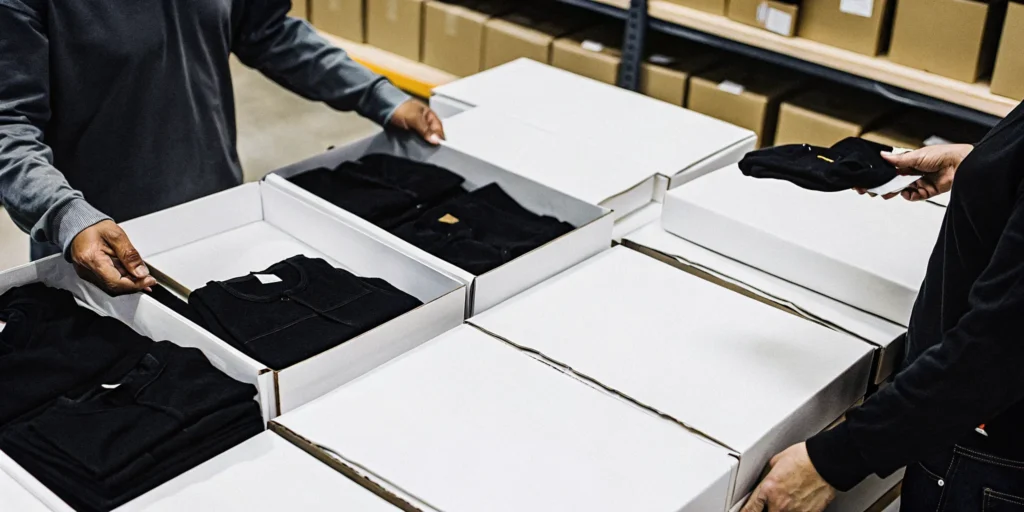
When a new hire, event attendee, or distributed team receives several branded items at once, the experience depends on more than the products themselves. Someone must coordinate components, packaging, inventory, and delivery so the right contents arrive together and ready to use.
Corporate kitting is the process of assembling multiple individual items into one cohesive package for distribution. In practice, what is corporate kitting depends on the program: it may combine branded apparel, office supplies, technology accessories, printed materials, or event essentials. A well-managed kit reduces separate shipments and packaging operations while giving recipients a consistent experience.
For enterprise teams, the operational model matters as much as the finished package. Components may need to be customized by department, region, role, or campaign, then tracked through storage, assembly, and fulfillment. Brand Vessel connects these requirements through Kitting and Fulfillment Services, helping teams manage merchandise programs with greater consistency. The definition is straightforward, but the value becomes clearer when the process is examined from an enterprise logistics perspective.
What Is Corporate Kitting?
Corporate kitting goes further than bundling by treating the products as a coordinated fulfillment unit. The components are sourced, selected, assembled, packaged, labeled, and prepared for a defined recipient, program, or distribution event. That distinction matters when a company is managing hundreds or thousands of shipments rather than placing a few items in the same sales carton. The U.S. Department of Health and Human Services describes kitting in the context of preparing configured ancillary supplies for distribution. Showing that the model is useful wherever separate components must arrive together and ready for use.
How is corporate kitting different from basic bundling?
Bundling generally describes the commercial decision to offer several products together. Corporate kitting goes further by treating those products as a coordinated fulfillment unit. The components are selected, assembled, packaged, labeled, and prepared for a defined recipient, program, or distribution event.
| Aspect | Basic Bundling | Corporate Kitting |
|---|---|---|
| Purpose | Combine products for a single sale or promotion | Create coordinated packages for defined audiences and programs |
| Customization | Standard contents for all recipients | Contents adapted by department, region, role, or campaign |
| Packaging | Common carton or polybag | Branded packaging, custom inserts, intentional presentation |
| Inventory tracking | One SKU for the bundle | Individual component tracking through assembly and fulfillment |
| Scale | Point-of-sale only | Hundreds or thousands of coordinated shipments |
For example, a basic bundle might place a notebook, pen, and water bottle in one box at the point of sale. A corporate kit may require approved artwork, size or role-based variations, inventory checks for every component, branded packaging, recipient data, and a fulfillment schedule. The kit is designed around the complete experience and the logistics required to deliver it consistently.
Why does kitting matter to enterprise logistics?
At enterprise scale, each additional component creates another inventory dependency and another opportunity for a packing or shipping error. A coordinated kitting program can reduce the number of individual shipments and packaging operations, improving efficiency while reducing packaging waste. It also gives procurement and operations teams a clearer way to plan what is sourced, stored, assembled, and distributed.
That operational view connects kitting to the broader logistics program. Brand Vessel can coordinate merchandise sourcing with storage, assembly, fulfillment, and distribution, rather than treating the kit as a one-time packaging task. Contents can be adapted for a department, region, campaign, or recipient group while maintaining a consistent program structure.
For organizations planning recurring employee, event, or customer programs, the right partner must manage both presentation and execution. Review Brand Vessel’s Kitting and Fulfillment Services to see how corporate kitting fits within an integrated merchandise and logistics operation.
How Does a Kitting and Fulfillment Process Work?
A reliable kitting program connects merchandise decisions to the operational details that determine whether every recipient receives the right package, in the right condition, at the right time. For enterprise teams, the process typically moves through six coordinated stages:
- Plan the kit and select products. Start with the recipient, use case, quantity, delivery schedule, and budget. A new-hire kit may require apparel, office supplies, technology accessories, and a welcome insert, while an event kit may need different contents and packaging. Brand Vessel can help align product selection with brand standards, audience needs, and regional requirements before purchasing begins.
- Source and receive components. Products, packaging, printed materials, and custom inserts are sourced according to the approved specifications. As components arrive, they should be inspected and recorded against the project plan. This stage is also where teams identify substitutions or supply risks early, rather than discovering them during assembly.
- Track inventory across the warehouse. Effective kitting depends on warehouse management that tracks the inventory level and location of each individual component. Accurate records help teams see what is available, what is committed to upcoming kits, and what needs replenishment. That visibility reduces avoidable shipping delays and protects fulfillment schedules as order volumes change.
- Assemble and pack each kit. The fulfillment team combines the approved components, follows the defined packing sequence, and applies the appropriate packaging and inserts. Consistent assembly matters when kits are distributed across offices, regions, or employee groups. It creates a repeatable recipient experience while allowing contents to vary by department, campaign, or location.
- Complete quality control and ship. Before dispatch, the team verifies quantities, branding, packaging condition, recipient information, and any special handling requirements. The completed kits can then move through the selected shipping and logistics plan, including regional or international distribution. Automation platforms that connect inventory management with distribution workflows help make large-scale programs more manageable as demand increases.
- Support post-delivery needs. Fulfillment does not end when the carrier collects the shipment. Teams may need delivery visibility, replacement components, inventory updates, or support for the next kit release. A coordinated partner can use the results of each distribution cycle to improve forecasts, refine packaging, and prepare future orders more efficiently.
For organizations managing recurring employee or customer programs, a Custom Company Stores solution can complement kitting by giving authorized users a controlled way to access approved merchandise. Talk with Brand Vessel about kitting services to build a fulfillment process around your products, recipients, and distribution requirements.
Types of Corporate Kits: Onboarding, Event, and Recognition
Corporate kits are most effective when their contents reflect a specific recipient, moment, and business objective. Brand Vessel helps organizations design and assemble kits that feel intentional rather than interchangeable, whether the audience is a new employee, an event attendee, or a valued client.
Onboarding and new hire kits
New hire kits are one of the most popular uses of corporate kitting. They give employees a consistent, brand-aligned welcome while reducing the coordination required across recruiting, HR, IT, and workplace teams. A well-planned kit can be tailored by role, office, region, or remote-work setup.
- Branded apparel such as shirts, jackets, or hats
- Tech accessories, including laptop sleeves, chargers, and headphones
- Office supplies such as notebooks, pens, desk organizers, and drinkware
- Welcome materials, custom inserts, and role-specific information
Brand Vessel can coordinate product sourcing, creative decoration, packaging, and fulfillment so each new employee receives a cohesive experience. For a broader look at quality and scale in enterprise merchandise programs, see Corporate Swag for Large Companies: Scale and Quality.
Event and conference kits
Event kits support trade shows, conferences, customer meetings, sales kickoffs, and internal gatherings. Instead of distributing disconnected promotional items, teams can package the materials attendees need in a format that is easy to transport. Hand out, or ship ahead of the event.
- Trade show materials, booth accessories, and branded signage components
- Conference swag such as apparel, bags, drinkware, and notebooks
- Printed collateral, product samples, and meeting supplies
- Post-event follow-up materials or gifts for priority prospects
Event kits can also be assembled for different audiences, such as speakers, sponsors, employees, or VIP customers. Brand Vessel’s experience with custom kits helps teams align presentation, quantity, and delivery timing with the event plan.
Recognition and gift kits
Recognition kits turn an award, milestone, client thank-you, or holiday gesture into a more considered brand experience. Because kitting can be customized for departments, regions, campaigns, and recipient groups, organizations can preserve consistency without forcing every audience into the same package.
- Employee awards, milestone gifts, and branded apparel
- Client gifts selected for relationship, industry, or occasion
- Holiday packages with food, lifestyle, or wellness items
- Personalized notes, custom inserts, and presentation packaging
Review examples of Brand Vessel’s merchandise and creative work on Our Work. The right kit is not defined by how many items it contains, but by how well each component supports the recipient and the moment.
Why Presentation Matters in Corporate Kitting
A kit can contain the right products and still feel disconnected from the brand if the recipient experience is treated as an afterthought. Packaging is the first physical touchpoint many employees, customers, or event attendees have with a program. Thoughtful presentation makes the contents easier to understand, reinforces the purpose of the kit, and communicates the level of care behind the organization sending it.
For enterprise programs, the unboxing experience should be intentional rather than extravagant. Brand Vessel uses custom packaging design to add a distinct “wow factor” while keeping the presentation aligned with each client’s identity and audience. That may mean a polished new-hire welcome, a cohesive event package, or a recognition kit that feels considered from the moment it arrives.
Packaging elements that shape the recipient experience
Small details can turn a collection of products into a cohesive brand moment. Depending on the kit’s purpose, presentation may include:
- Custom inserts that explain the contents, provide usage guidance, or welcome the recipient.
- Branded tissue and protective materials that create consistency without compromising product protection.
- Personal notes that add a human touch to onboarding, recognition, or customer engagement programs.
- Premium unboxing structure that organizes each item and gives the recipient a clear, deliberate sequence.
Presentation should reflect company values
Packaging choices also communicate operational priorities. Durable materials can support a quality-focused brand, while efficient, right-sized packaging can demonstrate more deliberate resource use. Clear organization can reflect a company that values accessibility and ease, especially when a kit contains apparel, technology accessories, documents, or multiple components.
Consistency matters when kits are distributed across offices, regions, or events. A professional assembly standard helps every recipient receive the same experience, even when fulfillment is managed at scale. Brand Vessel combines custom packaging design with kitting, storage, and logistics support so presentation quality remains connected to the broader merchandise program.
Talk with Brand Vessel about professional kitting and presentation design.
How to Get Started with Corporate Kitting
A successful corporate kitting program starts with an operating plan, not a box design. Before selecting products, align the program with the business moments it needs to support and the teams responsible for ordering, approving, distributing, and measuring results.
1. Define the purpose and audience
Begin by identifying where kits will create the most value. Common use cases include welcoming new employees, preparing materials for conferences and customer events, recognizing milestones, or equipping regional teams for a campaign. Document the audience, expected volume, timing, destinations, and any variations by department, region, or role.
- What should each recipient be able to do or feel after receiving the kit?
- Which items are essential, and which are optional upgrades?
- Will the same kit be distributed once, seasonally, or throughout the year?
This assessment also clarifies inventory requirements and prevents teams from ordering attractive items that do not support a defined business objective.
2. Choose an experienced program partner
Look for a provider that can manage more than assembly. A capable partner should coordinate sourcing, quality control, custom inserts, packaging, storage, order management, and distribution. For enterprise programs, integrated logistics and customs expertise can reduce handoffs when kits move across regions or countries.
Brand Vessel works as an extension of internal marketing and procurement teams, connecting merchandise selection with company stores, storage, kitting, and fulfillment. Review the About Brand Vessel page to understand the company’s partnership approach and capabilities.
3. Design the kit and its logistics together
Select components based on the recipient experience, durability, brand standards, and shipping requirements. Then design packaging, inserts, and presentation as part of the same system. Confirm component specifications, approved artwork, substitutions, assembly instructions, quality checks, and replenishment thresholds before production begins.
Finally, establish how orders will be submitted, who approves them, where inventory will be stored, and how delivery exceptions will be handled. A clear distribution process makes the program repeatable instead of dependent on manual coordination each time.
Explore Branded Merchandise Services & Company Stores to discuss a corporate kitting program with Brand Vessel.
Frequently Asked Questions
What is corporate kitting?
Corporate kitting is the process of assembling multiple individual items into one coordinated package for distribution. The contents can be selected for a specific audience, purpose, department, region, or campaign, so each recipient receives a complete and relevant set of materials.
How does corporate kitting work?
A kitting program starts with defining the contents, packaging, quantities, and delivery requirements. Components are received and tracked as inventory, assembled according to the approved specifications, quality checked, and shipped individually or in batches. Strong warehouse and fulfillment processes help prevent component shortages and shipping delays.
What items are typically included in a corporate kit?
Contents depend on the intended use. A new hire kit may include branded apparel, office supplies, onboarding materials, and technology accessories. Event kits might combine promotional products, credentials, collateral, and attendee essentials, while recognition kits can be tailored around an award, milestone, or company initiative.
How can corporate kitting improve employee onboarding?
A thoughtfully assembled onboarding kit gives new employees useful materials and branded essentials in one coordinated delivery. It creates a consistent first-day experience across locations and reduces the administrative work involved in sourcing, packing, and shipping each item separately. Kits can also be adapted to a role, department, or region.
What is the cost of corporate kitting services?
Cost depends on the items, quantities, packaging, assembly requirements, storage needs, shipping destinations, and level of customization. A reliable estimate should account for both product and operational costs. Sharing the kit specifications, expected order volume, delivery schedule, and distribution plan allows a fulfillment partner to scope the program accurately.
Ready to simplify your corporate kitting program?
A coordinated kitting partner can help your team bring merchandise, packaging, fulfillment, and logistics into one clearer program. Explore Brand Vessel’s Branded Merchandise Services & Company Stores to discuss an approach that fits your operational needs.