An onboarding box should do more than make day one look polished. At enterprise scale, the real test is whether every new hire gets a useful, brand-right welcome without creating more admin work for HR.
Ready to simplify employee onboarding kits? Explore Brand Vessel’s kitting, custom packaging, company store, and logistics services.
Employee onboarding kits are curated welcome packages that help new hires get oriented, equipped, and connected from day one. A strong kit combines a welcome note, quality apparel, a notebook, and lightweight drinkware with repeatable fulfillment for office, remote, and international employees. The goal isn’t random swag; it is a consistent touchpoint within a broader onboarding program. A meta-analysis of 83 field experiments found 1.46 times higher retention odds for newcomers in formal socialization programs. At scale, inventory planning, address capture, HRIS-connected workflows, and direct-to-employee shipping keep the experience personal without turning People Ops into a packing team.
Before ordering products, ask the question that keeps every choice focused: What are employee onboarding kits supposed to do? The answer sets the standard for what belongs in the box, how it should arrive, and which steps should be automated. Here’s how.
What are employee onboarding kits supposed to do?
Employee onboarding kits are planned packages that welcome new hires and help them start work with context. They can combine useful items, branded merchandise, and clear cues about how the company works. That makes the kit a practical touchpoint and a cultural one.
A useful first touchpoint
A kit should not be a grab bag of logo items. Its job is to make the first days feel considered, consistent, and easy to navigate. For remote and hybrid teams, the package also creates a shared welcome when colleagues start in different places.
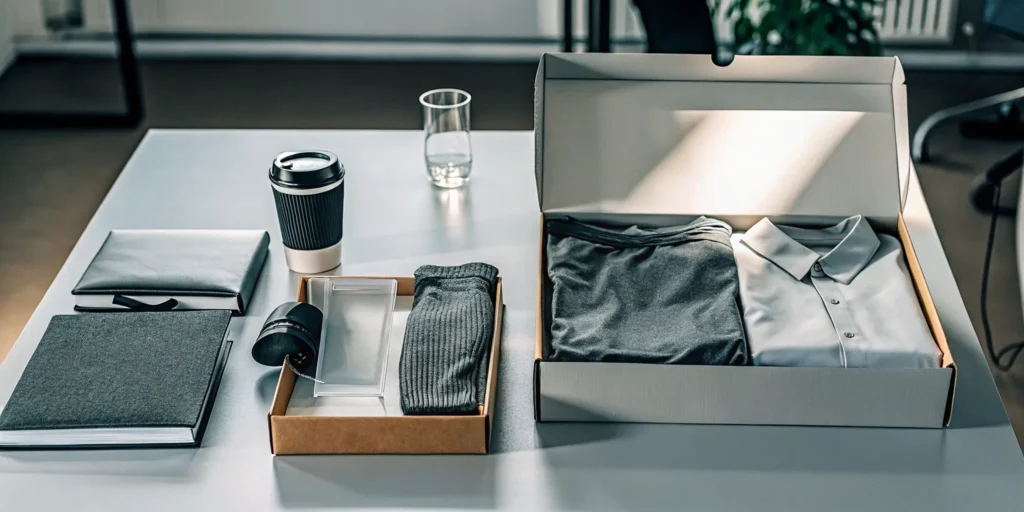
Useful contents depend on the role and shipping plan. A thoughtful mix might include a notebook, apparel, drinkware, or a short welcome note. For broader program planning, Brand Vessel’s client work shows how branded merchandise can support real campaign goals instead of one-off gifting. The point is not to add more products. It is to choose items that support the employee experience and reflect the brand with care.
A standard list is only a starting point. The best choices fit the work setting, the employee’s location, and the moments the team wants to mark. Each item should have a reason to be there.

A supporting role in retention
Formal onboarding is broader than a package, but the kit can reinforce the wider plan. A meta-analysis of 83 field experiments found higher retention odds for newcomers in socialization programs than for those in control groups. The researchers found stronger benefits when programs included task guidance, proactive behavior, and social integration.
That distinction matters. Employee onboarding kits cannot replace manager check-ins, role clarity, or team introductions. They can make those efforts feel connected by giving each hire a consistent starting point.
Early days can also bring stress and uncertainty. Research on formal onboarding practices describes their role in structuring early experiences and helping new professionals join a group. A well-planned kit supports that process without pretending to be the whole process.
Consistent welcome for distributed teams
Remote and hybrid onboarding adds a logistics question: how does the same welcome reach each hire? Teams should plan remote employee onboarding kits as a repeatable process, not an office handoff. That approach helps keep the experience consistent across locations.
Timing matters as much as the contents. Teams need a clear trigger for each shipment, a checked address, and a plan for items that travel well. A package that arrives late or feels generic can weaken the first impression.
A strong kit has a clear purpose. It gives the hire a useful first touchpoint while the broader onboarding plan builds role knowledge and team ties. When the process scales, HR teams can spend less time moving packages and more time supporting each new employee.
What should you include in employee onboarding kits?
The best employee onboarding kits feel useful from the first day. Start with a focused set of items, then adjust it for each role and shipping region. A well-planned kit can support onboarding without turning the box into a pile of random merch.
A practical core set
Begin with a short welcome note from a team leader. Keep the message warm and clear. Welcome the employee, explain why the items were chosen, and point to the next onboarding step. The note gives the box context while leaving room for managers to make the welcome personal.
Build the rest of the core kit around items employees can use at work or at home:
- One quality apparel item, such as a soft T-shirt, quarter-zip, or sweatshirt.
- A sturdy notebook with a simple branded pen.
- Lightweight drinkware, such as an insulated bottle or travel tumbler.
- A useful tech accessory, such as a charging cable, laptop sleeve, or webcam cover.
- A short culture guide with company values, team norms, and key resources.
Choose fewer items with a clear purpose. Consistent branding matters, but the logo should not take over every surface. If employees can use each piece in daily life, the kit is more likely to stay in view.
Role-specific additions
Add a small role-based layer after the core set. A field team may need a weather-ready garment. A remote hire may value a laptop stand or cable organizer. A customer-facing employee may need an event-ready polo or name badge.
Culture materials can help new hires understand how work gets done. Formal programs aim to structure early experiences and support socialization. That goal is described in an NIH-hosted review of onboarding practices. Keep printed guides brief, then point employees to current digital resources.
For distributed teams, a custom company store can also support remote employee onboarding kits. It gives People Ops teams a clear way to manage approved items without treating every shipment as a separate project.
Premium items and shipping choices
Premium add-ons work best when they mark a role, milestone, or executive welcome. Options can include a higher-end jacket, a durable backpack, or a desk accessory. Teams that need a wider merchandise strategy can also start a project with Brand Vessel before locking the final product mix. Make these items intentional rather than automatic, and keep the main kit useful across job types.
Plan for shipping before you approve the final mix. Heavy or fragile items, such as ceramic mugs, can add avoidable cost and risk for international orders. Favor light, durable pieces for global programs. Reserve bulky options for local delivery when they serve a clear purpose.
How do you tailor kits for distributed teams?
Distributed employee onboarding kits should follow one shared brand standard without treating every new hire the same. Start with a core kit. Then adjust the contents by role, region, team, season, work setting, and shipping destination.
One core kit with clear variations
Build a simple decision tree before choosing products. A remote engineer, a hybrid sales hire, and a field employee may need different items. Team size also matters because a large hiring class needs repeatable choices, not one-off exceptions.
Keep the welcome message, visual system, and packaging style consistent across each version. Then create approved variations for practical needs:
- Use region and season to guide apparel weight, sizing, and weather-ready items.
- Use role and team to add practical items that fit the employee’s day-to-day work.
- Use remote or hybrid status to decide whether office-specific items belong in the box.
- Use destination country to guide product weight, packaging, and shipping plans.
This structure helps HR teams avoid manual sorting as the company grows. A custom company store can support remote employee onboarding kits with clearer ordering and fulfillment rules.
Global shipping choices
For global shipments, review each destination before approving the final mix. Check customs details, restricted materials, product values, address formats, and local delivery needs. Keep product descriptions clear so the shipment paperwork matches the contents.
Weight deserves an early review. Heavy items, such as ceramic mugs, can raise global shipping costs. Lighter substitutes may be a better fit. Make these checks during product selection, not after boxes are packed.
Localization goes beyond freight. Confirm apparel sizing, language needs, climate, electrical standards for tech items, and cultural fit for each market. If an item cannot travel well, swap it while keeping the same purpose and brand feel.
A consistent unboxing experience
A distributed program still needs one recognizable welcome moment. Use the same box style, message hierarchy, and packing order across regions where possible. When a local swap is needed, choose an item with a similar use and perceived value.
The kit should support a wider onboarding plan, not stand alone as a gift. Research on socialization programs found stronger retention benefits when they support task behaviors, proactivity, and social integration.
Add a short insert that points the hire toward the next useful step. This might be a team channel, learning hub, or first-week checklist. Track each approved kit version in one fulfillment system.
That gives People Ops a clear view of inventory, destination rules, shipment status, and replacement needs. It also helps preserve a consistent welcome across the company.
A scalable fulfillment workflow for onboarding kits
The operating plan
Employee onboarding kits scale when the workflow is set before the first order. Define each handoff, approval owner, inventory rule, and shipping trigger before sourcing begins. This gives HR a repeatable process instead of a rush request for every new hire.
The kit should support a wider onboarding program, not act as a stand-alone gift. Formal onboarding practices help structure early experiences for new staff, according to a review of onboarding programs. That makes timing, accuracy, and presentation part of the employee experience.
From concept to delivery
Use one workflow across locations, while allowing planned changes for region, role, or work setting. The same system can support office hires and remote employee onboarding kits without sending boxes through an HR office.
- Plan the kit and budget. Set the audience, welcome goal, item mix, packaging, regions, forecast, and reorder point. Note any size choices, address rules, or regional limits before product research starts.
- Approve the design. Select items, confirm brand standards, and review proofs for each decorated product. Approve the custom packaging, insert cards, and pack layout at the same time.
- Source and decorate the merchandise. Place orders after approvals are final. Track production dates by item so a late product does not quietly delay every kit.
- Kit, inspect, and store inventory. Assemble each approved item in the set pack order. Check decoration, sizes, quantities, packaging, and inserts before finished kits move into storage.
- Collect addresses and release shipments. Use a secure intake process or a company store flow for new-hire details. Confirm start date, shipping address, region, and product choices before the order reaches fulfillment.
- Track delivery and replenish stock. Send tracking details, watch exceptions, and set a path for replacements. Review kit usage against the forecast, then reorder early enough to cover production and decoration lead times.
The company store connection
A company store can turn the workflow into a controlled program. It gives teams one place to manage kit options, address intake, inventory, order status, and approved brand assets. This reduces side requests and makes repeat orders easier to audit.
Set a regular inventory review by item, size, and region. Usage data can show which pieces move fastest and where stock needs differ. When a new hire starts, the approved kit is ready to go. Replenishment becomes routine rather than a last-minute scramble.
Brand Vessel’s comprehensive merchandise solutions connect sourcing, decoration, kitting, custom packaging, storage, and logistics. For a distributed team, the useful question is simple: can each hire receive the right kit without adding another manual handoff for HR?
In-house fulfillment vs. merchandise partner
The operational choice
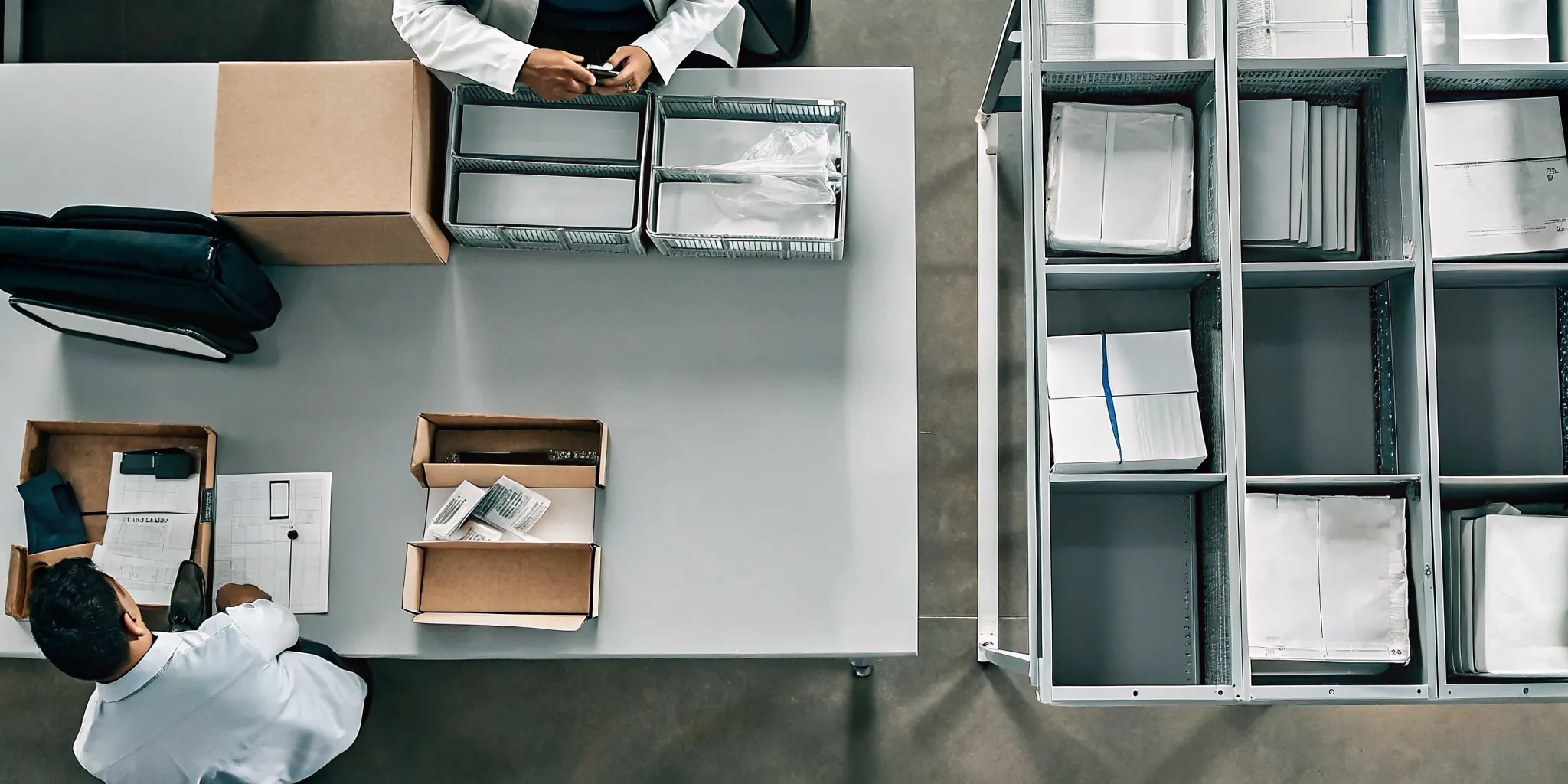
Employee onboarding kits can be packed in-house or managed through a merchandise partner. The right choice depends on hiring volume, employee locations, and the time your team can give to logistics. This is more than a shipping decision. Formal onboarding helps structure early experiences and support socialization, according to research on onboarding practices.
In-house fulfillment can work for a small team with local hires and simple kits. Yet every new location adds address checks, inventory questions, and delivery details. Brand Vessel’s brand-first approach is built around making merchandise feel intentional, not transactional. A partner becomes more useful when kits need to reach remote employees at a steady pace.
If your HR team is already managing one-off requests, storage, or reships, Brand Vessel can help turn that work into a repeatable program. See the service model.
| Criterion | In-house fulfillment | Merchandise partner |
|---|---|---|
| Admin time | Your team places, packs, and tracks each order. | The partner runs repeat workflows and tracking. |
| Quality control | Your team inspects each kit directly. | Approved packing rules guide each shipment. |
| Inventory | Your office stores items and counts stock. | Inventory is stored and monitored off-site. |
| Addresses | HR gathers and checks shipping details. | A set process can collect and manage addresses. |
| International shipping and customs | Your team handles carrier and customs details. | The partner manages shipping steps across regions. |
| Scale and employee experience | Personal service may get harder as volume grows. | A repeat process helps keep the experience consistent. |
Where in-house work fits
Internal packing gives your team a close view of each box. It may fit a limited hiring plan, one region, and a small set of items. Your team still needs a clear owner for stock counts, damaged items, address changes, and missed deliveries.
The cost is not just postage. People Ops may spend time chasing details instead of helping a new hire settle in. If hiring becomes more distributed, a custom company store for remote employee onboarding kits can create a cleaner handoff.
When a partner makes sense
A merchandise partner fits teams that need repeatable workflows across locations. The partner can store items, follow packing rules, and manage routine shipping steps. That approach gives your team one process for inventory, addresses, and delivery status.
International delivery deserves extra care because item weight and customs steps can affect the plan. A partner can help teams choose practical kit contents and set a clear shipping workflow. For broader support, review Brand Vessel’s comprehensive merchandise solutions.
How should you measure and improve your onboarding kits?
A clear kit scorecard
Start with a simple scorecard for employee onboarding kits. Track when each order enters fulfillment, when it ships, and whether it arrives before the employee starts. Pair those delivery records with address corrections, returned packages, reshipments, and support tickets. This shows where a smooth welcome becomes extra work for HR.
Separate results by office, country, and work model. Remote teams may have different shipping needs than employees near a central office. A custom company store can help HR manage remote employee onboarding kits without office-based sorting or redistribution.
Feedback and product use
Ask new hires for short feedback after delivery. Keep the questions practical: Did the kit arrive on time? Was anything missing or damaged? Which items did they use? Did the kit support a clear welcome? A short rating plus one open comment can reveal patterns without creating survey fatigue.
Review product use alongside comments. Reorders, size exchanges, unclaimed items, and frequent support requests help show what to keep, change, or remove. This matters because onboarding is more than a one-time welcome. Research describes formal onboarding as a way to structure early experiences and help socialization. The published review on formal onboarding gives useful context for that broader goal.
Budget and improvement cycles
Measure cost at the kit and program levels. Include product cost, packing, shipping, replacement orders, address corrections, and support time. Then compare those costs with delivery speed, feedback, and product use. A low item cost may not save money if it drives replacements or tickets.
- Fix address checks when failed deliveries rise.
- Adjust inventory when reorders or size exchanges repeat.
- Replace items that new hires rarely use.
- Review packaging when damage tickets cluster.
- Share recurring questions with your fulfillment partner.
Use a regular review cycle and assign an owner for each change. The goal is steady improvement, not a report that sits unused. Brand Vessel’s comprehensive merchandise solutions connect kitting, fulfillment, and company store support. That connection helps HR teams improve the full program.
Frequently Asked Questions
What is an example of an onboarding kit?
A practical employee onboarding kit can include a welcome note, branded T-shirt, tumbler, notebook, and a compact tech accessory. Choose items that support the employee’s first weeks and reflect the company culture. For remote hires, use packaging that ships safely and fits the destination. Avoid heavy items when international delivery costs matter.
What are the 5 C’s of employee onboarding?
The 5 C’s are commonly described as compliance, clarification, culture, connection, and check-in. Compliance covers required policies and forms. Clarification explains the role and expectations. Culture introduces company norms. Connection builds working relationships. Check-in creates regular follow-up points. An onboarding kit can support these steps, but it should not replace manager contact or role-specific guidance.
What is the 30 60 90 onboarding rule?
The 30 60 90 onboarding rule divides a new employee’s first three months into clear stages. The first 30 days focus on learning. Days 31 to 60 emphasize contribution and feedback. Days 61 to 90 build ownership and measurable goals. A kit can arrive before day one, while later touchpoints can support the broader plan.
How much do employee onboarding kits cost?
Employee onboarding kit costs depend on item quality, quantity, customization, packaging, and shipping destinations. According to Brand Vessel, enterprise kits with items such as a T-shirt, tumbler, and notebook typically cost a wide range depending on the product mix. International shipping can raise the total, especially when packages include heavy or fragile items.
How do you fulfill employee onboarding kits for remote teams?
For remote teams, connect the kit workflow to new-hire data, keep approved inventory in storage, and ship directly to each employee. HRIS-triggered distribution can reduce manual order entry as hiring volume grows. Use lighter items for international recipients and plan for customs requirements. According to Brand Vessel, automated kit distribution from HRIS platforms is essential for enterprise scale.
Ready to streamline employee onboarding kit fulfillment?
If your team needs employee onboarding kits that feel thoughtful and arrive on time, Brand Vessel can help connect the pieces. Our team supports custom merchandise, company stores, kitting, custom packaging, storage, and global logistics so People Ops can focus on the new-hire experience instead of managing boxes.
Talk to Brand Vessel about scalable onboarding kit fulfillment.