

A branded kit may look simple when it reaches an employee, customer, or event guest. Behind that box is a coordinated operation involving product sourcing, inventory, assembly, packaging, address management, shipping, customs, and reporting. Corporate kitting and fulfillment connects those moving parts so an enterprise can deliver a thoughtful experience without asking its internal team to become a warehouse.
For enterprise buyers, the objective is not merely to place products in boxes. It is to build a repeatable merchandise program that protects brand quality, controls inventory, and reliably reaches recipients. This guide explains the complete operating model, including global distribution and customs considerations, so procurement, marketing, HR, and operations teams can make better decisions together.
What does corporate kitting and fulfillment include?
Corporate kitting combines several individual items into one ready-to-ship package. Fulfillment stores those items, receives orders, picks inventory, ships packages, manages exceptions, and reports results. Together, these services turn separate branded products into a controlled merchandise program that can support one campaign or recurring demand.
The work begins well before assembly. Teams must define the audience, select useful products, confirm artwork, approve samples, estimate quantities, and choose packaging. Those decisions affect warehouse space, assembly time, shipping cost, customs documentation, and the final recipient experience. A capable partner connects creative merchandise planning with logistics rather than treating them as unrelated purchases.
Core operational components
- Merchandise sourcing: Selecting products, decoration methods, quantities, and packaging that fit the audience and program goal.
- Receiving and storage: Inspecting inbound goods, recording inventory, and storing components until they are needed.
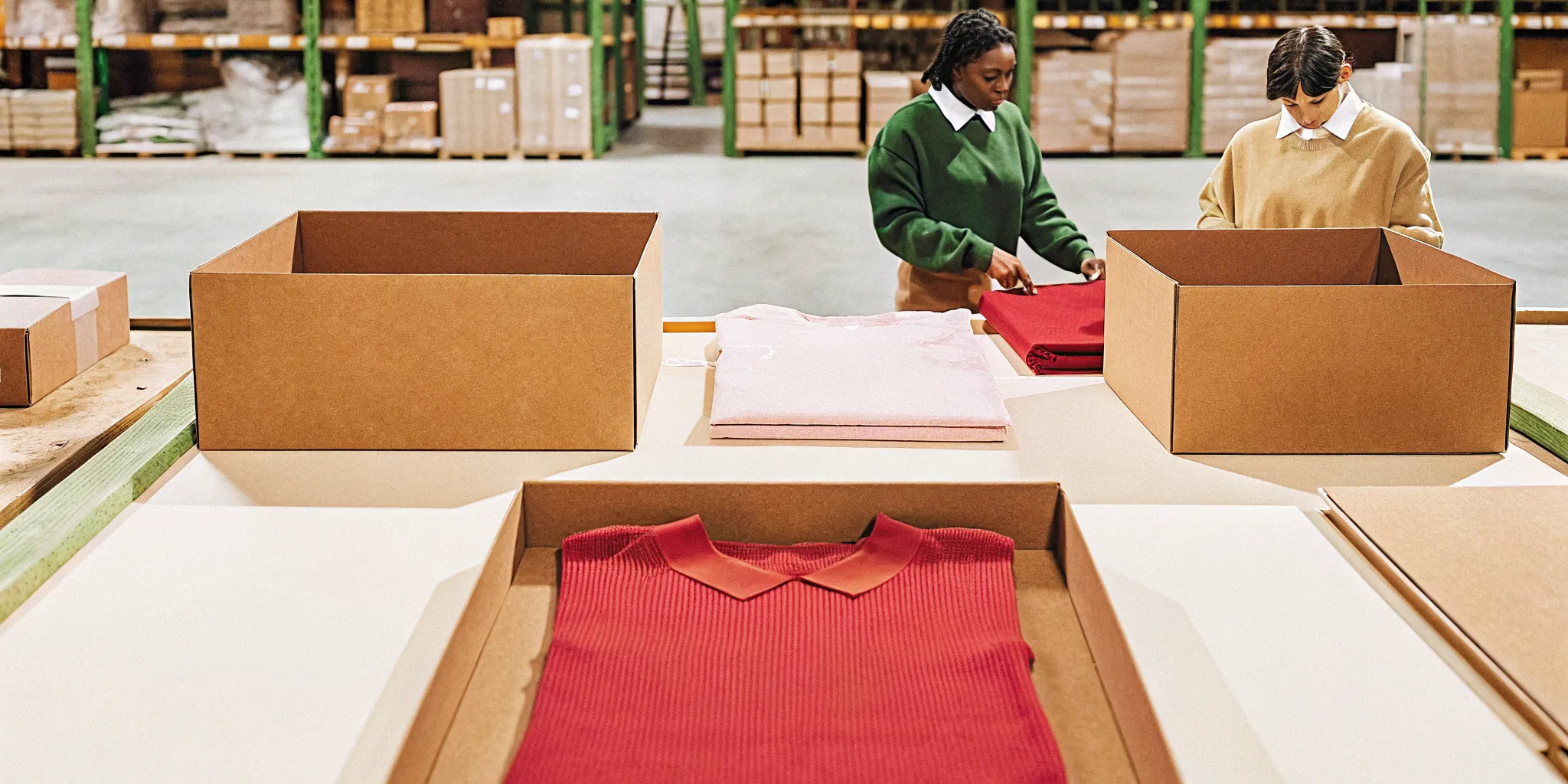
- Assembly and quality control: Picking the correct components, arranging them consistently, adding inserts, and checking completed kits.
- Order management: Capturing addresses and requests through a company store, approved file, integration, or managed campaign.
- Shipping and reporting: Choosing service levels, producing labels, tracking deliveries, resolving exceptions, and reconciling inventory.
This integrated approach is especially useful when a program has several audiences, product variants, or recurring campaigns. Brand Vessel connects branded merchandise, creative decorating, company stores, storage, kitting, fulfillment, in-house shipping, global distribution, and customs brokerage through one merchandise partnership. Explore the full range of Brand Vessel services to see how those capabilities work together.
How does an end-to-end kitting workflow operate?
A reliable kitting workflow is designed backward from the required delivery date and recipient experience. Every stage needs an owner, approval point, quality standard, and contingency plan. The best workflow exposes dependencies early, before one delayed component or incomplete address file can disrupt the entire program.
- Define the program. Clarify the audience, purpose, budget, quantity, destination mix, delivery window, and desired unboxing experience.
- Select and approve merchandise. Choose products that support the goal, confirm decoration, review samples when appropriate, and finalize quantities.
- Plan packaging and assembly. Determine box dimensions, product arrangement, inserts, personalization, and quality-control rules.
- Receive and count inventory. Inspect incoming items, document shortages or damage, and confirm that every component is ready.
- Assemble and inspect kits. Follow documented work instructions so each recipient gets the correct products and presentation.
- Release orders and ship. Validate addresses, select shipping services, create labels, and send tracking details.
- Measure and reconcile. Monitor delivery exceptions, inventory levels, returns, and outcomes before the next campaign.
Planning should include decision deadlines, not only a final ship date. If a kit contains five components, one late item can prevent the entire batch from being assembled. The operating plan should identify which items are essential, which substitutions are acceptable, and who has authority to approve a change.
Quality control also needs to be specific. “Check every kit” is not a complete instruction. A useful standard identifies required components, sizes or variants, placement, insert orientation, packaging condition, and the action to take when something is wrong. This converts brand expectations into a repeatable warehouse process.
Where do corporate kits create the most value?
Corporate kits create the most value when a business needs to deliver a coordinated physical experience to many people at a meaningful moment. Strong programs start with a defined audience and outcome, then select merchandise, packaging, and distribution methods that support that purpose.
Employee onboarding and recognition
Onboarding kits help distributed employees feel welcomed before or during their first week. They may combine apparel, practical desk items, printed information, and culture-focused pieces. The strongest programs connect the kit with a broader onboarding process instead of treating it as a one-time gift. See more ideas in Brand Vessel’s guide to employee onboarding kits.
Recognition programs can use a similar model while allowing managers or employees to trigger shipments throughout the year. A controlled catalog and clear eligibility rules help preserve budget while giving the recipient a relevant choice. Inventory visibility matters because a recognition moment loses impact when an item is unavailable or arrives weeks late.
Events and sales enablement
Event kits can support speakers, attendees, virtual participants, or field teams. Pre-event shipping reduces the material staff must carry and gives remote guests a tangible connection to the program. For in-person events, kits can be sent in bulk to a venue or individually to attendees, depending on timing and the experience the team wants to create.
Sales kits can support product launches, account-based marketing, or customer appreciation when the contents and message are relevant to the recipient. Brand Vessel’s article on branded event kits for trade shows offers additional planning context for event teams.
Corporate gifts and customer programs
Premium gift sets can create a memorable presentation by combining useful products, careful packaging, and a clear message. The operational challenge is maintaining quality across every shipment, particularly when gifts are sent internationally or on demand. Browse Brand Vessel’s selected merchandise work for examples of how distinctive products and presentation can reinforce a campaign.
How should an enterprise design the operating model?
An enterprise merchandise operating model defines who can order, which inventory is available, where it is stored, how orders are approved, and how performance is measured. The right model reduces manual work without removing the controls procurement, finance, HR, and brand teams need.
Begin by separating predictable demand from campaign demand. Predictable demand includes recurring onboarding, recognition, replacements, or approved store orders. Campaign demand includes events, launches, seasonal gifting, or one-time initiatives. Recurring programs benefit from replenishment rules and automated ordering. Campaigns need detailed schedules, firm approvals, and a closeout plan for remaining inventory.
Choose an ordering path that fits the use case
A managed address file may work for a one-time shipment with a known audience. A feature-rich company store is often better for recurring programs because approved users can place orders within a structured experience. Stores can support curated products, user permissions, budget controls, and reporting while reducing back-and-forth email. Compare the approaches in company swag store versus one-time order.
Program governance should also be explicit. Identify the person responsible for brand approval, the budget owner, the operations contact, and the escalation path. Decide how new products enter the catalog, how obsolete products leave it, and who approves exceptions. These decisions prevent a merchandise program from becoming a collection of disconnected requests.
Connect creative and operational decisions
Creative choices have operational consequences. A premium rigid box can elevate presentation but may increase storage and shipping requirements. Multiple apparel sizes can improve relevance but create more inventory positions. Personalization can make a kit feel special but adds data and production controls. Teams should evaluate every creative option against its impact on cost, lead time, accuracy, and recipient value.
How do global merch logistics and customs work?
Global merchandise logistics requires country-specific planning for documentation, product restrictions, taxes, duties, carrier options, and delivery expectations. A kit that moves easily within one country may need different documentation or product substitutions elsewhere. Accurate data and early destination review reduce avoidable delays.
Global planning starts with a destination list and a complete description of every item. Product values, countries of origin, materials, intended use, and tariff classifications help customs authorities understand a shipment. Vague descriptions can create review delays. Businesses must also decide who is responsible for duties and taxes so recipients are not surprised by a payment request.
Why customs brokerage matters
Customs brokerage supports the clearance process by helping prepare documentation, classify goods, and coordinate with authorities and carriers. It does not remove the need for accurate product information, but it creates a more informed response when a shipment requires review. Brand Vessel combines global distribution with expert customs brokerage, providing a connected path from merchandise planning to international delivery.
A global program may benefit from different approaches by region. Shipping every kit from one warehouse offers presentation consistency and centralized control. Regional inventory may reduce transit time or landed cost for sustained volume. A hybrid approach can reserve centralized shipping for premium or complex kits while using regional fulfillment for repeatable products.
Build a destination matrix before production
A destination matrix turns a broad international goal into an actionable plan. For each country, record expected volume, product restrictions, documentation requirements, service options, estimated transit windows, and responsibility for duties. Review product materials and power or battery components before buying inventory. If a product creates a problem in a specific market, choose an approved substitution before assembly begins.
How can inventory management prevent merchandise waste?
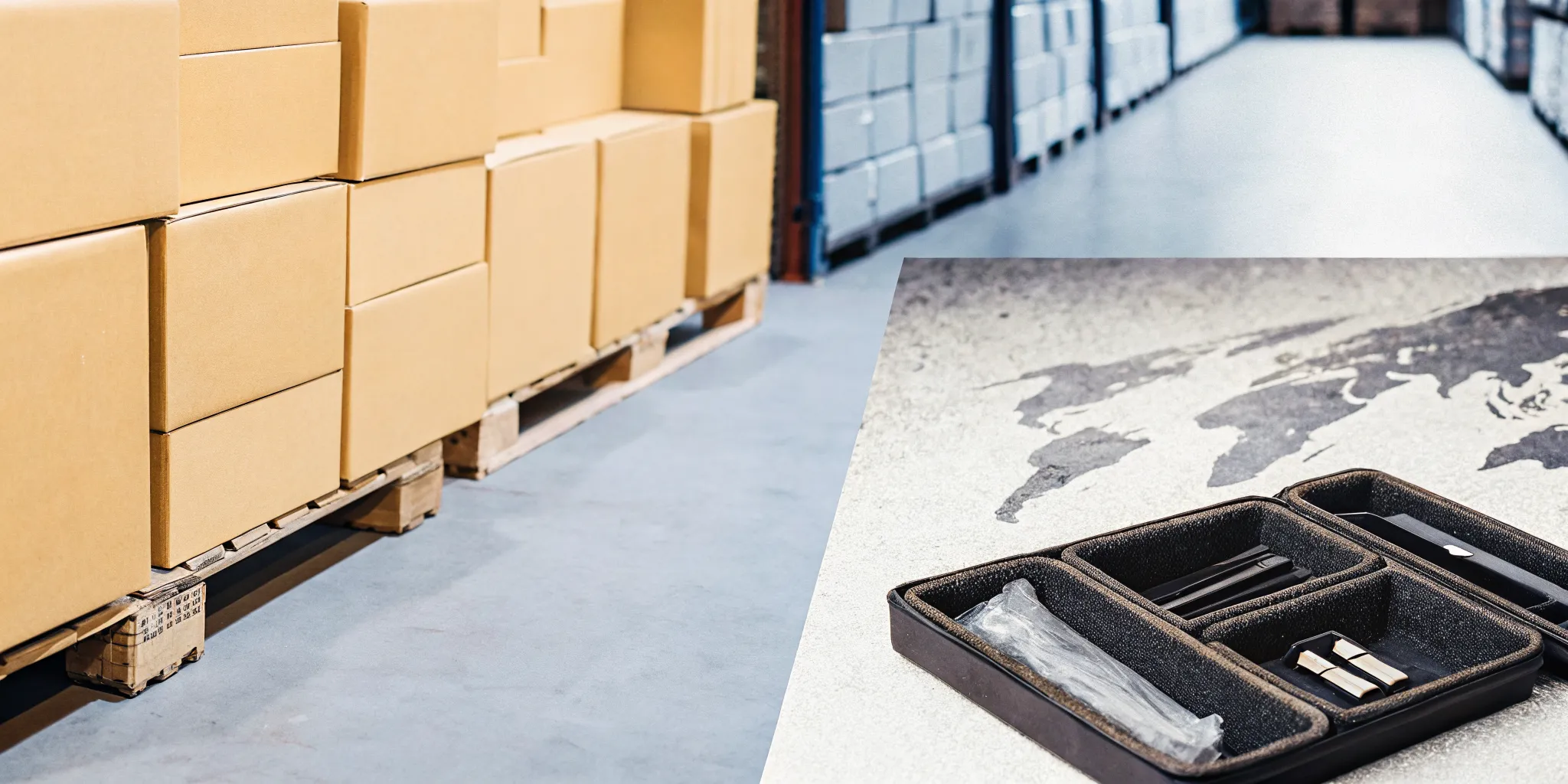
Inventory management prevents waste by balancing product availability with actual demand. Too little stock causes missed moments and rushed reorders. Too much stock ties up budget, occupies warehouse space, and can become obsolete after a brand change, campaign close, or employee-size shift.
Good inventory management begins with visibility. Program owners should understand what is available, what is reserved for active orders, what is moving, and what has remained untouched. Reorder points should account for product production time, decoration time, usage rate, and planned campaigns rather than relying on a single minimum quantity.
Practical controls for healthier inventory
- Assign a clear owner and intended audience for every item.
- Set reorder points based on demand, replenishment time, and upcoming campaigns.
- Review slow-moving and aging inventory on a regular schedule.
- Use approved substitutions or alternate products when continuity matters.
- Define how returns, damaged goods, and obsolete products will be handled.
- Reconcile physical counts with system records and investigate differences.
A feature-rich custom company store can support controlled ordering by giving approved users a structured way to request merchandise. When stores, inventory, and fulfillment work together, program owners gain better visibility while recipients get a simpler experience.
Inventory reviews should lead to decisions. If one apparel size repeatedly runs out, adjust the buying mix. If a product has not moved, stop replenishment and identify a responsible closeout path. If recurring orders spike around predictable dates, build those events into the forecast. Read Brand Vessel’s guide to corporate merchandise program management for a broader view of program controls.
How should buyers compare fulfillment partner models?
Buyers should compare partners by the complete operating model, not by merchandise unit price alone. The right partner must fit both the creative and logistical demands of the program. Enterprise teams should evaluate ownership, systems, quality controls, reporting, global support, and exception management.
| Partner model | Typical strength | Potential gap | Question to ask |
|---|---|---|---|
| Promotional products vendor | Product sourcing and decoration | Storage, recurring fulfillment, or reporting may be separate | Can you store, assemble, and fulfill recurring orders? |
| General 3PL | Warehouse operations and shipping | May lack creative decorating and brand-experience expertise | How do you handle custom packaging, decoration, and brand standards? |
| Integrated merchandise partner | Connects merchandise, stores, kitting, and logistics | Fit depends on service depth and communication model | How will one team manage the program from sourcing through reporting? |
Evaluation questions for enterprise buyers
- What receiving, assembly, quality-control, and inventory procedures are documented?
- How are custom work instructions created, approved, and updated?
- What reporting is available for inventory, orders, shipment status, and exceptions?
- Can the partner support company stores, campaign uploads, and recurring order workflows?
- How are international shipping, customs documentation, and duties managed?
- What service levels apply during normal operations and high-volume periods?
- Who owns communication when a component, address, or shipment creates an exception?
Ask potential partners to explain a realistic workflow for your program rather than only listing capabilities. Their answer should reveal how teams communicate, where approvals occur, and how issues are escalated. Review a partner’s demonstrated work, operating process, and fit with your team. Brand Vessel positions its agile team as an extension of the customer, with merchandise expertise and logistics depth connected through one relationship. Learn more about Brand Vessel.
What determines kitting costs and lead times?
Kitting cost and lead time are determined by the full program design: product quantities. Decoration methods, packaging, assembly complexity, storage duration, order volume, destinations, carrier service, duties, and taxes. Comparing only merchandise unit prices can hide meaningful operational costs and risk.
Assembly becomes more complex when kits include personalization, multiple variants, fragile items, or exact presentation requirements. Packaging dimensions matter because larger boxes can increase shipping expense even when they are light. International destinations add documentation, brokerage, taxes, and longer transit windows.
Ways to improve cost control
- Finalize destinations and address collection methods early.
- Choose packaging that protects products without unnecessary empty space.
- Limit variants unless they meaningfully improve the recipient experience.
- Use realistic order forecasts and review actual usage after each campaign.
- Build time for approvals, production, receiving, assembly, and exceptions.
- Evaluate total landed cost instead of comparing only merchandise prices.
Lead times should be built from the longest dependency. Merchandise production may happen in parallel, but assembly cannot begin until all required components are available. A practical schedule includes contingency time and clear decisions about what happens if one item is delayed.
A planning framework for realistic timelines
Start with the in-hands date, then work backward through carrier transit, assembly, receiving, product production, sampling, artwork approval, and product selection. Add time for address validation and international documentation where needed. Do not assume every stage can overlap. Physical samples must often be approved before full production, and final assembly instructions depend on approved products and packaging.
The safest cost conversation uses scenarios. Compare a standard kit with a premium presentation option, or centralized fulfillment with a regional model. This shows decision-makers where spending changes the recipient experience and where it only adds complexity. Brand Vessel works on a custom-quote basis for core B2B services, allowing the operating model to reflect each program’s actual requirements.
Which KPIs make a merchandise logistics program scalable?
The most useful merchandise logistics KPIs measure delivery reliability, order accuracy, inventory health, total cost, and recipient experience. Metrics should help teams decide what to change, not merely fill a dashboard. Review them by campaign, destination, and product to uncover problems hidden by overall averages.
Operational metrics
- Order accuracy: Whether recipients received the intended products, quantities, and personalization.
- On-time shipment and delivery: Whether orders met the promised service level.
- Inventory accuracy: Whether system quantities match physical stock.
- Exception rate: The share of orders affected by address, carrier, customs, or product issues.
- Inventory aging: How long products remain in storage without movement.
- Cost per completed shipment: A total that can include assembly, packaging, and outbound logistics.
Experience and business metrics
Operational success is necessary, but it is not the only outcome. Employee programs may track activation, store participation, or feedback. Event programs may track attendance, meeting engagement, or follow-up. Customer gift programs may evaluate responses or relationship milestones. The right measurement connects the physical package with the program’s purpose.
Review exceptions as a source of improvement. An international route with repeated delays may need a different carrier or product mix. A product with frequent damage may need new packaging. A high return rate may indicate weak address validation. Regular reviews turn fulfillment data into better merchandise, planning, and recipient experiences.
How can teams govern a multi-stakeholder merchandise program?
A scalable merchandise program needs clear decision rights, shared operating rules, and a regular review cadence. Procurement, marketing, HR, finance, and operations may all use the same inventory for different goals. Governance keeps those goals aligned while giving each team a practical way to request, approve, and measure corporate kitting and fulfillment work.
The first step is to name one program owner who is accountable for the complete experience. That person does not need to make every decision. Instead, the owner maintains the operating model, brings the right stakeholders into approvals, and resolves conflicts between speed, cost, brand standards, and recipient needs. Without a clear owner, small exceptions can quietly become inconsistent policies.
Define decision rights before requests arrive
Write down who approves products, artwork, packaging, quantities, budget, destinations, and delivery dates. Separate routine decisions from exceptions. A replenishment order for an approved item can follow a fast path, while a new product, custom package, or international destination may require additional review. This distinction prevents every request from becoming a custom project.
A useful governance document also explains what requesters must provide. Required information may include the program goal, recipient group, quantity, destination mix, in-hands date, budget owner, data source, and measurement plan. Complete briefs help a merchandise partner recommend an appropriate path and expose risks early. Brand Vessel’s integrated merchandise and logistics services can support both the creative and operational sides of this process.
Create service levels by program type
Not every shipment needs the same workflow. An executive gift, new-hire kit, event shipment, and routine company-store order carry different risks. Define service levels by use case so teams understand the approvals, lead-time expectations, quality controls, and reporting each program requires.
- Recurring programs: Use approved catalogs, replenishment rules, standard packaging, and scheduled inventory reviews.
- Campaign programs: Use a defined project plan, firm approval dates, assembly instructions, and a closeout decision for leftover stock.
- High-touch programs: Add sample reviews, personalization controls, premium presentation standards, and a named exception owner.
- International programs: Add a destination matrix, customs documentation review, product restriction checks, and a clear duties policy.
Service levels make tradeoffs visible. If a stakeholder requests a shorter timeline, the team can identify which approval, customization, or delivery option must change. This is more productive than promising an unrealistic date and reacting to exceptions later.
Use a quarterly business review to improve the system
A useful review combines operational data with stakeholder feedback. Examine inventory accuracy, order accuracy, aging stock, delivery exceptions, total program cost, recipient feedback, and demand by use case. Then convert the findings into decisions with owners and deadlines. A dashboard without action does not improve the program.
For example, repeated last-minute event orders may signal that planning should begin earlier or that a small pool of approved event products should remain available. Slow-moving apparel may indicate the buying mix does not match demand. Frequent international exceptions may justify a revised destination matrix or alternate products for certain markets. These are operating-model decisions, not isolated warehouse problems.
Governance should remain lightweight enough that teams will use it. The objective is not to add approvals for their own sake. It is to protect the brand, reduce avoidable costs, and make the reliable path the easiest path. A connected custom company store, clear rules, and an experienced fulfillment partner can turn those policies into a practical daily workflow.
Frequently asked questions
What is the difference between kitting and fulfillment?
Kitting assembles several items into one prepared package. Fulfillment stores inventory, receives orders, picks products, ships packages, manages exceptions, and reports results. Corporate programs often need both services working together so the kit is assembled accurately and delivered through a controlled process.
Can corporate kits be shipped internationally?
Yes. International shipments require careful planning for product descriptions, values, origins, classifications, documentation, duties, taxes, carrier options, and destination restrictions. An experienced global logistics and customs brokerage partner can help coordinate the process and identify issues before products are assembled.
How should a business choose items for a corporate kit?
Start with the audience and purpose. Choose useful, brand-appropriate products that fit the delivery method, packaging, budget, and destination rules. Confirm availability, decoration, and samples before finalizing the program. Brand Vessel’s branded merchandise company checklist can help buyers evaluate merchandise partners and program fit.
How can companies avoid excess merchandise inventory?
Use realistic forecasts, establish reorder points, review aging stock, track usage by program, and plan how obsolete or returned merchandise will be handled. Connected ordering and fulfillment data improves visibility and enables earlier decisions before stock becomes waste.
When should a company use a store instead of a campaign file?
A managed campaign file can work for a one-time shipment with a known audience. A company store is usually better for recurring or decentralized demand because it gives approved users a structured ordering path and can support catalog. Permission, budget, inventory, and reporting controls.
Prepare a partner brief that produces better answers
A useful partner brief states the program goal, audience, expected volume, destination countries, and delivery window. It also covers product preferences, packaging expectations, personalization needs, and the ordering workflow.
Identify the people who will approve products, costs, artwork, and final assembly instructions.
Share uncertainties as well as requirements. If recipient counts, destination mix, or event dates may change, a partner can build decision points into the schedule. Include examples of the desired recipient experience and explain which details are essential. Early transparency makes it easier to protect the brand experience while controlling cost and risk.
Build a corporate kitting and fulfillment program that scales
A scalable corporate kitting and fulfillment program combines product creativity with logistics discipline. The strongest model connects merchandise, decoration, company-store controls, storage, assembly, inventory, shipping, customs, and reporting so every decision supports a consistent recipient experience.
Brand Vessel helps businesses manage that complete merchandise journey. Its services include high-quality custom apparel, creative decorating, feature-rich company stores, storage, kitting, fulfillment, global distribution, in-house shipping, and expert customs brokerage. That connected approach gives enterprise teams one partner for both the experience people see and the operations behind it.
Start your corporate kitting and fulfillment project with Brand Vessel.