
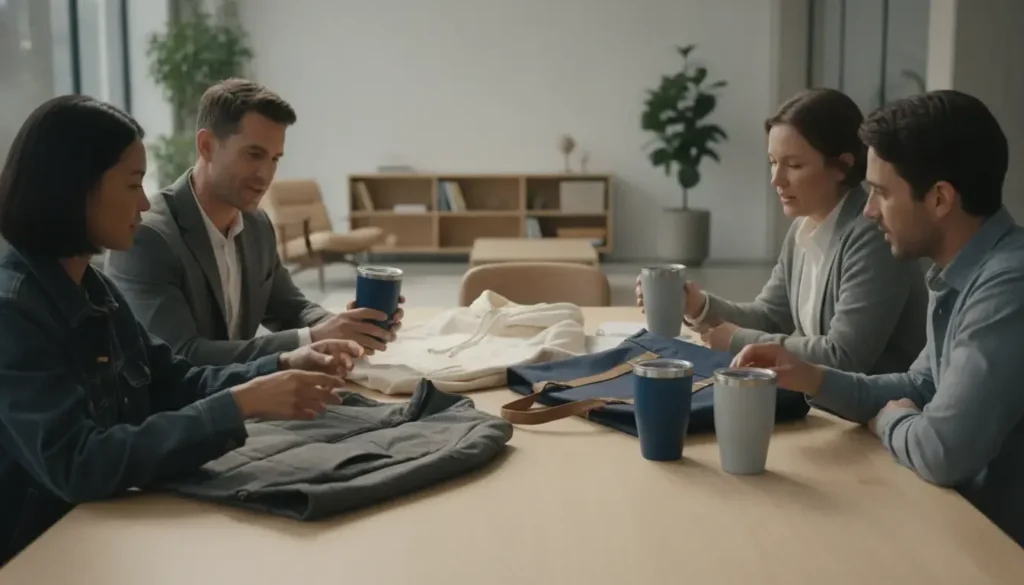
Corporate merchandise quality vs price is not a choice between wasteful luxury and the lowest bid. For enterprise buyers, the better question is whether an item will be used, represent the brand well, and move through sourcing, storage, and fulfillment without creating avoidable work. Brand Vessel’s Custom Apparel for Business Teams Will Actually Wear framework starts with that use case. Premium pays off when quality is matched to the audience, use case, and operating model.
Talk with Brand Vessel about a merchandise program built for your team.
What is the problem with cheap corporate merchandise?
Cheap corporate merchandise often reduces the visible unit cost while increasing the hidden cost of poor fit, weak decoration, low usefulness, replacements, and unused inventory. When recipients do not keep or wear an item, the program loses the brand exposure and employee goodwill it was meant to create.
A low bid can be reasonable for a one-time giveaway with a short event life. It is less persuasive when the merchandise is intended for employees, customers, recruiting, executive gifts, or a company store. In those settings, the item is part of the brand experience. A flimsy garment, uncomfortable fit, peeling decoration, or disposable accessory can communicate a level of care that the company did not intend.
Before comparing quotes, separate the decision into three questions:
- Will the recipient use the item often enough to justify producing it?
- Will the material and construction hold up through normal use and washing?
- Can the vendor decorate, store, pack, and deliver it consistently?
- What happens when sizes, regions, or product variations change?
- Can the program support reorders without creating a new quality problem?
That last question matters for enterprise programs. Quality is not only a product attribute. It is also the consistency of the process around the product.
Where should you invest more in a corporate merch program?
The strongest quality investment follows the moment when merchandise carries the most brand meaning. Spend more attention on the products people will wear or use repeatedly, the decoration they will see up close, and the logistics that determine whether the right item arrives in good condition. Do not upgrade every item automatically; prioritize the highest-impact touchpoints.
Start with the audience and the setting. An onboarding kit, field uniform, executive gift, conference giveaway, and customer appreciation package have different quality thresholds. Employees may value comfort and repeat wear, while a client-facing piece may need a more polished silhouette and restrained decoration. A useful item with a durable finish can outperform a larger assortment that feels generic.
For apparel, the garment and decoration must be chosen together. Brand Vessel’s Custom Apparel for Business Teams Will Actually Wear approach connects fabric, fit, decoration, and use case instead of treating the logo as an afterthought. Embroidery, screen printing, patches, specialty washes, and other methods each create a different visual and tactile result.
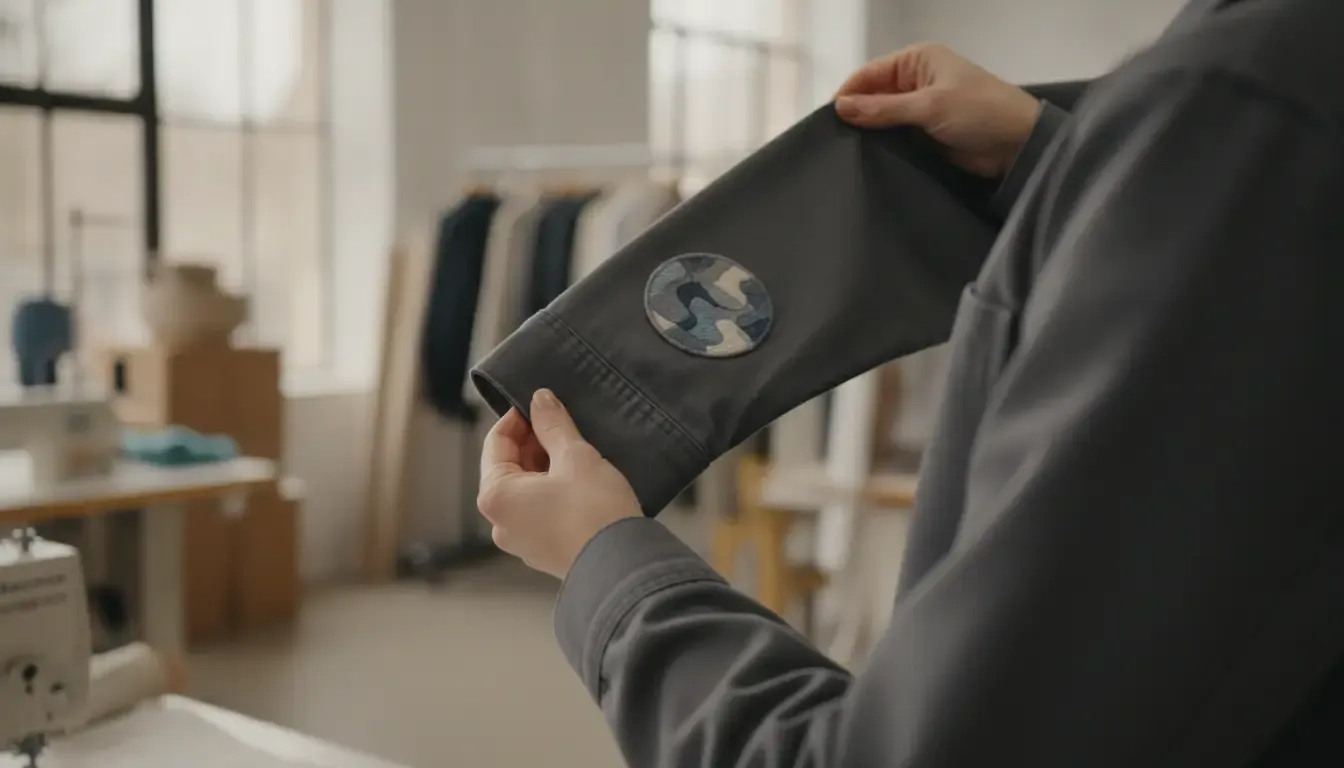
Also invest in the handoffs around the item. A product that looks excellent in a sample can still create a poor program if inventory is not organized, orders are packed inconsistently, or international deliveries require a separate scramble. Brand Vessel combines branded merchandise with company stores, storage, shipping, customs brokerage, kitting, and fulfillment through its Branded Merchandise Services & Company Stores.
How should you weigh corporate merchandise quality vs price?
Premium merchandise creates a better return when it increases useful wear, perceived value, program consistency, or operational efficiency enough to offset its higher initial cost. The right comparison is not price per unit alone. It is the total cost of producing, distributing, replacing, and managing an item that people will actually use.
Use a simple total-value model for each proposal:
| Decision factor | Budget-only question | Quality-led question |
|---|---|---|
| Usefulness | What is the lowest unit cost? | Will the recipient use it repeatedly? |
| Durability | Will it survive initial distribution? | Will construction and decoration hold up in normal use? |
| Brand experience | Is the logo present? | Does the finished item feel consistent with the brand? |
| Operations | Can the supplier ship this order? | Can the partner manage storage, variations, reorders, and fulfillment? |
| Measurement | How many units were purchased? | What useful action, repeat use, or program outcome can be observed? |
The model does not require a made-up impression count or a guaranteed revenue claim. Track what the program can actually show: redemption or order activity, repeat orders, return reasons, employee or recipient feedback, damaged units, unused inventory, and the time required from internal teams.
For example, a smaller, better-curated collection may reduce the number of products that sit untouched. A company store may make ordering easier and reduce manual requests. A partner that manages storage and fulfillment may also reduce the number of internal handoffs. Those are measurable program outcomes even when the marketing effect is difficult to isolate.
Build a quality benchmark for your next branded merchandise program with Brand Vessel.
How should you set quality benchmarks for vendor proposals?
A quality benchmark turns a subjective preference into a repeatable procurement decision. Define the intended use, require comparable samples, inspect decoration and construction, document fulfillment requirements, and score every proposal against the same criteria. This helps finance compare like with like instead of choosing a low number with missing scope.
Give vendors a short but specific scorecard. Ask for the assumptions behind each quote, including product specification, decoration method, packaging, delivery model, and reorder conditions. The PPAI Product Quality Basics resource also emphasizes defined quality processes, qualified suppliers, and inspection before non-conforming products reach customers.
- Product specification: What fabric, material, weight, finish, construction, and size range are included?
- Decoration: Which method, placement, thread or ink standard, color treatment, and approval process apply?
- Sample approval: Can the buyer inspect a pre-production sample before the full run?
- Quality control: How are defects, shade variation, misprints, and damaged goods identified?
- Program consistency: How will the supplier preserve specifications across reorders and locations?
- Fulfillment: Who stores, picks, packs, ships, tracks, and handles exceptions?
- Reporting: What information will the buyer receive about inventory, orders, returns, and reorders?
Ask vendors to identify what is not included. A proposal that appears cheaper because it excludes warehousing, individual fulfillment, customs support, or quality inspection is not directly comparable to a managed program. The goal is not to force every vendor into the same model. It is to make the trade-offs visible.
How can you make the case for quality to your finance team?
Finance teams respond best to a quality case that connects product decisions to controllable costs and business outcomes. Present the proposed use case, the total program cost, the risk of failure, the measurement plan, and the reason the selected quality level is appropriate. Premium should be a documented choice, not a vague claim.
- Start with the job to be done. Explain whether the merchandise supports onboarding, recruiting, events, customer relationships, uniforms, recognition, or a company store.
- Show total program scope. Include product, decoration, packaging, storage, fulfillment, shipping, returns, and the internal time needed to manage the work.
- Separate must-haves from upgrades. A durable decoration may be essential for a uniform, while a premium material may be reserved for a smaller executive or recruiting collection.
- Define success before ordering. Choose observable measures such as order activity, repeat use, reduction in replacement requests, employee feedback, or fewer fulfillment exceptions.
This approach makes room for disciplined trade-offs. It may lead to fewer products, a narrower color range, staged ordering, or different quality levels for different audiences. It can also show when the lowest-cost option is appropriate. The decision becomes easier to defend because the quality standard follows the use case.
Brand Vessel can support that broader operating conversation. Its What Is Corporate Kitting? Guide for Enterprise Teams explains how product selection, assembly, packaging, and distribution work together. For programs with ongoing stock needs, the Corporate Merch Inventory Management: Returns Guide covers the operational side of keeping merchandise useful after the initial order.
What should buyers ask before approving a corporate merchandise program?
Before approval, buyers should be able to explain who will use the merchandise, what quality level that use requires, how the supplier will prove consistency, and how the program will be measured after delivery. These questions keep a corporate merchandise quality vs price decision grounded in business purpose rather than a single quote.
Is premium corporate merchandise worth the higher upfront cost?
It can be when recipients will use the item repeatedly, the decoration must last, or the program includes costly distribution and replacement risks. Premium is not automatically better. Compare the total program value and choose the quality level that fits the audience and use case.
How do you compare quality when vendors quote different prices?
Normalize the proposals by product specification, decoration, sample approval, packaging, storage, delivery, returns, and reorder terms. Ask each vendor to state exclusions. A comparable scope lets procurement evaluate the actual trade-off instead of mistaking an incomplete quote for a better value.
What are high-quality corporate swag options?
Useful options include well-constructed apparel, durable bags, drinkware selected for regular use, thoughtful onboarding kits, and client or employee gifts that fit the recipient and setting. The best choice depends on comfort, usefulness, decoration, brand standards, and how the program will be fulfilled.
How can finance evaluate the return on a premium merch program?
Track the measures the program can influence, such as order activity, repeat use, replacements, returns, unused inventory, fulfillment exceptions, and internal management time. Compare those outcomes with the full program scope, not only the item price on the original proposal.
Quality-led merchandise is not about buying the most expensive option. It is about buying the right product, decoration, and service model for the moment when your brand meets a person. Brand Vessel helps enterprise teams connect those decisions across creative production, company stores, storage, fulfillment, and global distribution.