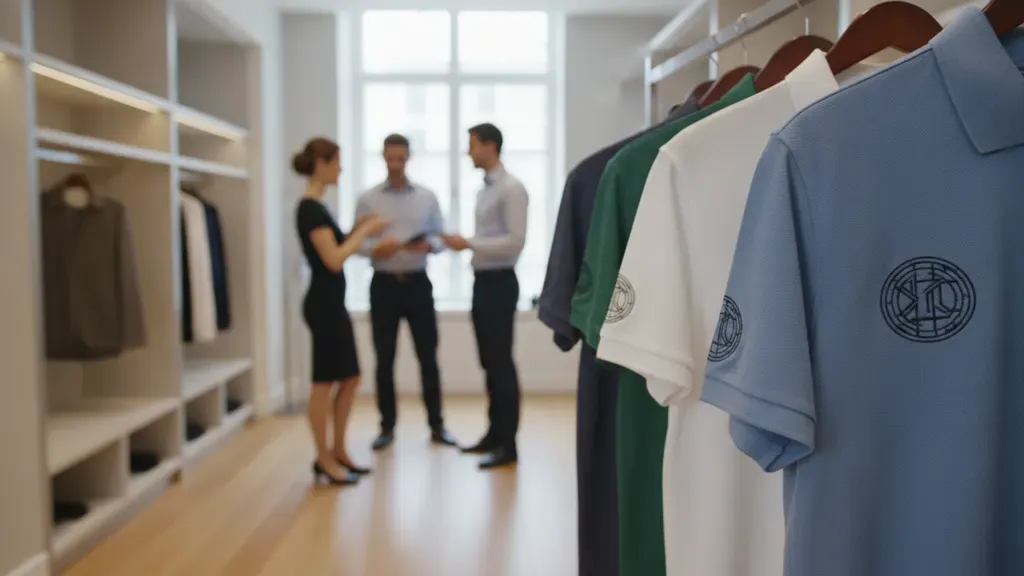
A polo program can look straightforward until a company needs consistent decoration, inclusive sizing, repeatable reorders, and delivery across teams or locations. Buyers should align the product, logo treatment, ordering workflow, and fulfillment model before selecting a blank garment.
Start a project with Brand Vessel to plan custom embroidered polos around your team, brand standards, and fulfillment needs.
For custom embroidered polos corporate programs, success depends on matching the polo style and logo placement to how employees will use the apparel. Support that choice with samples, controlled reorders, and a practical bulk or company-store workflow.
Embroidery is one part of a broader merchandise decision, not a standalone decoration choice. Brand Vessel helps enterprise teams evaluate the product alongside custom apparel, stores, inventory, and logistics.
For a closer look at decoration considerations, see Custom Embroidery Corporate Apparel: Brand Guide for Teams. The first decision is how a standardized polo program should serve different teams without losing consistency.
How Custom Embroidered Polos Corporate Teams Can Standardize
Corporate teams use embroidered polos to create a consistent visual standard without losing sight of everyday wearability. The strongest programs connect product selection, decoration quality, and repeat ordering.
That gives brand leaders a practical way to equip employees across locations while keeping apparel aligned with established brand expectations.
A polo can serve as a shared uniform for customer-facing teams, a recognizable layer for events, or part of an employee apparel program. The point is not to make every employee dress identically. It is to establish a dependable option that looks intentional when teams gather, represent the company, or participate in a brand-led experience.
That distinction matters for the enterprise audience Brand Vessel serves. Large corporations and established brands often manage apparel across departments, offices, and programs. A consistent polo specification gives those teams a clearer reference point than choosing a different garment or decoration approach for every request.
What a standardized polo program should control
- The approved polo style and overall visual direction
- The placement and treatment of the corporate mark
- The quality expectations for individual stitching
- The range of approved sizes and fit options
- The process for reviewing samples before broader use
- The documentation needed for consistent reorders
- The owner responsible for maintaining brand standards
Wearability should remain part of the standard, not an afterthought. Brand Vessel describes its custom apparel around products people will actually want to wear, with attention to quality and individual stitching. That quality-led approach helps a polo program support the brand rather than turn apparel into a disposable giveaway.
Brand leaders also need consistency over time. A successful program should make it easier to identify the approved garment, reproduce the intended decoration, and evaluate future requests against the same standard. For a broader view of selecting apparel people will use, see Premium Corporate Apparel: Wardrobe Your Team Will Wear.
Brand Vessel can help teams frame embroidered polos as part of a repeatable corporate apparel system, with the product and decoration decisions documented before the program expands.
How Do You Choose Polo Styles and Blanks for Corporate Use?
Choose a corporate polo by matching the garment to its working environment, audience, brand standards, and ordering model. Compare fabric, fit, construction, decoration suitability, size coverage, and sample results before approving a blank. The right choice should look consistent across teams while remaining practical to reorder as the program grows.
Start with the use case rather than the logo. A customer-facing sales team may need a polished, easy-care style, while field staff may prioritize workwear characteristics. A golf or event program may call for a different silhouette than an everyday uniform. Catalogs commonly separate polos into performance, easy-care, basic, long-sleeve, cotton-blend, workwear, fashion, golf, and pocket categories. These are useful comparison groupings, not a recommendation that every program needs every style.
Fit planning also matters for distributed teams. Review ladies, unisex, tall, and youth options where relevant to the workforce, then check whether the selected styles have a coherent visual relationship. A broad size assortment is only useful when the cuts are intentional and employees can understand which option to choose.
Use product features as questions, not promises
Competitor catalog descriptions can help buyers build a review checklist, but they should be treated as product-specific examples rather than Brand Vessel promises. For example, one Nike Dri-FIT listing describes moisture-management technology, a self-fabric collar, and a three-button placket. A Carhartt Force listing highlights quick-drying, snag-resistant fabric, while a TravisMathew listing describes wrinkle resistance, four-way stretch, and quick-drying technology. Confirm any feature on the exact garment under consideration instead of generalizing it across a category.
- Fabric and environment: Will the material suit office, event, field, travel, or mixed use?
- Fit and size assortment: Do the available cuts and sizes serve the actual workforce?
- Decoration quality: Does the fabric and construction support a clean embroidered result?
- Logo suitability: Will the mark remain legible at the planned placement and scale?
- Sample approval: Can stakeholders review the blank and decorated sample before rollout?
- Reorder consistency: Can the organization maintain a dependable visual standard over time?
For a deeper procurement lens on fabric, fit, decoration, and reorders, see Premium Corporate Apparel: Wardrobe Your Team Will Wear. Brand Vessel can then help align the selected blank and decoration approach with the broader merchandise program, without forcing one polo style onto every team or use case.
Where Should a Corporate Polo Logo Be Embroidered?
For most corporate polos, the left chest is the practical starting point because it keeps the mark visible without overwhelming the garment. The best placement still depends on the logo’s proportions, the polo’s construction, the wearer, and whether the decoration must work across several sizes, colors, or employee groups.
Before approving artwork, evaluate these five placement decisions:
- Left chest: A conventional location for a company mark, department identifier, or concise wordmark.
- Right chest: Useful when the left side is reserved for a partner, event, or secondary brand element.
- Sleeve: Appropriate for a smaller campaign mark, division name, or secondary identity that should remain understated.
- Back yoke: A visible option for larger team or event branding, provided the artwork remains comfortable and proportional.
- Placement approval: Confirm the location, finished dimensions, thread colors, garment color, and size grading on a physical sample before production.
Embroidery is not a matter of dropping a digital logo onto a shirt. The artwork must be digitized, meaning the image is converted into a format an embroidery machine can read. That conversion affects stitch direction, density, fine detail, and how the mark will appear on a textured or lightweight polo. Brand Vessel provides embroidery alongside screen printing, custom patches, specialty washes, custom labels, and other decorating methods. Its documented work includes corporate designs and embroidered patches. The decoration plan can therefore be matched to the broader apparel program rather than treated as an isolated production step.
Numeric specifications should be treated as starting points, not universal Brand Vessel policy. For example, one competitor’s published guidance recommends no more than six colors for an embroidered logo and recommends embroidered text at least one-quarter inch tall. Those recommendations may be useful during artwork review, but the right decision depends on the actual logo, garment, thread selection, and intended viewing distance. Ask for a sew-out or sample when fine lettering, gradients, small icons, or multiple color changes could affect legibility.
When the design may work better as a surface print or a hybrid treatment, compare the tradeoffs in Screen Printing vs Embroidery Business Apparel Guide before finalizing the polo specification.
What Should Bulk Polo Sourcing Include?
Bulk polo sourcing should connect garment selection, decoration, approvals, inventory, and distribution into one accountable program. Start by defining the business use case, then validate samples and reorders before committing. Buyers should also request program-specific pricing, minimums, and lead times, since those details vary by selected garment and fulfillment model.
For enterprise teams, the goal is more than placing a large order. Procurement and strategic sourcing leaders often need vendor consolidation, quality control, spending visibility, and a scalable process that can support recurring apparel needs. Use this sequence to evaluate the program before approving production:
- Define the use case and demand pattern. Document whether the polos support a sales team, employee onboarding, events, uniforms, recognition, or another program. Estimate who will wear them, where they are located, and whether the need is a one-time bulk order or a recurring reorder.
- Set the product and brand requirements. Confirm the preferred fabric, fit, color range, size assortment, logo placement, and decoration method. Check that the selected polo reflects brand standards and is appropriate for the environments where employees or event participants will wear it.
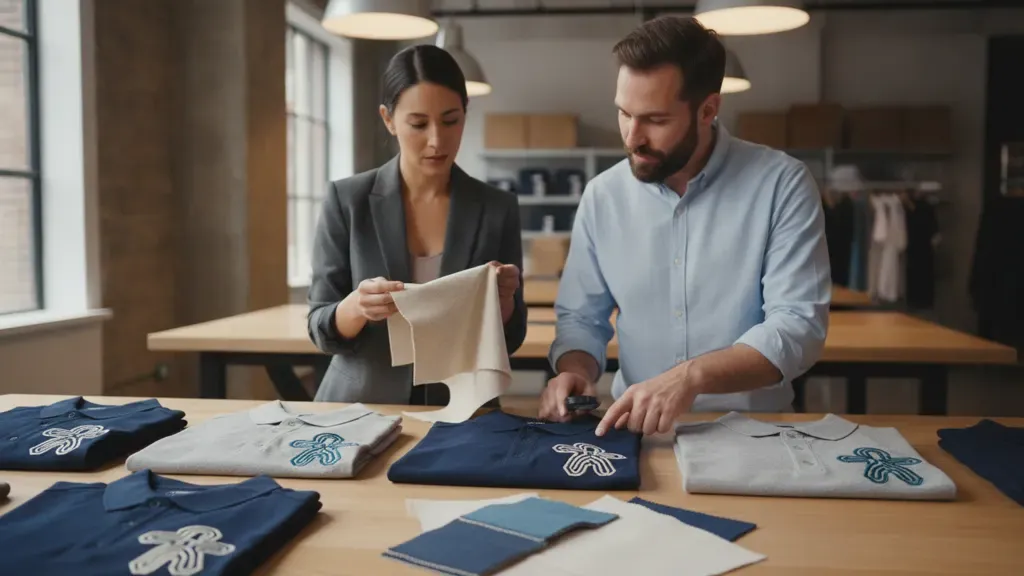
- Review decoration quality and approve a sample. Examine stitch quality, logo suitability, placement, and the finished appearance on the actual garment. A sample approval gives marketing, procurement, and other stakeholders a shared reference before a larger run begins.
- Request the commercial and operational terms. The selected program should provide its current pricing, minimum order quantities, production lead times, reorder rules, and any setup or fulfillment details in writing. The Brand Vessel knowledge base does not verify prices, MOQs, or lead times for embroidered polos. Buyers should request those details for the specific program rather than relying on invented figures.
- Plan inventory and reorders. Decide where approved inventory will be held, how size and color availability will be monitored, and who can authorize replenishment. Reorder consistency matters when employees join at different times or teams need apparel across multiple locations.
- Map distribution before launch. Confirm whether the order will ship centrally, go directly to employees, or use both approaches. Brand Vessel documents support for bulk and individual shipments, storage, inventory management, in-house shipping, and worldwide distribution. These capabilities can help align the order with the actual workforce and event structure.
- Choose the right operating model. A centralized bulk order may fit a team rollout or event, while a self-service company store can support distributed employees ordering approved products individually. Brand Vessel combines custom merchandise, company stores, storage and logistics, and kitting and fulfillment under one provider. Review its Branded Merchandise Services & Company Stores – Brand Vessel to compare the broader program against your sourcing requirements.
This process gives stakeholders a documented decision path and makes gaps visible before production. It also creates a practical foundation for a polo program that can be reviewed, replenished, and distributed as the organization changes.
How Can a Company Store Support Polo Ordering?
A company store gives distributed teams a consistent way to order approved polos without sending every request through procurement. Employees can select from the authorized assortment, submit orders through defined approval workflows, and receive items at home or another approved location. Meanwhile, program owners retain visibility into inventory, budgets, reporting, and replenishment across the organization.
That model is particularly useful when custom embroidered polos corporate programs need to serve different audiences at the same time. A field team may need a coordinated bulk shipment for an event, while individual employees need one or two polos for onboarding, customer meetings, or regional work. Those orders should not have to follow the same process.
Match the ordering path to the business need
Brand Vessel’s company-store model supports both centralized bulk ordering and individual self-service ordering. Procurement, HR, or an event owner can coordinate a larger order when quantities, recipients, and timing are known. Employees can use self-service ordering for approved individual needs, with budgets and approvals applied according to the program rules.
This distinction helps preserve control without making routine requests unnecessarily manual. The storefront can present the approved polo styles, decoration, and brand treatment, while reporting and analytics give program owners a clearer view of activity. Automated inventory management also supports ongoing oversight as sizes and styles move through the program. For teams managing several locations or departments, a branded storefront can create one governed experience instead of disconnected local purchasing.
Explore Custom Company Stores for Enterprise Teams | Brand Vessel for more detail on self-service ordering, storefront design, approvals, budgets, and program reporting.
Connect the store to fulfillment and distribution
The ordering interface is only one part of the experience. A company-store program also needs a practical path from approved order to delivery. Brand Vessel supports individual or bulk shipments, direct-to-employee delivery, storage, inventory management, in-house shipping, and worldwide distribution. That allows a polo program to support both centralized workplace needs and employees working across regions.
Storage and inventory management can help keep approved products available without requiring every office or employee to hold stock. When a program includes multiple countries, in-house customs brokerage supports international shipping and country-specific compliance requirements. These capabilities matter when the company wants consistent brand presentation but cannot manage every shipment from a single local office.
For onboarding kits, recognition packages, or other coordinated apparel deliveries, the store can also sit within a broader merchandise workflow. Learn more in What Is Corporate Kitting? Guide for Enterprise Teams. Together, company-store ordering and connected fulfillment give distributed teams a controlled way to request, approve, store, and receive embroidered polos as the program scales.
What Should Buyers Approve Before Ordering?
Before ordering corporate embroidered polos, buyers should approve the fabric and fit, decoration quality, logo suitability, size assortment, physical sample, and reorder plan. They should also confirm how inventory and distribution will be managed. This checklist keeps brand, procurement, and employee needs aligned before production begins.
| Decision area | What to approve | Why it matters |
|---|---|---|
| Fabric and material | Selected fabric, construction, care expectations, and any material preference. Recycled polyester and bamboo are examples of available material options, not claims about every polo. | The material choice affects how the garment fits the intended program and brand standard. |
| Fit and size assortment | Approved silhouettes, fit categories, size range, and size-chart references. | A considered assortment gives employees a clearer path to selecting the right garment. |
| Decoration quality | Embroidery method, logo placement, thread treatment, and the approved decoration sample. | Consistent decoration protects the visual standard across teams and future orders. |
| Logo suitability | Artwork version, scale, colors, lettering legibility, and placement on the chosen polo. | A logo that works on one garment or size may need review before it is applied across the full assortment. |
| Sample approval | A physical sample or other agreed proof showing the garment, fit, decoration, and overall presentation. | Reviewing the finished combination gives stakeholders a concrete reference before they approve the program. |
| Reorders and distribution | Reorder ownership, approved specifications, inventory approach, and how garments will reach teams or employees. | Documented decisions make future replenishment more consistent and reduce avoidable artwork or product questions. |
Keep the approved sample, artwork, sizing information, and material decision together as the program record. The checklist should support a conversation, not replace it: Brand Vessel’s Custom Embroidery Corporate Apparel: Brand Guide for Teams provides additional guidance on embroidery planning for teams. If a detail is not verified for the selected polo, leave it open for confirmation rather than treating a general apparel claim as a product specification.
Start a project with Brand Vessel to confirm the polo style, decoration, reorder, and distribution plan before production.
Frequently Asked Questions
How should we choose polo styles for different employee groups?
Start with the work environment, fit needs, branding requirements, and expected use. Compare fabric, construction, decoration quality, logo suitability, size assortment, and sample approval before selecting a core style. A program may use different cuts or performance characteristics while keeping decoration and brand standards consistent.
Can a company order embroidered polos in bulk and individually?
Yes. The right workflow can support centralized bulk orders for launches, events, or team outfitting alongside individual orders for onboarding and ongoing needs. Confirm inventory ownership, approval rules, reorder processes, and distribution responsibilities before committing to the program. Brand Vessel supports both individual and bulk shipments, including direct-to-employee delivery. Branded Merchandise Services & Company Stores – Brand Vessel
How does a company store make polo reorders easier?
A company store gives employees a controlled place to select approved products and sizes while the organization manages inventory, budgets, approvals, reporting, and storefront presentation. This separates self-service ordering from centrally managed bulk purchasing, which is useful when different teams have different timing or fulfillment needs. Custom Company Stores for Enterprise Teams | Brand Vessel
What should we approve before placing a custom polo order?
Approve the garment sample, size range, logo placement, decoration treatment, thread or color specifications, and care information. Also document who can reorder, how inventory will be replenished, and where finished goods should ship. Do not assume a standard minimum, price, or lead time; confirm those details for the specific polo program and decoration method.
Ready to Start Your Corporate Polo Project?
A coordinated embroidered polo program can make sourcing, approvals, and reorders easier to manage across teams and locations. Brand Vessel can help you evaluate the right styles, decoration approach, ordering workflow, and company-store fit for your organization. To discuss your requirements and define the next steps, start a project with Brand Vessel.