
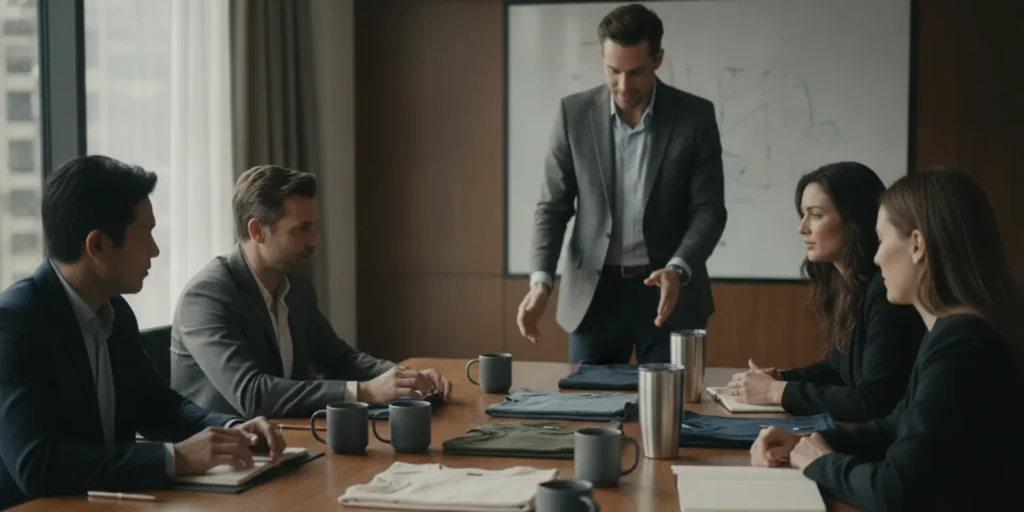
Custom merchandise can support onboarding, events, employee recognition, and customer programs—but only when the choices fit the audience and the way items will be distributed. For business teams, a successful program starts with a clear purpose, then connects product selection, branding, approvals, and fulfillment into one workable plan.
Discuss your merchandise program
What should a business team know about custom merchandise?
Custom merchandise is a group of useful or memorable products adapted with a company’s branding, message, or design. It may include apparel, drinkware, bags, desk items, or a coordinated kit. The term describes a broad category, not a particular product or production method.
The important decision is not simply which item has a logo on it. It is whether the product serves a defined audience, fits the occasion, can be produced to an acceptable standard, and can reach people reliably. A thoughtful program works backward from the recipient experience and operational requirements.
Start by answering four questions: Who receives the merchandise, and what might they need or appreciate? What should the program help accomplish? How many recipients are expected, and where are they located? Who owns budget approval, artwork, product approval, and delivery details?
These answers shape the product, quantity, decoration, packaging, and fulfillment plan. If the program serves multiple use cases, separate them rather than assuming one item or kit will work equally well for everyone. A product that makes sense for an event attendee may not suit a new employee working remotely, even if both groups recognize the same brand.
What should a custom merchandise brief include?
A short written brief prevents teams from beginning with a catalog and choosing items before they know the job to be done. It also gives suppliers a consistent basis for recommendations and quotes. Keep the brief concise, but include enough detail that two people reading it would understand the same goal.
Define the audience and moment
Describe recipients in practical terms: employees starting remotely, attendees at a customer event, field teams, or customers receiving a thank-you. Note what they will be doing when they receive or use the item. A welcome package may need to arrive before a start date; event merchandise may need to be portable and ready at a venue. If recipients have different roles or preferences, state which differences affect the product choice.
Set the outcome and constraints
Choose one primary outcome and write down constraints that affect execution. These might include a spending ceiling, required delivery date, size range, destination list, packaging needs, or brand approval process. Distinguish must-haves from preferences so the team can make tradeoffs without losing the purpose.
For example, suppose an event team wants a useful takeaway and has a fixed date. Portability and delivery timing may be must-haves, while a particular color or an extra insert could be preferences. For a remote onboarding kit, arrival before the employee’s first day and a correct address may be essential, while the number of decorative extras may be flexible. Making that distinction early helps avoid late-stage debate.
Assign decision owners
Identify who approves the design, confirms quantities and recipient data, and authorizes production. Agree on how decisions and revisions will be recorded. A single source of truth for artwork and approvals helps prevent an outdated file from being used or conflicting feedback from extending the schedule. For broader programs, review Brand Vessel’s merchandise, company store, and fulfillment services to understand service paths that can support different needs.

How should you compare custom merchandise options?
Compare products against the same criteria rather than relying on appearance alone. The table is a starting point; the best fit depends on the recipients, use case, and delivery plan.
| Option | Often fits | Questions to resolve | Operational considerations |
|---|---|---|---|
| Apparel | Employee wear, team identity, event use | Which garment, colors, size range, and decoration suit the audience? | Size collection, size mix, samples, and exchanges or extras |
| Drinkware | Everyday use, welcome kits, recognition | Is the format practical for recipients and compatible with the design? | Packaging, transit protection, and storage volume |
| Bags and accessories | Events, commuting, travel, or kits | What will recipients carry, and how often might they use it? | Dimensions, packing plan, and destination requirements |
| Desk and office items | Workplace use, onboarding, internal programs | Will the item be useful in recipients’ work settings? | Kit composition, personalization, and shipping method |
| Coordinated kit | Onboarding, events, or a planned gift moment | Do the items tell a coherent story and fit the intended budget? | Assembly, packaging, recipient data, and delivery timing |
For each shortlisted item, request the details needed for a fair comparison: product specifications, available colors and sizes, decoration options, minimums if applicable, sample availability, estimated production and transit timing, and how packaging affects delivery. Confirm estimates for the actual quantity, artwork, and destinations. Do not treat a product photo as a substitute for reviewing a physical sample when hand feel, color, fit, or finish matters.
Use a simple decision scorecard if stakeholders disagree. List the same criteria for every option, such as usefulness to recipients, fit with the occasion, alignment with brand standards, ease of distribution, and total scope. Give each criterion a rating such as strong, acceptable, or weak, then discuss the reasons behind the ratings. The scorecard is not meant to create false precision; it makes assumptions visible and shows where the group needs more information.
Consider how an item will be used, not just how it looks in a mockup. A wearable item needs an inclusive size plan and a way to collect selections. A fragile item may need protective packing. A kit assembled from several components needs a clear bill of materials and a plan for handling substitutions if something becomes unavailable. If a choice creates a new operational task, include that task in the comparison.
How do you plan branding and approvals?
Branding includes more than placing a logo on a product. Decoration method, size, location, color contrast, and the relationship between product and brand identity all affect the finished result. Ask for a proof showing the design on the selected item and review placement and scale, not only the artwork file.
Before approval, check the correct logo version and color; spelling, names, and dates; artwork size and placement; readability at the proposed scale; personalization or individual variations; and the person authorized to approve the final proof. Have the reviewer compare the proof with the brief and confirm that any specific product or decoration details match what was quoted.
Keep approved artwork and proof versions together with the project brief. State clearly that production should use the approved version. If a change is needed after approval, document it and obtain a revised proof. These controls reduce confusion between design intent and production instructions.
When possible, review a sample before committing to a larger or repeat order. A sample helps stakeholders assess material, color, fit, print or embroidery appearance, and packaging. For apparel, confirm the selected garment and sizing approach before collecting recipient choices at scale. If a sample cannot be reviewed in person, agree on what can and cannot be assessed from images, and leave enough time to resolve concerns before production.
What should you plan for fulfillment and delivery?
A product decision is only one part of the recipient experience. Determine whether items will be sent in bulk to one location, distributed at an event, packed into kits, or shipped individually. Each route requires different information and coordination.
Build a delivery plan backward from the date
Map important dates backward from when recipients need the merchandise. Include time for product selection, artwork, sample review, approvals, production, packing, and transit. Ask the supplier to confirm current timing for the selected products and destinations; do not assume a previous order’s schedule applies to a new project.
Set internal deadlines before supplier deadlines. For example, if recipients need items at an event, establish when the venue can accept cartons, when the final count is due, and who can receive them. For individual shipments, set a cutoff for address and size changes. Add checkpoints for proof approval and final quantity confirmation. This makes a delay visible while there is still time to make a decision.
Check recipient and address data
For individual delivery, assign an owner to collect and validate names, sizes when needed, and addresses. Decide how corrections will be handled and who can access the data. Establish a cutoff for changes so the team can prepare orders consistently. Use a clear format for addresses and size selections, and check for missing fields before the order is released.
Specify kit contents and packing
List every component, its quantity, and any insert or packaging requirement. Clarify whether items should be packed together, whether recipients receive the same combination, and how exceptions will be recorded. For event distribution, confirm counts by location and who will receive and store cartons. Include instructions for special versions so they are not confused with the standard kit.
Teams coordinating multiple shipments or a recurring program may want to review how corporate kitting works and the considerations in this guide to merch fulfillment lead times. These resources can help frame operational questions before a deadline is fixed.
How can teams compare the full program cost?
Compare the total project scope, not just the unit price. The total may depend on product, decoration, packaging, assembly, storage, shipping, and the number and location of recipients. Ask for a quote that states what is included, what assumptions it uses, and which items may change with quantity or destination.
When comparing two proposals, put them on the same basis. One may include individual packing while another quotes only the decorated items. One may assume delivery to a single address, while the other covers multiple destinations. Ask what is excluded and what could change after final counts or addresses are known. A clear comparison prevents a low headline price from hiding a different scope.
When choices exceed the working budget, revisit the brief in order. First protect the primary outcome and recipient fit. Then compare practical adjustments such as a different product, simpler decoration, fewer kit components, or a different distribution method. Avoid cutting quality checks or omitting delivery and assembly costs: an apparently lower item price may not reflect the actual program cost.
Keep a reserve for known uncertainties, such as address corrections or additional recipients, if the budget allows. Confirm how changes affect the quote and schedule before authorizing them. For repeat programs, capture actual quantities and operational lessons so the next planning cycle starts with better information.
How can a merchandise program become repeatable?
Document decisions that should carry forward: approved product specifications, artwork, decoration details, packaging instructions, supplier contacts, and the process for requesting an order. Record what may change by occasion, such as event dates, quantities, recipient lists, or kit inserts.
For ongoing demand, teams may want a structured ordering route rather than a new email-based project each time. A custom company store can be one option to explore when employees or other approved users need a consistent place to order branded items. Consider who can access it, which products should be available, how budgets or approvals work, and who manages inventory and fulfillment.
Set ownership for replenishment and changes. Decide who checks stock, who can request new items, and who approves updates to artwork or product specifications. If recipients can order for themselves, clarify which items are available to which groups and what happens when a product is temporarily unavailable. A documented process reduces the need to reconstruct decisions each time an order is placed.
After each order, review the process with the people who managed it. Were items useful? Did approvals arrive on time? Were quantities and sizes accurate? Did packing and delivery match the plan? Keep feedback specific and use it to improve the next brief, rather than treating every order as an isolated purchase. A short post-order review can record what should remain fixed and what should change.
Frequently asked questions about custom merchandise
What is the difference between custom merchandise and promotional products?
The terms overlap in everyday business use. Custom merchandise broadly refers to products adapted for a company or program, while promotional products often emphasizes items used to support awareness, events, or campaigns. The same planning questions apply: audience, purpose, product fit, branding, and delivery.
When should a team start planning?
Start as early as practical, especially when the order has multiple products, individual shipments, apparel sizes, or a fixed event date. Build a schedule with the supplier around the actual items, approvals, quantity, and destinations rather than relying on a general lead-time assumption.
Should we order samples?
Consider a sample when physical qualities could affect approval, such as fit, feel, color, finish, or packaging. A sample review is especially useful when several stakeholders need to agree on the finished item before a larger order.
How do we handle a program that serves different audiences?
Separate audiences or occasions in the brief. You may be able to use a shared visual system while choosing different products or kits for each group. Confirm quantities, personalization, delivery destinations, and approval owners for each variation.
Start a conversation about your program
A clear purpose, a realistic product comparison, documented approvals, and a delivery plan give business teams a stronger foundation for custom merchandise. With those decisions in place, the program is easier to execute, evaluate, and improve over time.