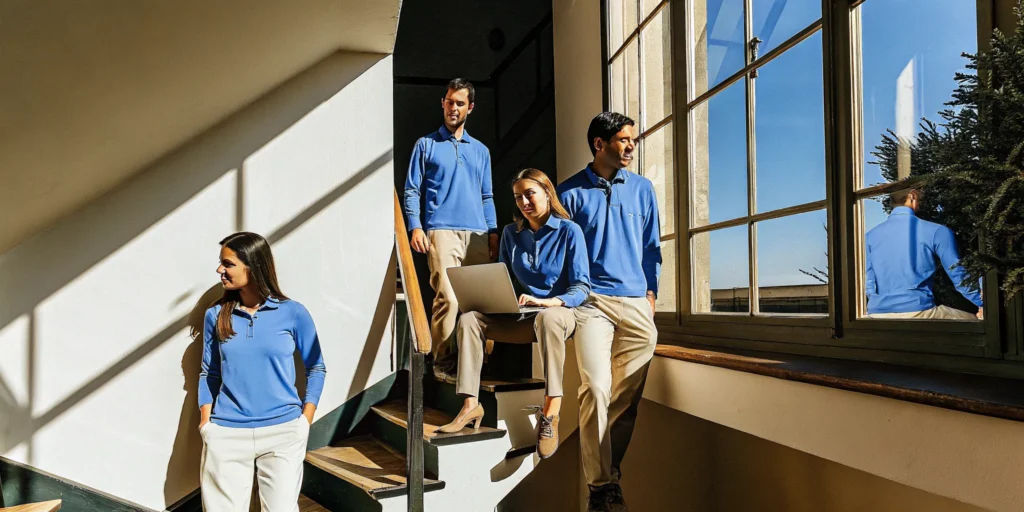
Corporate clothes that feel cheap or fit poorly usually end up in the back of a closet. Choosing high-quality garments ensures your team actually wears your logo with pride.
Premium corporate apparel consists of high-quality garments made with durable fabrics, precise construction, and expert decorating techniques. Unlike cheap promotional wear, premium apparel focuses on retail-grade fit, breathability, and professional style across different company departments. Investing in retail-quality clothing improves employee retention, elevates team morale, and strengthens brand affinity. To drive organic ROI, enterprise teams must integrate clothing programs with a broader Custom Corporate Gifts for Clients: A Premium Merch Guide and a structured corporate merchandise strategy. Partnering with professional suppliers ensures your team gets clothes they want to wear every day.
Every procurement manager wants a high return on their branding investment. Before you place your next bulk order, it is vital to know why cheap shirts fail. Let us look at The Problem With Cheap Corporate Apparel.
Why Does Cheap Corporate Apparel Cost More in the Long Run?
For teams comparing decoration methods, the Screen Printing vs Embroidery Business Apparel Guide helps connect garment quality, decoration fit, and program economics before production.
Buying low-cost clothing for your team seems like a smart way to save money. Yet, cheap items often fail in enterprise settings. When you buy cheap clothing, you face hidden costs that quickly add up. A study from North Carolina State University shows that corporate image apparel serves key goals like establishing a unified company identity and acting as employee incentives. Low-quality garments fail to meet these goals, which turns your initial savings into waste.
Poor Fabric Quality and Wear
Cheap fabrics often pill, fade, and lose their shape after only a few washes. Thin cotton and low-grade polyester fabrics stretch out or shrink easily, making your team look unprofessional. When garments look worn out after a month, you must buy replacements. This constant reordering quickly outpaces the price of How to Build a Corporate Swag Strategy That Builds Loyalty, which focuses on long-term durability and value.
Decorating and Sizing Failures
Low-grade apparel often suffers from poor decoration. Printed logos on cheap shirts tend to crack, peel, or fade quickly in the laundry. Embroidery on thin fabric can bunch and pull, which ruins the look of your logo. Sizing is also inconsistent across shipments from budget suppliers. A medium shirt from one batch might fit like a small in the next, which leaves your staff with items they cannot use.
Low Employee Adoption
Employees simply will not wear stiff, itchy, or ill-fitting clothes. If the apparel is uncomfortable, your team will leave it in their closets or throw it away. This waste defeats the purpose of your investment. When you choose premium corporate apparel through Brand Vessel, you get soft, well-fitting items that employees actually want to wear. High-quality items boost brand affinity and turn your team into proud brand advocates.
What Makes Corporate Apparel Premium?
High-end clothing is more than just a brand name printed on a shirt. True quality comes from the materials and how the garments are put together. Real premium corporate apparel is defined by fabric quality, construction, and decorating techniques, according to standards set by Brand Vessel. Choosing these better pieces shows that a business values its team and its image.
Fine Fabric and Weights
The base of any great garment is the cloth itself. Premium items use high-grade fibers that feel soft and last through many wash cycles. Sustainable materials also make a much stronger business case for modern firms. Research from NYU Stern shows that eco-friendly choices in apparel programs bring long-term benefits that go well past the first cost. Look for these key fabric traits when selecting items for your team:
- Long-Staple Cotton: Soft fibers like Pima or organic cotton that resist pilling and stay strong over time.
- Perfect Weight: Correct fabric thickness, measured in grams per square meter (GSM), so shirts drape well without feeling stiff.
- Technical Blends: Moisture-wicking polyesters and flexible elastane mixes that keep active workers cool and comfortable.
Strong Garment Construction
How a shirt or jacket is sewn determines how long it will look good. Cheap clothes stretch out of shape after one wash because of weak seams. High-quality pieces use tight stitches and smart cuts to keep their shape. When checking garment quality, look for these specific details:
- Reinforced Seams: Double-needle stitching on shoulders, collars, and hems to prevent tearing.
- Taped Necklines: Soft fabric tape over back neck seams to stop irritation and keep the collar flat.
- Tagless Labels: Heat-sealed details instead of itchy paper tags to make sure employees want to wear the gear all day.
Decorating Methods and Trusted Brands
The final touch is how your company logo is placed on the fabric. Premium decoration must match the quality of the garment. For example, high-density embroidery uses tight thread counts to create a clean, raised logo that does not puck. This stands out when placed on retail-brand pieces from Nike, Patagonia, Carhartt, or Peter Millar. Brand Vessel helps enterprise buyers select the right decoration style for each specific retail brand so the final look remains clean and professional.
Building a Cohesive Corporate Wardrobe
A unified look does more than display a logo. It creates a professional image across every team and season. Enterprise teams need to build a wardrobe that matches their guidelines and works for different job roles. Building this collection requires smart choices about style, color, and fit to keep everyone looking unified.
Selecting Your Corporate Color Palette
Your brand colors are the base of your wardrobe strategy. But you do not have to put your bright primary brand color on every item of clothing. A better path is to use neutral base colors like navy, charcoal, or black for core pieces like jackets and quarter-zips. Then, you can use your specific brand colors as accent tones on small details, polo trims, or embroidery. This choice ensures your team looks clean and professional while keeping your brand front and center.
Choosing Core Apparel Pieces
A cohesive wardrobe relies on a few key items that coordinate easily. Selecting versatile styles allows employees to mix and match while staying within your dress code guidelines. Focus on these main pieces:
- Classic Polos: Best for daily office wear and outdoor events.
- Button-Downs: Needed for client meetings and formal settings.
- Quarter-Zips: Great for layering and smart-casual looks.
- Weatherproof Jackets: Protects your team during travel and field work.
Adapting for Seasons and Roles
Your team needs to stay comfortable all year long. This means choosing lightweight, breathable fabrics for hot summer days, and selecting insulated, windproof options for cold winter weather. For large operations, managing these options across seasons and locations can get complicated. Enterprise procurement teams can reduce vendor complexity by using integrated solutions that cover design, production, and global logistics instead of dealing with multiple separate vendors. To learn more about setting up an easy distribution system for your team, read about our Custom Company Store services.
Having different clothing options for sales, field, and office teams helps everyone do their jobs well. But these different styles must still look like they belong to the same company. When you build a structured Employee Swag Program: How to Launch One People Love, you can ensure every department gets the right style while keeping a single, unified corporate look. This integrated plan helps you get maximum value from your premium corporate apparel budget.
To back up these procurement choices, academic research shows that well-planned corporate apparel programs help companies build a stronger, more unified company identity. You can read the full analysis in this study on corporate image apparel hosted by the North Carolina State University Repository. Working with Brand Vessel helps you design and deliver a cohesive clothing system that your team will actually want to wear.
Apparel Styles That Work Across Departments
A single dress code does not fit every team member in a large business. Your sales staff, field workers, warehouse team, and office administrators all have distinct roles that need different types of clothing. When choosing Custom Branded Apparel, you must match the right style to each department to keep your workforce safe, happy, and professional.
The Trap of Single Style Sourcing
Many businesses try to save time by ordering one polo style for every single employee. This simple plan often fails in real life because different roles have different demands. For instance, a heavy cotton polo that keeps a field tech warm can make a warehouse worker overheat. Using the same shirt for everyone means most teams get clothes that do not work well for their daily tasks. To make the most of your budget, you need to use a structured approach for each group.
Department Clothing Needs
Each department needs a unique blend of style and function. Here is a breakdown of what works best for each team:
- Sales and Client Teams: These roles need high-end polos, fine knit blazers, and custom performance dress shirts. The goal is to build immediate trust during face-to-face meetings.
- Field and Service Teams: These teams need tough outerwear, heavy-duty work pants, and bright safety wear. High durability is the main goal here.
- Warehouse and Logistics: These workers need light, breathable shirts that allow easy movement. Fabrics must wick sweat to keep people cool during physical work.
- Office and Admin: This team works in mild indoor settings. They look and feel best in comfortable layers like quarter-zips, cardigans, and light sweaters.
Comparing Department Needs
Selecting the right styles requires an organized plan. Industry buying models, such as the organizational buying process framework from North Carolina State University, show that businesses make better choices when they review technical needs first. The table below compares the specific needs of each department to help you plan your next order.
| Department | Primary Needs | Best Fabric Types | Key Styles |
|---|---|---|---|
| Sales & Client | Professional look, wrinkle control | Fine Pima cotton, poly blends | Polos, blazers, dress shirts |
| Field & Service | High durability, safety focus | Heavy canvas, ripstop, hi-vis | Outerwear, work pants, vests |
| Warehouse | Breathability, stretch, ease of movement | Moisture-wicking mesh, light polyester | Active tees, flexible work shirts |
| Office & Admin | Comfort, layering, casual style | Lightweight knits, soft fleece, cotton | Quarter-zips, cardigans, sweaters |
Brand Vessel works with you to design a custom wardrobe that fits every department. We provide high-quality items for each team while keeping your overall brand image clean and unified.
How to Source Premium Apparel at Enterprise Scale
Sourcing Best Branded Merchandise Companies for Enterprise Businesses at a large scale requires a clear strategy. To keep quality high across thousands of items, businesses must move away from simple transactions and build integrated plans instead.
Step 1: Vet Your Suppliers
Working with top-tier brands is only the first step. Large teams need partners who can handle complex production needs. You must vet each supplier to ensure they have the proper minimum order quantities, deep decoration capabilities, and direct access to retail-quality catalogs. This initial step prevents delays and ensures your team gets durable, retail-grade garments.
Step 2: Choose the Right Decoration Methods
The way your logo is placed on a garment affects both its look and lifespan. You must select the right method for each fabric type. For example, high-stitch-count embroidery is best for heavy outerwear, while precise screen printing or modern heat presses work better on lightweight performance shirts. Matching the right decorating technique to the fabric ensures your logo remains sharp and does not peel or distort after washing.
Step 3: Solve the Logistics Puzzle
For large organizations, logistics depth and fulfillment scalability are just as important as the quality of the product itself. This fact is central to successful brand programs. Managing inventory across multiple offices requires a streamlined approach. Working with an integrated partner helps simplify your supply chain by handling warehousing, custom kitting, and direct shipping to global offices.
Step 4: Streamline Global Compliance
Global shipping brings complex rules, taxes, and customs issues. A single mistake can hold up an entire shipment at the border. You need an experienced partner who understands international trade guidelines to ensure your shipments clear customs without extra fees or delays. This keeps your global team outfitted on time, no matter where they are located.
- Vetting vendors: Look for partners who offer deep brand access and can scale production to meet your exact order volumes.
- Matching techniques: Use high-quality embroidery for jackets and sharp screen printing or heat transfers for performance fabrics.
- Scaling logistics: Simplify your operations by using a partner that manages Logistics and Fulfillment under one roof.
- Navigating customs: Ensure your partner has the expertise to clear global shipments quickly and keep your supply chain moving.
Managing a large-scale program does not have to be difficult. By focusing on supplier strength, correct decoration, and expert shipping, you can build a corporate clothing line that your team is proud to wear. Brand Vessel can help you design and deploy a seamless corporate apparel program today.
Frequently Asked Questions
What defines premium corporate apparel?
According to Brand Vessel, premium corporate apparel is defined by a combination of high fabric quality, durable garment construction, and professional decoration. Choosing premium items ensures the clothing holds its shape and color after many washes. This makes the apparel a lasting representation of your business rather than a single use item.
Why should businesses invest in higher quality custom clothing?
Investing in high quality clothing boosts employee pride and brand affinity. An academic study from North Carolina State University shows that corporate image apparel helps build a unified company identity and acts as a strong performance incentive. Staff members are far more likely to wear garments that fit well and feel comfortable.
How do sustainable materials impact corporate clothing programs?
Using sustainable fabrics helps your company meet its environmental goals while building a stronger business case. Research from the NYU Stern Center for Sustainable Business shows that eco-friendly apparel programs offer long term value. They improve brand reputation and appeal to modern workers who value green practices.
What is the best way to manage corporate apparel at scale?
Managing large apparel programs requires integrated logistics and fulfillment to reduce vendor complexity. Brand Vessel recommends using a single partner to handle design, production, and storage. Having a dedicated custom company store streamlines the ordering process. This ensures that remote teams get their gear on time without stressing your internal staff.
Ready to Start Your Premium Corporate Apparel Project?
Low-quality clothing sits forgotten in closets or ends up in landfills, wasting your marketing budget. Choosing high-quality gear boosts your brand and makes your team proud to represent your company every day.
Ready to start a project with Brand Vessel? You can get a free consultation today to set up your corporate apparel order.