
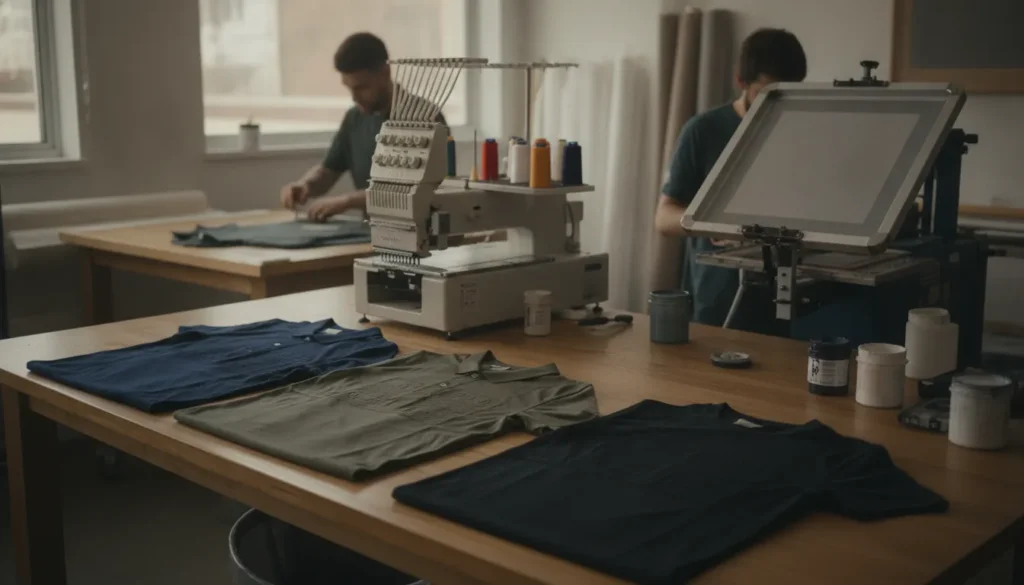
The right decoration method can determine whether business apparel feels polished, practical, and consistent across a large team. Screen printing and embroidery each serve a different role: the best choice depends on the garment, logo detail, fabric, order volume, wear expectations, and brand standards. A thoughtful program may use one method across every item, or combine both to create clear visual hierarchy. Brand Vessel approaches that decision through Custom Apparel and Creative Decorating for Corporate Brands, not as an isolated decoration purchase.
Start a business apparel project with Brand Vessel.
When comparing screen printing vs embroidery business apparel, evaluate the decoration area, design complexity, garment construction, and quantity before focusing on unit cost. Screen printing typically suits large, flat graphics and higher-volume orders, while embroidery brings a professional, textured finish to polos, jackets, hats, and other structured pieces. Brand Vessel can help align the method with your brand standards and apparel program.
The comparison starts with how each technique is applied and what that process means for the final garment. Understanding the fundamentals makes it easier to assess color, scale, texture, and production economics before selecting a decoration plan through Branded Merchandise Services & Company Stores. Brand Vessel’s custom apparel and creative decorating work supports the same program-level decisions across garment types.
How Does Screen Printing Work for Business Apparel?
Screen printing places ink through a prepared mesh screen onto business apparel. It is usually a practical choice for large, flat graphics, vibrant color blocks, and repeat orders with consistent artwork. Brand Vessel evaluates the print area, fabric, color count, order volume, and brand standards together before recommending screen printing for an enterprise apparel program.
Screen printing applies ink through a prepared mesh screen onto the garment, creating a bold graphic on the fabric surface. For enterprise apparel programs, it is generally a strong fit for large, flat, vibrant artwork, especially when many people will receive the same design. The method is commonly used for team T-shirts, event apparel, employee programs, and other casual pieces where the graphic needs to be visible from a distance.
Screen printing is typically most efficient when the order quantity is large enough to spread screen preparation and setup across many garments. Each color in the artwork requires its own screen and setup. So a simple one- or two-color mark may be easier to manage than a highly detailed, multicolor design. That does not make complex artwork impossible, but it does make the decoration plan more important during procurement.
What makes screen printing practical for large programs?
The economics favor consistency. Once the screens are prepared, repeating the same approved artwork across a larger run can minimize setup cost per item. This is why screen printing is generally most cost-effective for large-volume orders with a limited number of colors. See the supporting method overview from Custom Ink for the quantity and color considerations behind this approach.
- Large front, back, or sleeve graphics.
- Flat artwork with strong color blocks.
- Team, event, recruiting, or employee-celebration apparel.
- Programs using the same approved design across many garments.
- Casual cotton or cotton-blend apparel selected for printed decoration.
What should buyers approve before production?
Artwork review should confirm the print location, finished dimensions, garment color, ink colors, and how the design will appear at its intended viewing distance. Procurement teams should also identify whether the artwork contains fine detail or more colors than the program needs. Reducing unnecessary colors can simplify setup, while preserving the visual elements that carry the brand.
Fabric matters as well. Logo detail, fabric type, and budget all influence the best decoration choice. So a production partner should review the garment and artwork together rather than treating the logo as a standalone file. Brand Vessel can help teams evaluate those tradeoffs through its Branded Merchandise Services & Company Stores, with decoration decisions aligned to the broader apparel program. Its work includes embroidered Tesla Giga Factory hats and printed Tesla hooded sweatshirts, examples of how the garment and decoration method can change together.
How Does Embroidery Work for Business Apparel?
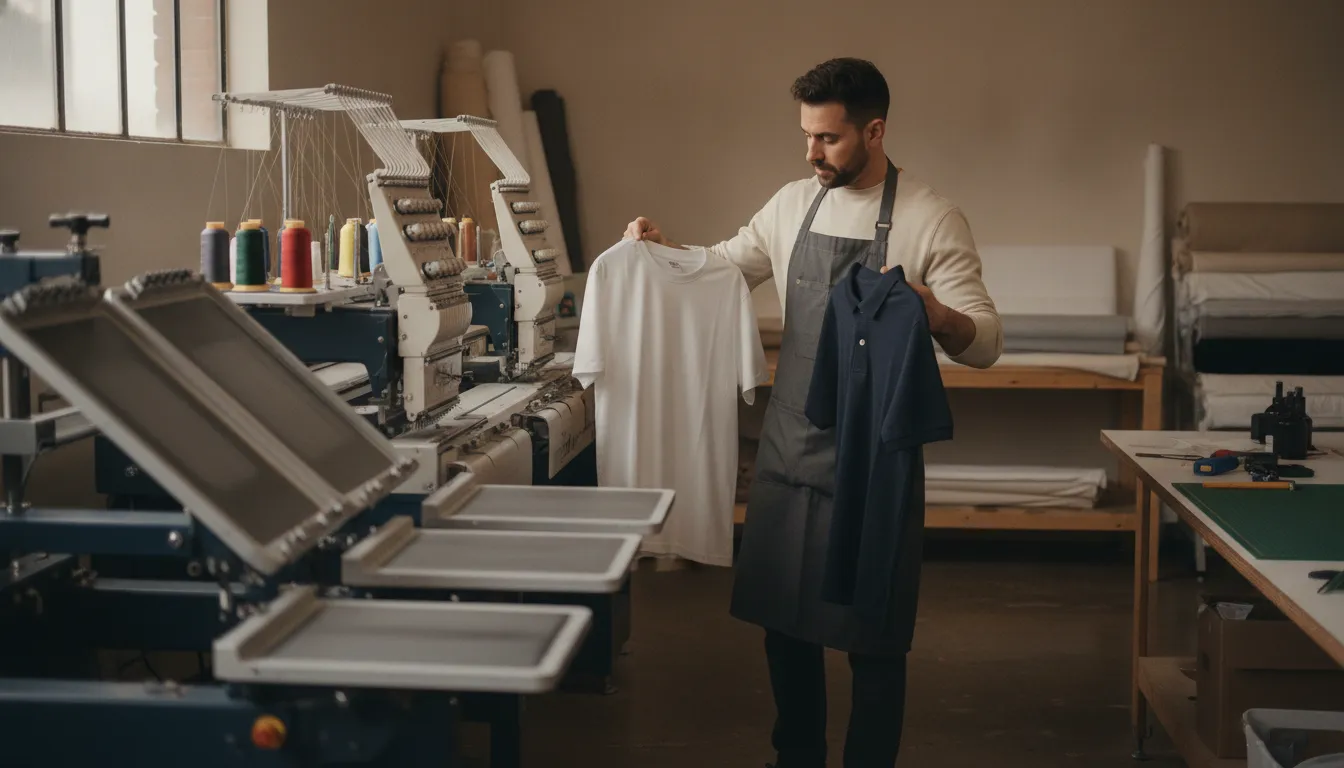
Embroidery converts approved artwork into digitized stitch instructions, then builds the design with thread on the garment. The raised finish often suits polos, jackets, hats, and structured workwear. Brand Vessel reviews logo size, stitch density, garment construction, placement, and sew-out results so enterprise teams can approve a consistent decoration standard.
Embroidery converts a logo into a stitch plan, then uses thread to build the design directly on the garment. For enterprise apparel buyers, that process creates a raised, tactile finish that often looks especially polished on polos, jackets, hats, and other structured pieces. The result depends on the artwork, fabric, placement, and production specifications, not just the logo file.
Embroidery is a strong choice when a business wants a professional, durable, textured appearance for corporate apparel. It is commonly used for chest logos on polos, outerwear, caps, and workwear where a refined presentation matters. Brand Vessel describes embroidery as suitable for high-end corporate apparel through its Branded Merchandise Services & Company Stores.
Digitization turns artwork into stitch instructions
An embroidery machine cannot use an ordinary image file as a direct production map. The logo must first be digitized specifically for embroidery. Digitization converts the artwork into instructions that define stitch placement, direction, density, thread changes, and other production details. As the VCU Health apparel guidance explains, the digitized design tells the machine where to place each stitch.
This step is also where practical apparel decisions become important. Fine lettering, narrow gaps, small icons, and intricate edges may need adjustment so they remain legible at the selected size. A procurement team should approve a sew-out or comparable sample before scaling a program across employee, event, or customer-facing apparel. That review helps confirm that the logo retains its intended proportions and visual weight on the actual garment.
Match the stitch design to the garment
Thread creates dimension and texture, which can reinforce a premium brand impression. It also means the decoration should be evaluated alongside the garment’s structure and fabric. Polos and jackets often provide a stable surface for an embroidered chest mark. Hats and other structured garments can also support embroidery, while very lightweight or delicate materials may require a different approach.
- Polos: A left-chest logo can support a consistent professional uniform.
- Jackets: Embroidery can provide a durable-looking finish for outerwear and team layers.
- Hats: Structured caps often suit compact embroidered marks.
- Structured workwear: Stitch-based decoration can align with a practical, polished presentation.
Durability should be treated as a design and garment-fit consideration rather than an absolute promise. Logo size, stitch density, fabric, laundering, and daily use all affect the finished result. Brand Vessel can help enterprise buyers evaluate those variables when building a consistent apparel program across roles, locations, and distribution needs.
What Costs More: Screen Printing vs Embroidery for Business Apparel?
There is no universal lower-cost method for business apparel. Screen printing can become more efficient when a consistent design is ordered in higher volume, while embroidery costs reflect digitization, stitch count, machine time, garment mix, and quantity. Brand Vessel compares the complete program rather than quoting decoration in isolation.
Neither method is automatically more expensive. The right comparison depends on how the decoration is produced, how many garments are ordered, and how consistently the design must be applied across a program. Screen printing can become more efficient at higher quantities, while embroidery adds digitization and stitch-planning considerations that may be more appropriate for structured corporate apparel.
| Cost driver | Screen printing | Embroidery |
|---|---|---|
| Initial setup | Screen creation and press setup affect the first run. | Logo digitization prepares the file for stitch placement. |
| Order quantity | Often becomes more efficient as quantity increases because setup is spread across more items. | Scale still matters, but stitch count, machine time, and garment mix also influence the quote. |
| Color and detail | Each ink color generally requires its own screen and setup, so multicolor artwork adds complexity. | Detail is evaluated through stitch density, design size, and the digitized file. |
| Garment type | Typically fits flat, casual garments and larger graphic areas. | Often fits polos, jackets, hats, and other structured garments. |
| Program scale | Repeatable artwork and larger runs can support predictable production planning. | Standardized logo files and approved placements help maintain consistency across apparel types. |
For screen printing, two variables deserve close attention during procurement. The setup required to create screens can make smaller runs less efficient, while larger quantities may reduce the setup cost per item. Design complexity matters as well: each color generally requires its own screen and setup, which makes a multicolor logo more involved than a one-color mark. These cost drivers are documented in custom apparel printing methods.
Embroidery has a different cost structure. A logo must be digitized so the production equipment knows where to place each stitch. Garment type, design size, stitch density, and the number of units can then affect the production requirements. A small embroidered mark on a polo may be evaluated differently from a dense design on a jacket, even when the underlying logo is the same.
Cost should also be considered alongside brand governance. Corporate guidelines may require a consistent decoration method and logo treatment across employee apparel, regardless of which option appears less expensive for one order. Before choosing, compare the intended garment mix, logo detail, color count, expected quantity, and repeat-order needs. Brand Vessel can help procurement teams connect those production factors with a broader program plan. For additional planning context, see the How Much Does Branded Merchandise Cost? Enterprise Pricing Guide.
Which Technique Fits Each Business Garment?
For business apparel, the right decorating method depends on the garment’s role, logo treatment, fabric, and expected wear. Embroidery often suits polished polos and jackets, while screen printing can work well for casual T-shirts and larger graphics. Review these decisions together rather than choosing a method based on price alone.
- Garment type: Use embroidery as a starting point for polos, jackets, caps, and other structured professional apparel. Screen printing is often a better fit for casual T-shirts, event wear, and garments intended to carry a larger graphic. This distinction is also reflected in Arizona State University’s apparel merchandise guidance.
- Logo scale and detail: A small chest mark or concise wordmark typically translates well to embroidery. A large back graphic, illustration, or design with fine color detail generally gives screen printing more room to reproduce the artwork clearly.
- Fabric: Check how the decoration will interact with the material. Cotton and structured fabrics may support different choices than lightweight or performance polyester, so the fabric should be reviewed alongside the logo file before production.
- Use case: Choose the finish that matches how employees will wear the item. Client-facing uniforms and leadership apparel may call for embroidery’s professional, textured appearance, while an internal event shirt may benefit from the visual flexibility of screen printing.
- Expected wear: Daily-use garments need a decoration approach that suits repeated washing, movement, and handling. Embroidery is known for a durable, raised finish, while the success of a printed design depends on the garment, artwork, ink, and production specifications.
- Brand standards: Confirm that the selected method preserves logo proportions, approved colors, and placement rules across the program. A consistent standard matters when the same brand appears on multiple garment types.
For a broader review of fabrics, silhouettes, and employee adoption, see Premium Corporate Apparel: Building a Wardrobe Your Team Will Wear and Custom Apparel for Business Teams Will Actually Wear. Brand Vessel can evaluate the artwork, fabric, and use case together so the selected technique supports both the brand and the people wearing it. This is the role of Custom Apparel and Creative Decorating for Corporate Brands within a broader merchandise program.
When Should a Brand Combine Screen Printing and Embroidery?
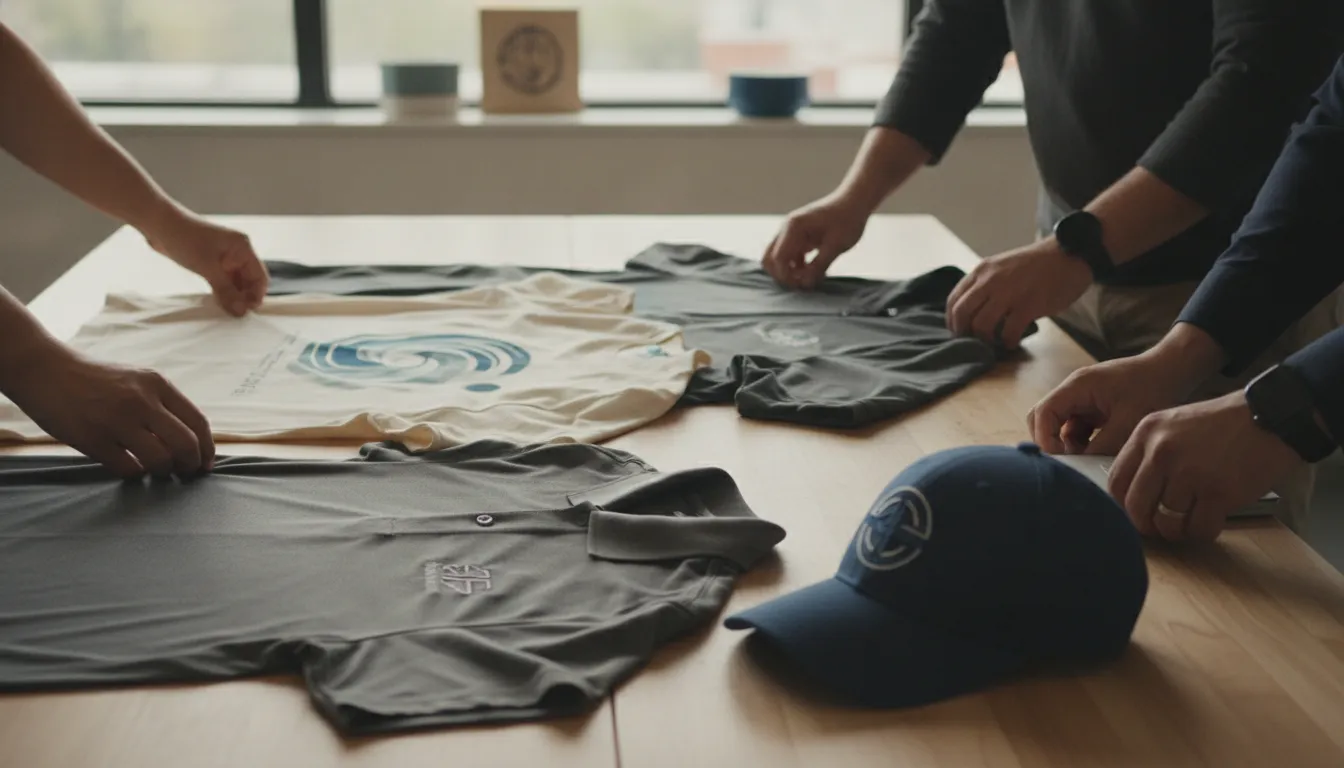
A hybrid program works when one apparel collection needs a polished identifier and a larger graphic. Embroidery can define a chest logo on a polo or jacket, while screen printing can carry a sleeve or back design. Brand Vessel helps teams govern both methods through approved artwork, placement rules, samples, and garment-specific production decisions.
A hybrid decoration program makes sense when one garment or apparel collection needs to communicate different messages at different placements. A small embroidered chest mark can signal polish and identity, while a larger screen-printed back or sleeve graphic can carry an event theme, campaign message, or team designation. The right combination depends on the artwork, garment construction, audience, and how the pieces will be used.
For example, chest embroidery with sleeve or back screen printing can create a premium corporate apparel result. The embroidered placement gives a polo, jacket, or structured layer a refined primary mark. Screen printing gives the program more room for a larger, flatter graphic where color, scale, or visual impact matters. Brand Vessel describes this combination as one option for creating a premium effect in branded apparel.
The placements should have distinct roles rather than compete for attention. A practical structure might include:
- Chest: Use a carefully sized embroidered logo as the consistent identifier across a professional garment collection.
- Sleeve: Add a printed campaign mark, department label, event theme, or partner reference when the design needs more space.
- Back: Reserve screen printing for a larger graphic, service message, or recruiting concept that benefits from visibility at a distance.
- Outerwear and layers: Confirm that the fabric, seams, lining, and placement can support the selected decoration before approving production.
Govern the artwork as one system
Combining methods does not mean treating each placement as a separate creative exercise. Establish one approved artwork package that identifies the logo version, clear space, colors, sizing limits, placement coordinates, and acceptable decoration method for each garment. Corporate branding standards commonly require consistent logo application and decoration methods across merchandise, so the program should document those decisions before production begins. See the Branded Merchandise Services & Company Stores page for Brand Vessel’s broader merchandise and apparel capabilities.
Request physical or digital proofs for each method, especially when thread and ink reproduce the same brand color differently. Also confirm which garments are approved for both techniques. Not every logo or garment supports both methods well, and forcing a hybrid treatment can reduce legibility, comfort, or wear quality. A decoration partner should review the complete assortment rather than approving one sample in isolation.
Start a business apparel project with Brand Vessel.
Frequently Asked Questions About Business Apparel Decoration
Is it better to embroider or screen print business apparel?
Choose based on the garment, artwork, and use case rather than treating one method as universally better. Embroidery suits polos, jackets, hats, and other professional pieces that benefit from a textured, durable finish. Screen printing is often the stronger choice for large, flat graphics on casual shirts or event apparel.
Which is more expensive, screen printing or embroidery?
There is no fixed winner because cost depends on order quantity, design complexity, garment, and setup requirements. Screen printing often becomes more economical at larger volumes, while each additional ink color can add setup work. Embroidery pricing can vary with stitch count and digitization, so compare complete program quotes rather than decoration rates alone.
Can screen printing and embroidery be used on the same garment?
Yes. A common hybrid approach places a smaller embroidered logo on the chest and a larger screen-printed graphic on a sleeve or back. This combination can give uniforms or team apparel a premium, layered look while assigning each technique to the placement and artwork it handles best.
How should a business choose a decoration method for performance fabrics?
Review the fabric, stretch, logo detail, placement, expected wear, and brand standards before approving production. Some performance materials respond differently to heat, ink, or stitching, so request a decorated sample when the garment is unfamiliar. A merchandise partner can test the method and confirm the result before a larger rollout.
Ready to Plan Your Business Apparel Program?
Choosing between screen printing, embroidery, or a combination of both is easier when decoration decisions align with your garments, logo details, budget, and intended use. Brand Vessel can help you coordinate those choices into a consistent apparel program for your team. To talk with Brand Vessel about your requirements, get started on a business apparel project.