
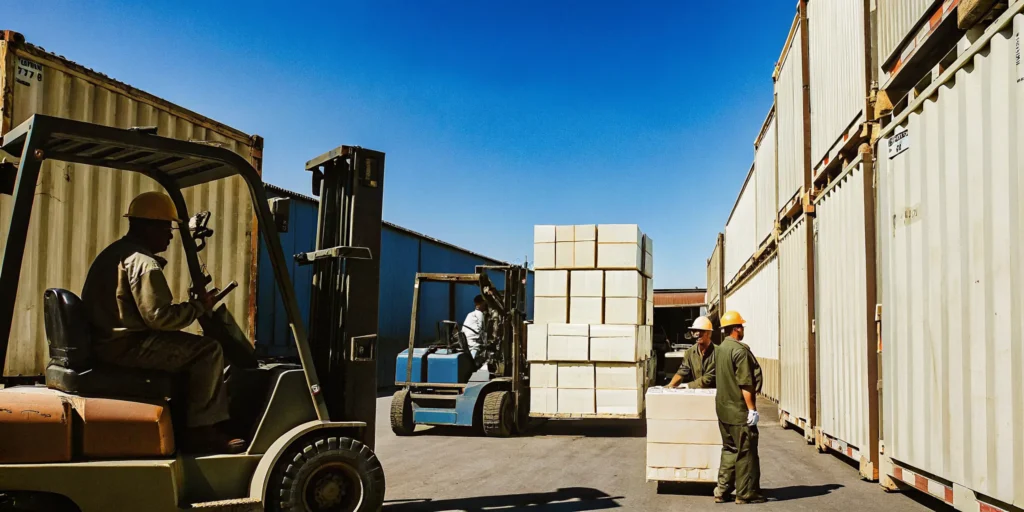
International merchandise programs rarely fail because a carrier cannot move a carton. They become difficult when customs requirements, destination-country rules, inventory coordination, and delivery expectations are managed in separate systems.
To understand how to ship branded merchandise internationally, start with customs, duties, documentation, and fulfillment as one connected process. A full-service merchandise partner with in-house customs brokerage can coordinate those requirements alongside storage, inventory tracking, packaging, and delivery.
That integrated approach matters for enterprise teams distributing apparel, gifts, event kits, or new-hire merchandise across multiple markets. Brand Vessel supports global distribution with end-to-end logistics, including climate-controlled warehousing, real-time inventory tracking, and multi-component kit assembly. The first step is recognizing where international shipments accumulate risk, from variable transit times to customs holds. Then building a process that addresses those points before goods leave the warehouse.
How to Ship Branded Merchandise Internationally Without the Headaches
For enterprise teams, overseas merchandise shipments are rarely a matter of placing products in cartons and booking transport. Customs requirements, destination-country regulations, freight coordination, delivery windows, and inventory visibility all intersect. A delay affecting one shipment can disrupt an employee onboarding program, customer event, or regional launch.
International freight forwarders can move cargo from dock to door while coordinating freight tracking, warehousing, cargo space, consolidation, and documentation, according to the U.S. Department of Commerce. Federal guidance on customs brokers and freight forwarders also distinguishes those logistics functions from customs compliance, which requires accurate product information and disciplined documentation.
Why timelines and costs vary by destination
Shipping times can range from a few days to several weeks. Weather, customs clearance, transportation disruptions, and port congestion can all change the original delivery estimate. Costs also shift with freight mode, shipment volume, fuel and handling charges, destination requirements, duties, and taxes. Treating every country as if it follows the same process creates avoidable surprises for procurement and marketing teams.
Brand Vessel has more than 14 years of operational experience, dating back to 2010. That experience supports a planning process built around the full merchandise lifecycle rather than a single outbound shipment. Teams can coordinate product creation, storage, packaging, fulfillment, and international distribution through one merchandise partner.
Where customs classification affects the shipment
Branded apparel, drinkware, technology accessories, and assembled kits may be subject to different classification and admissibility requirements. The U.S. Department of Commerce explains that customs brokers oversee customs entry, merchandise admissibility, product classification, customs valuation, and payment of duties, taxes, or other charges. Accurate classification matters because it supports correct duty calculations and helps prevent clearance questions that can hold freight at the border.
For programs involving several components, corporate kitting for global distribution can bring assembly and shipping preparation into the same workflow. Brand Vessel also provides climate-controlled warehousing and real-time inventory tracking, giving enterprise teams better visibility before kits leave the facility and while inventory is staged for regional fulfillment.
A coordinated model is especially useful when a program serves multiple offices or countries. Brand Vessel’s corporate kitting fulfillment and global merch logistics services connect warehousing, tracking, freight coordination, and in-house customs brokerage. The result is a clearer chain of accountability, fewer handoffs. And a practical way to protect delivery schedules without asking an internal team to manage every border requirement independently.
The Hidden Costs and Regulations in International Merch Shipping
International branded merchandise programs rarely fail because of the quoted freight rate alone. The final cost depends on what is being shipped, where it is entering, how it is classified, and whether the documentation is ready when the shipment reaches customs. Delivery windows can also expand when clearance, weather, port congestion, or local transport creates an exception.
What costs should procurement teams model?
Build the landed-cost estimate before approving the program, rather than treating duties and taxes as an afterthought. Common cost factors include:
- Freight and fuel surcharges: Air, ocean, parcel, and expedited services have different cost and speed tradeoffs.
- Duties, taxes, and brokerage: Charges can vary by destination and by the merchandise classification used for entry.
- Documentation and compliance: Missing or inaccurate information can create amendment fees, storage charges, or clearance delays.
- Packaging and dimensional weight: Bulky cartons, protective materials, and multi-item kits may increase billable weight.
- Returns and re-shipments: A failed delivery or incorrect recipient address can trigger additional transport and import costs.
- Carbon impact: Expedited air freight and fragmented shipments generally require more transport capacity than consolidated, planned distribution.
Which regulations affect branded merchandise?
Requirements are not uniform across commodities or destination markets. The U.S. Customs and Border Protection advises importers to review entry requirements specific to the commodity, including requirements imposed by other federal agencies. Teams should confirm product classification, admissibility, labeling, and any permits before the order leaves the warehouse. CBP also recommends reviewing its policies and procedures in advance to reduce clearance problems.
Authenticity matters as well. CBP identifies intellectual property protection as a priority, so branded goods should be authorized and supported by accurate commercial documentation. This is especially important when merchandise incorporates licensed marks, imported components, or multiple brands in one kit. CBP guidance on protecting intellectual property rights provides useful context for procurement and compliance teams.
Q: How can a company reduce unexpected international shipping costs?
A: Consolidate merchandise, stores, and fulfillment under a coordinated program, classify products before shipping, and review destination requirements early. A unified partner can reduce vendor-management complexity while coordinating documentation, freight, and delivery decisions. Explore Brand Vessel’s global branded merchandise distribution approach for enterprise programs.
For large organizations, vendor consolidation can also reduce the operational burden of managing separate merchandise, company-store, and fulfillment providers. The objective is not merely to find the lowest shipping quote. It is to create a predictable, compliant flow that balances delivery time, landed cost, brand protection, and emissions across every market served.
Key Customs and Duties Considerations for Branded Goods
Customs planning should begin before branded merchandise leaves the warehouse. Import requirements vary by destination, and the wrong classification or incomplete paperwork can create clearance delays, unexpected charges, or both. A licensed customs broker can manage import and export paperwork, interpret tariff requirements, and confirm whether a shipment is admissible in its destination market.
How are duties, tariffs, and VAT calculated?
Product classification is the starting point. Each item should be assigned the appropriate Harmonized System (HS) code, which customs authorities use to identify the product and calculate applicable duty. Rates can vary by product category, country of origin, destination, declared value, and trade agreement. Depending on the destination, VAT or another consumption tax may also apply.
Are there duties and taxes for international shipping of branded goods? Yes. Duties and taxes are often applied according to the destination country’s regulations. The amount is not determined by the fact that an item carries a company logo. It depends on the merchandise itself, its classification, value, origin, and the rules governing the import. Confirm who is responsible for payment before dispatch so procurement teams and recipients are not surprised by collection requests.
Which documents should procurement teams prepare?
Documentation should match the shipment, destination, and agreed delivery terms. Typical requirements include:
- Commercial invoice: item descriptions, quantities, values, currency, country of origin, and seller and consignee details.
- Packing list: carton contents, weights, dimensions, and package counts.
- Shipping or airway bill: carrier, routing, and shipment identification details.
- HS classification information: accurate codes for each product category, including apparel, accessories, kits, or promotional items.
- Additional permits or certificates: documents required by the destination country or by agencies regulating specific goods.
A customs broker should also review whether branded goods face country-specific restrictions, labeling rules, or agency requirements. The U.S. Customs and Border Protection does not generally require an import license, but other federal agencies, and destination-country authorities, may require permits or approvals for particular products. That distinction makes compliance review important even when the shipment appears routine.
For organizations coordinating multiple destinations, managing global branded merchandise distribution through a structured program can centralize classifications, documentation, and approval workflows. Brand Vessel’s in-house customs brokerage supports that operational approach by helping manage admissibility and requirements before goods are tendered to the carrier.
How In-House Customs Brokerage Simplifies Global Shipping
For enterprise merchandise programs, customs is not a final administrative step. It affects documentation, delivery timing, inventory planning, and the total cost of getting branded goods to employees, customers, or events. Brand Vessel’s in-house customs brokerage connects import compliance with the rest of the logistics operation, so merchandise, documentation, warehousing, and distribution are managed as one program.
One accountable partner from production to delivery
When customs brokerage is handled inside the same organization coordinating fulfillment, fewer handoffs stand between the shipment and its destination. Brand Vessel can align customs requirements with multi-component kit assembly, custom packaging, climate-controlled warehousing, and distribution to locations anywhere in the world. That integrated approach helps procurement teams avoid the fragmented communication that can occur when a merchandise supplier. Freight provider, warehouse, and separate broker each own one part of the process.
It also connects compliance activity to operational visibility. Real-time inventory tracking and integrated technology solutions give teams a clearer view of what is available, what is moving, and where an exception needs attention. Brand Vessel brings more than 14 years of operational experience, supporting programs that need dependable processes rather than one-off shipment coordination.
In-house brokerage versus an outsourced handoff
| Consideration | In-house customs brokerage | Outsourced brokerage model |
|---|---|---|
| Communication | Merchandise, logistics, and customs teams work within one coordinated operation. | Information may pass between multiple vendors, increasing the risk of delays or duplicated follow-up. |
| Compliance | Import documentation and requirements can be planned alongside fulfillment and distribution. | The broker may have limited context about the merchandise program, packaging, or delivery priorities. |
| Cost control | Fewer intermediary handoffs can help reduce avoidable rework, storage issues, and delay-related costs. | Separate service fees and corrections can make the total landed cost harder to evaluate. |
| Visibility | Customs status can be considered alongside inventory and shipment tracking. | Teams may need to reconcile updates across disconnected systems and contacts. |
Designed for the complete brand experience
Custom packaging and coordinated kit assembly matter as much as clearance when merchandise represents a company across borders. Packaging can protect products in transit while reinforcing brand perception when a recipient opens a shipment. For a deeper look at logistics management for international branded merchandise, Brand Vessel’s company store guidance shows how fulfillment planning supports a consistent recipient experience.
This connected model is a practical answer to how to ship branded merchandise internationally: establish compliance early, connect brokerage to inventory and fulfillment, and give one experienced partner responsibility for the full delivery chain.
Country-Specific Restrictions for Promotional Products
A product that clears customs in one market may require additional review, documentation, or labeling in another. The entry requirements can change by commodity, destination, and intended use, so international branded merchandise programs need a country-by-country compliance check before goods leave the warehouse. U.S. Customs and Border Protection advises importers to review requirements specific to the commodity, including requirements administered by other federal agencies: CBP import and export guidance.
Restricted product categories vary by region
Restrictions are not limited to obviously sensitive products. They can affect everyday merchandise when it contains certain materials, components, or claims. A practical screening list may include:
- Apparel and textiles: fiber composition, country-of-origin markings, treatments, and care information may require review.
- Electronics and battery-powered goods: product safety, battery transport, radio equipment, and recycling rules can differ by market.
- Food, drinkware, and wellness items: ingredient, food-contact, health, or sanitation requirements may apply.
- Leather, wood, and natural materials: sourcing and quarantine controls can affect admissibility.
- Branded or licensed goods: authentic, authorized merchandise is essential because intellectual property protection is a CBP priority. Review CBP intellectual property protection guidance when applicable.
Labeling requirements need local review
Labels may need to identify the country of origin, material composition, importer or responsible party, safety information, or care instructions. Language and formatting requirements can also vary. Treating one universal label as sufficient creates avoidable clearance risk, especially when a shipment combines apparel, electronics, kits, and printed materials.
Documentation should match each destination
Before shipment, procurement teams and their logistics partner should confirm the documentation required for each country and commodity:
- Commercial invoice, packing list, and accurate product descriptions.
- HS classification, declared value, origin, and applicable duty information.
- Permits, certifications, testing records, or agency approvals where required.
- Proof that trademarks, logos, and licensed artwork are authorized.
Customs brokers manage classification, valuation, admissibility, duties, and related entry requirements across complex regulatory environments. Brand Vessel’s in-house customs brokerage coordinates these variations with merchandise and fulfillment operations. Reducing the risk of delayed or seized shipments, unexpected fines, and inconsistent brand delivery across markets.
How to Choose a Global Merchandise Fulfillment Partner
The right partner should make international distribution easier to govern, not add another layer of vendors. For enterprise programs, evaluate the operating model behind the shipment: customs capability, geographic reach, inventory visibility, pricing transparency, and experience protecting brand standards across markets.
| Evaluation area | Full-service merchandise partner | Multiple vendors managed separately |
|---|---|---|
| Customs and compliance | One accountable team coordinates classification, documentation, duties, and admissibility. In-house customs brokerage can reduce reliance on external intermediaries. | Procurement teams coordinate separate brokers, freight providers, and suppliers, increasing handoffs and the risk of inconsistent information. |
| Global movement | Freight forwarding, consolidation, warehousing, and delivery are planned as one distribution program. | Each vendor may optimize its own leg, while the customer manages cargo bookings, consolidation, and documentation across the network. |
| Inventory and fulfillment | Centralized inventory visibility, climate-controlled storage, kitting, and fulfillment support consistent delivery across regions. | Stock, company stores, and fulfillment data sit across disconnected systems, making exceptions and shortages harder to manage. |
| Commercial control | A transparent pricing model clarifies product, storage, freight, customs, and fulfillment costs before the program scales. | Separate quotes and markups can make the total landed cost difficult to compare or forecast. |
| Accountability | One merchandise partner owns the experience from procurement through delivery and can protect packaging and decoration standards. | Issues can move between suppliers, brokers, carriers, and agencies before an owner is identified. |
Look for customs depth, not just a shipping label
Customs brokers help manage product classification, valuation, duty payments, and admissibility requirements, while freight forwarders coordinate cargo space, tracking, documentation, and consolidation. Those capabilities matter when branded goods contain multiple products or move to several countries. Brand Vessel’s in-house customs brokerage is a meaningful differentiator because the customs function sits within the broader merchandise operation.
Test the partner’s operating model at enterprise scale
Organizations with 500 to 5,000 or more employees often benefit from centralizing merchandise procurement, company stores, and fulfillment under one partner. Ask whether the provider can support real-time tracking, climate-controlled storage, custom kitting, and regional distribution without sacrificing brand consistency. Brand Vessel positions this as a partnership rather than a commodity transaction, with more than 14 years of operational experience since 2010.
As you assess shipping branded merchandise globally, request a clear explanation of the handoffs, landed-cost assumptions, escalation process, and reporting included in the program. A centralized partner-led approach should reduce complexity for procurement while preserving control over the customer and employee experience.
Frequently Asked Questions
Are there duties and taxes when shipping branded merchandise internationally?
Often, yes. Duties, taxes, and other charges depend on the destination country’s rules, the merchandise classification, its value, and the shipment documentation. A customs broker can help manage classification, valuation, entry requirements, and duty payments. See the U.S. Department of Commerce guidance on customs brokers for the responsibilities involved.
What is the most cost-effective way to ship branded merchandise overseas?
Start by comparing service levels, shipment volume, destination requirements, and delivery deadlines rather than choosing a carrier on price alone. Consolidating multiple orders can reduce duplicated freight activity, while regional fulfillment can shorten delivery distances. A provider should also explain duties, brokerage, storage, and handling charges before the program begins.
How can a company ship branded merchandise to multiple countries?
Use a fulfillment partner that coordinates product sourcing, inventory, documentation, customs clearance, and final delivery across the target markets. Regional fulfillment centers can act as distribution hubs, while centralized inventory visibility helps teams monitor stock and replenish locations before shortages affect employee or event shipments.
What should a company look for in an international merchandise logistics partner?
Prioritize global reach, transparent landed-cost estimates, customs expertise, shipment tracking, inventory visibility, and the ability to manage kitting or custom packaging. Confirm who prepares export and import documentation, who handles exceptions, and whether the partner can support the full program instead of only supplying products.
Why does customs expertise matter for branded merchandise?
Customs expertise reduces avoidable clearance problems by addressing admissibility, product classification, valuation, documentation, and destination-specific requirements before goods move. Brand Vessel provides in-house customs brokerage alongside storage, inventory tracking, kitting, and global distribution, giving enterprise teams one coordinated operating partner.
Contact us about international merchandise logistics
Global branded merchandise programs require coordination across shipping, customs, and fulfillment. Brand Vessel can help your team evaluate the logistics requirements for international distribution and identify a practical path forward, with in-house customs brokerage included in the conversation. Contact Brand Vessel about global merchandise logistics and customs brokerage.