Enterprise apparel programs rarely fail because a vendor cannot print a logo. They fail when garment quality, decoration, ordering, inventory, and distribution are treated as separate problems. The right partner connects those decisions so procurement, brand, and People Operations teams are not left to fill the gaps.
Start a project with Brand Vessel to plan a custom apparel program built around your brand and operations.
The best custom apparel vendor for companies combines dependable garment and decoration expertise with the technology, fulfillment capacity, and operational discipline needed for a distributed program. Buyers should evaluate samples, brand control, ordering workflows, inventory, and support as one connected service model.
Brand Vessel brings custom apparel and creative decorating together with company stores, storage, logistics, kitting, and fulfillment. This article serves the vendor-selection job within the broader Custom Apparel and Creative Decorating for Corporate Brands content pillar. Use the criteria below to separate a scalable apparel partner from a transactional supplier.
What Should You Look For in a Corporate Apparel Vendor?
The right corporate apparel vendor combines wearable garments, thoughtful decoration, reliable brand control, clear compliance practices, and a defined operating model. Evaluate physical samples and ask how the partner will preserve quality from initial approval through reorders, employee distribution, and program changes.
A vendor should do more than decorate a garment. It should help your team select apparel people will wear, recommend an appropriate decoration method, protect approved brand standards, and manage the details behind the program.
Garment quality and wearability
Ask how the vendor evaluates fabric, fit, sizing, construction, and intended use. A shirt for daily employee wear has different requirements from a field jacket or a premium layer for an executive event. Request physical samples and check hand feel, fit across sizes, color accuracy, logo placement, and the finish from normal viewing distance.
Decoration expertise
Look for recommendations based on the garment, artwork, placement, audience, and expected use. Brand Vessel supports embroidery, screen printing, custom patches, all-over prints, custom labels, and specialty washes. Its Custom Embroidery Corporate Apparel: A Complete Guide explains why stitch quality, digitization, and placement matter. The best method should serve the apparel rather than force every project into one production process.
Brand control and operations
Confirm who owns approved artwork, size standards, color references, substitutions, and sample sign-off. Then ask what happens after approval: who manages inventory, individual and bulk distribution, exceptions, reorders, and escalations? These answers show whether the vendor can support a program or only complete a single order.
A repeatable approval process
Ask the vendor to show how a project moves from brief to approved production. A useful process names the decision owner, records the selected garment and decoration, and keeps the approved specifications available for the next order. It should also make change control clear. If a supplier proposes a substitute garment, a new thread color, or a different production method, your team should know who reviews and approves that change.
This discipline matters when a program expands from one event to several departments or locations. The strongest partner can preserve the original intent while adapting the execution to a new garment, size range, shipment pattern, or deadline. That is a more meaningful quality signal than a large product catalog by itself.
How Does the Best Custom Apparel Vendor for Companies Evaluate Your Program?
The best custom apparel vendor for companies begins with the way your organization uses, orders, budgets, stores, and distributes apparel. Discovery should include stakeholders, use cases, systems, locations, and service expectations before the vendor recommends garments or production methods.
A strong partner does not begin with a product list. It first clarifies whether the program supports onboarding, employee experience, team identity, events, customer-facing work, uniforms, or several of these use cases. That context determines the assortment, decoration, approvals, and fulfillment model.
Bring the right stakeholders into the conversation. Procurement may need vendor consolidation and accountability. HR or People Operations may need a consistent employee experience. Marketing and brand leaders may own quality and visual standards. Technology teams may review authentication, data connections, and security requirements.
- Which teams, locations, and employee groups will use the program?
- Who can order, approve, allocate budgets, and review activity?
- Which garments and decoration methods fit each use case?
- Will orders be individual, bulk, international, or a combination?
- What will happen when an item is unavailable, defective, or replaced?
A vendor that asks these questions early can design around the business instead of handing each department another disconnected ordering channel. For a wider view of the connected service model, see Branded Merchandise Services & Company Stores.
What Questions Should You Ask Before Choosing an Apparel Partner?
Before choosing an apparel partner, ask for evidence about samples, decoration recommendations, approvals, inventory, integrations, fulfillment, and issue resolution. The goal is to understand how the vendor will make decisions and remain accountable after the initial order, not just how it will quote a garment.
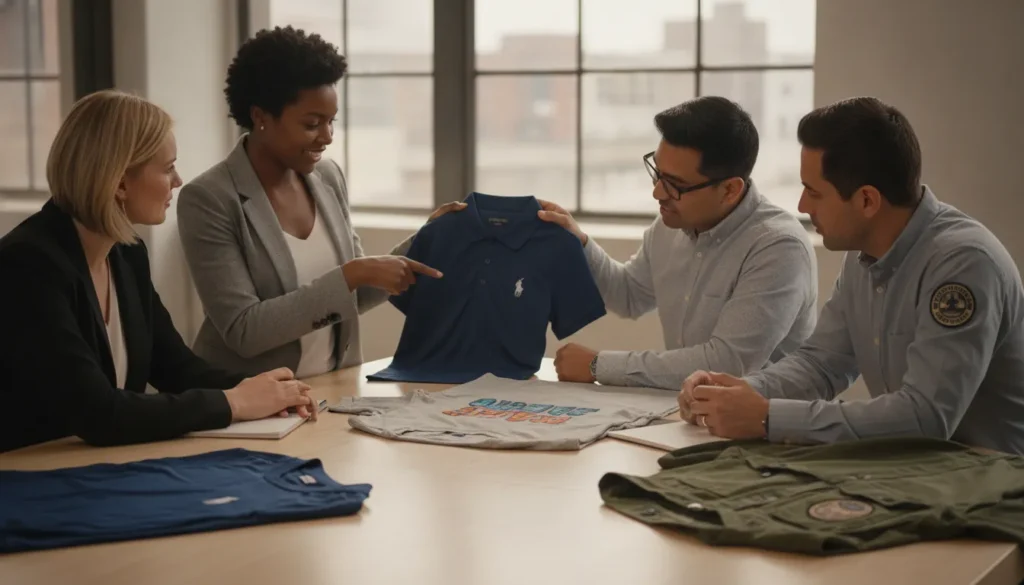
Use the evaluation conversation to test the vendor’s process. Ask for a representative sample and request a clear explanation of what may change between a digital mockup and the finished piece. Ask who approves substitutions and how defects, out-of-stock items, and reorder differences are handled.
- Ask how garment and decoration choices are matched to use, audience, and brand standards.
- Ask how approved artwork, sizing, colors, and samples are documented for future reorders.
- Ask what company-store tools support access, approvals, budgets, reporting, and analytics.
- Ask how inventory is stored, replenished, counted, and communicated to administrators.
- Ask how the partner handles individual shipments, bulk deliveries, kits, and international orders.
- Ask who owns communication when a shipment, garment, or production decision needs attention.
Brand Vessel’s Custom Company Store: Build One Employees Use page provides additional context on how a store can connect product selection, inventory, and fulfillment. A technology layer is useful only when the operating team behind it can keep the program accurate and responsive.
Which Red Flags Should You Watch for in Vendor Proposals?
Red flags include vague samples, one-size-fits-all decoration recommendations, unclear ownership, incomplete fulfillment answers, and proposals that focus only on unit selection. A credible vendor should make quality controls, substitutions, timelines, inventory responsibilities, and escalation paths visible before your company commits.
Vague samples or mockups only
A polished digital rendering cannot confirm fabric, fit, thread density, ink coverage, placement, or packaging. If a vendor avoids a representative physical sample, ask why. Sample review is especially important when several garment types, sizes, locations, or decorating methods are involved.
One decorating method for every garment
Different artwork and fabrics call for different treatments. A vendor that pushes one method without discussing the garment and use case may be optimizing its process rather than your brand experience. Look for a partner that can explain tradeoffs and recommend alternatives when the design changes.
No clear owner after the sale
Proposals should identify who handles approvals, order questions, inventory updates, replacements, and exceptions. If every issue is routed through an unnamed shared inbox, the process may become difficult once departments or locations begin ordering independently.
Fulfillment treated as an afterthought
Ask where products are stored, how individual and bulk orders are handled, and how international shipments are coordinated. Apparel programs often fail operationally after the creative work is approved. A complete proposal addresses the path from finished garment to the person or team receiving it.
How Can You Compare Apparel Vendors on Quality and Scale?
Compare vendors across the same decision categories instead of choosing on catalog size or quoted unit cost alone. Review garment quality, decoration range, brand controls, program technology, inventory, fulfillment, communication, and ability to support your locations. A weighted scorecard makes tradeoffs easier to explain internally.
| Evaluation area | What to verify |
|---|---|
| Garment and decoration | Representative samples, suitable methods, consistent placement, and clear approval standards. |
| Program technology | Ordering access, approvals, budgets, reporting, analytics, and required integrations. |
| Inventory and fulfillment | Storage, replenishment, individual orders, bulk shipments, kits, and international delivery. |
| Service model | Named ownership, communication expectations, escalation handling, and reorder support. |
Score each category according to your program’s priorities. A company with a distributed workforce may weight access, inventory visibility, and direct shipping heavily. A company focused on events may give more weight to creative development, sample speed, and bulk fulfillment. The comparison should reflect the job your vendor must perform.
Brand Vessel is positioned for organizations that want quality custom apparel plus an operating partner. Its work can connect creative decorating with company stores, storage, logistics, kitting, fulfillment, and global distribution. The broader pillar should explain decoration options in depth, while this vendor guide focuses on how to evaluate the partner responsible for the complete program.
That distinction also improves the buying conversation. Instead of asking only which shirt is available, your team can ask which partner will maintain the approved standard. Support the people placing orders, and respond when the program changes. A vendor scorecard built around those responsibilities gives finance, procurement, brand, and operations a common way to compare proposals. It also exposes gaps early, before a seemingly attractive order creates extra work for internal teams.
Give each stakeholder room to record a must-have and a risk. Procurement may prioritize accountability, brand may prioritize sample quality, and operations may prioritize inventory visibility. Aligning those views before reviewing proposals prevents the loudest requirement from becoming the only requirement. The result is a decision your company can explain and manage after launch.
Start a project with Brand Vessel when you are ready to compare apparel, decoration, and fulfillment requirements with a strategic merchandise partner.
Why Might a Boutique Partner Beat a High-Volume Shop?
A boutique partner may be the better choice when your company needs close creative collaboration, consistent quality, and operational coordination rather than a catalog-only transaction. Scale still matters, but the relevant question is whether the vendor can provide enterprise capability without losing accountability and attention to detail.
High-volume suppliers can offer broad catalogs and established production networks. Those strengths may fit a standardized, low-touch order. They do not automatically solve brand consistency, stakeholder coordination, company-store workflows, or distributed fulfillment.
Brand Vessel describes its model as a boutique enterprise provider. The value is the combination of customer-first support with capabilities for established brands and large organizations. Buyers should test that positioning against their own requirements: named support, physical samples, decorating range, inventory ownership, kitting, and delivery coordination.
There is no universally best vendor. The best fit is the partner whose quality controls, service model, technology, and logistics match the complexity of your apparel program. A disciplined evaluation helps your team choose on total program fit instead of a single product or proposal line.
Before making a final decision, turn the evaluation into a short internal record. Note the approved sample, the decorating rationale, the service owner, the fulfillment responsibilities, and the conditions that would trigger a review. This gives stakeholders a shared basis for approval and makes the next reorder easier to manage. It also keeps the selection focused on the experience your teams need over time, not only the appearance of the first shipment.
Start a project with Brand Vessel to discuss your company’s custom apparel and merchandise requirements.
Frequently Asked Questions
How do you choose the right custom apparel vendor for a company?
Define your users, use cases, brand standards, ordering process, inventory needs, and distribution pattern first. Then compare physical samples, decoration expertise, approval controls, technology, fulfillment capacity, communication ownership, and issue resolution. A vendor should explain how it will support reorders and program changes, not only the first production run.
What should an enterprise buyer request in an apparel sample?
Request the intended garment, decoration method, artwork scale, color, and representative sizes. Review fabric hand, fit, stitching, print or embroidery quality, placement, packaging, and labeling. The sample conversation should also clarify who approves substitutions and how the vendor handles defects or unavailable items.
What is more important than a large apparel catalog?
A large catalog is useful only when the vendor can help your team choose suitable products and deliver them consistently. For an enterprise program, brand control, decoration judgment, inventory visibility, ordering workflows, fulfillment, and responsive support may matter more than the number of products listed.