
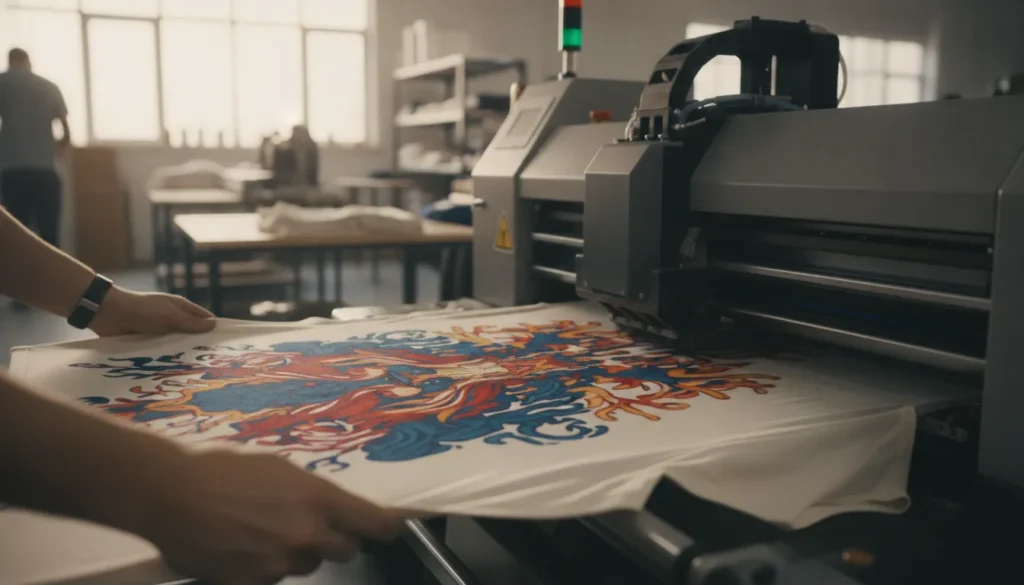
Choosing a decoration method for corporate apparel is less about finding one universal winner and more about matching the artwork, garment, order profile, and fulfillment plan. A photo-rich onboarding tee, a small employee kit, and a large event order may each call for a different production approach.
Start a project with Brand Vessel to review your apparel decoration and fulfillment needs.
Direct to garment printing corporate programs can be a strong fit when a design uses multiple colors, fine detail, or individualized artwork, especially on suitable cotton garments. DTG sprays ink directly onto fabric, allowing complex designs without the setup associated with traditional screen printing. But fabric choice, quantity, proofing, cost, and schedule still shape the decision. Printful explains the direct-printing process, while Brand Vessel can help evaluate decoration alongside apparel quality and distribution needs.
The right starting point is understanding what DTG actually does, where it performs best, and when another method offers a better operational or visual result.
What Is Direct-to-Garment Printing for Corporate Apparel?
Direct-to-garment printing applies ink directly to a finished garment through an inkjet-style process. It is well suited to complex, multicolor artwork on fabric items because the design is absorbed into the garment fibers rather than applied as a separate layer. For corporate buyers, the right result still depends on garment, artwork, preparation, and production controls.
DTG is a digital decoration method. Instead of creating screens for each color, a printer translates a digital artwork file into ink applied to the garment surface. The garment is typically prepared so the ink can bond consistently, then the printed piece is cured to set the design. The exact preparation and curing workflow varies by equipment and production partner, so buyers should confirm the process during sampling and approval.
The technology can support detailed, multicolor designs that would be difficult to reproduce economically with a limited-color decoration method. Industry guidance describes DTG as a strong option for complex designs on items such as T-shirts, hoodies, and tote bags, with the artwork soaking into the clothing fibers. Source: Printful
Garment selection affects the result
Fabric is not a neutral input. Smooth, cotton-rich garments generally provide a more predictable surface for ink absorption. A cotton-polyester blend may appear less vibrant, while a tri-blend can produce a softer, more lived-in appearance. Polyester and heavily textured fabrics can create ink inconsistencies, according to production guidance from RushOrderTees. Source: RushOrderTees
- Review the fiber content before approving a garment for the full program.
- Check whether the garment color requires a white ink base beneath the artwork.
- Consider how the fabric hand, drape, and wear pattern support the intended employee experience.
- Request a physical sample when color accuracy or brand standards are important.
Artwork and production context matter
DTG can reproduce gradients, fine detail, and photographic-style imagery, but that flexibility does not remove the need for production-ready artwork. The design should be reviewed at its intended print size, with attention to transparent areas, edge detail, contrast, and how the garment color changes the visual result. A digital proof is useful, but a physical sample gives procurement, brand, and People Operations teams a more reliable approval reference.
For an enterprise program, decoration is only one part of the decision. Garment consistency, size runs, brand approvals, inventory, individual shipping, and distribution can determine whether a technically strong print works operationally. Brand Vessel documents custom apparel and creative decorating alongside company stores, logistics, and fulfillment. Its Branded Merchandise Services & Company Stores provide useful context for evaluating the decoration method as part of a broader merchandise program.
How Does DTG Compare With Screen Printing for Corporate Orders?
DTG and screen printing can both support professional corporate apparel, but they solve different production problems. DTG is generally well suited to smaller orders with complex, multicolor artwork. While screen printing remains a strong option for repeatable designs, vibrant colors, and programs that prioritize consistent decoration across a larger run. The better choice depends on the artwork, garment, quantity, wear expectations, and fulfillment plan.
| Decision factor | DTG | Screen printing |
|---|---|---|
| Artwork complexity | Handles detailed, multicolor, gradient, and image-led artwork without reducing the design to a few spot colors. | Works well for bold, clearly separated artwork and repeatable brand graphics. More colors can require additional setup and production coordination. |
| Color and detail | Can reproduce many colors and fine visual detail, with a print feel that is typically soft because the design absorbs into the fibers. DTG printing guidance describes the process and its use for complex, multicolor fabric designs. | Can deliver vibrant, durable multicolor designs through traditional and specialty techniques, making it useful when strong graphic impact and repeatability matter. |
| Order size and personalization | Often fits smaller or highly varied orders, including designs that change by employee, team, or campaign. RushOrderTees recommends DTG for smaller order sizes and complex images: DTG service guidance. | Often fits repeat orders where the same artwork is applied consistently across a coordinated apparel run. |
| Fabric and garment | 100% cotton is favorable for ink absorption and vibrancy. Cotton-poly blends may look less vibrant, while tri-blends can produce a softer, slightly faded effect. Polyester and heavily textured fabrics can create inconsistencies. See the fabric guidance from RushOrderTees. | Offers broader decorating flexibility depending on the garment, ink system, artwork, and production method. The specific fabric still needs to be reviewed before approval. |
| Feel and wear expectations | Because DTG designs soak into clothing fibers, the surface can feel lighter than a heavy ink deposit. Curing and garment care remain important to the finished result. | Can create a more pronounced printed surface, depending on ink and application. It is a practical choice when a bold, uniform graphic is central to the program. |
| Corporate program fit | Useful for limited-edition drops, employee personalization, complex campaign art, and distributed ordering where designs or quantities vary. | Useful for standardized uniforms, event apparel, recurring brand graphics, and programs where consistent output across repeat orders is the priority. |
Fabric selection can determine the outcome before production begins. Research from RushOrderTees identifies cotton as ideal for DTG, notes that blends can reduce vibrancy, and advises caution with polyester and heavily textured materials. That does not make a blend or performance fabric automatically unsuitable, but it does make garment testing and artwork approval more important.
Screen printing may be the stronger operational fit when a corporate program repeats the same artwork across a coordinated run. DTG may be more practical when the artwork is photographic or highly detailed, or when a program needs more design variation. Quantity alone should not decide the method. Consider whether the garment is cotton, how the print should feel, how closely each item must match, and whether the same design will be reordered.
Brand Vessel evaluates those production choices alongside apparel quality, company-store ordering, inventory, and distribution requirements. Its Branded Merchandise Services & Company Stores offering can help teams connect decoration decisions to the broader merchandise program rather than treating printing as an isolated purchase.
When Is Direct-to-Garment Printing the Right Choice for a Corporate Program?
Direct-to-garment printing is often a strong fit when a corporate apparel program needs smaller or varied runs. Detailed multicolor artwork, or individualized designs without building a separate screen for every version. The right decision still depends on the garment, brand standards, approval process, and how finished items will reach employees.
Use this framework to evaluate DTG as one part of the decoration strategy, rather than assuming one method should serve every product in the program.
- Run size and assortment: DTG is worth considering for smaller order sizes or programs with many design variations. Research from RushOrderTees identifies smaller orders and complex imagery as common DTG use cases, but supplier minimums and economics vary by project. Source: RushOrderTees DTG guidance.
- Artwork complexity: Choose DTG when the artwork includes many colors, gradients, fine visual detail, or an image-led treatment that would be cumbersome to separate into screens. It can be especially useful when each team, event, or employee group needs a distinct version.
- Personalization: If names, team identifiers, or limited-edition artwork change from one order to the next, digital production can simplify variation. Confirm how the supplier will manage file versions, approvals, and data handling before production.
- Garment selection: Start with the intended garment, not the decoration method. Cotton is generally favorable for DTG, while cotton-polyester blends may appear less vibrant. Tri-blends can create a softer, more lived-in look, and polyester or heavily textured fabrics can produce inconsistencies. Review the fabric guidance before approving a blank.
- Brand review: Request a proof or physical sample when color accuracy, fine detail, or a dark garment matters. Have the brand owner review the actual garment and print together, since the same artwork can read differently across fabric colors and compositions.
- Program consistency: Define approved artwork files, garment colors, placement, sizing, and reordering rules. A digital method can support variety, but governance is still necessary when multiple offices or teams order independently.
- Fulfillment model: Map inventory, storage, individual shipping, and international distribution before launch. For a distributed workforce, the production choice must work with the ordering and delivery experience, not only with the print file.
Brand Vessel evaluates custom apparel alongside the broader merchandise operation, including company stores, inventory, approvals, storage, packing, and distribution. Its Branded Merchandise Services & Company Stores provide the appropriate context for buyers who need decoration and logistics coordinated through one strategic partner.
DTG is usually worth advancing when artwork variation and visual complexity matter more than a single standardized decoration across a large run. If the program prioritizes highly consistent spot colors, specialized garment types, or a different durability and production profile. Compare screen printing, embroidery, patches, or other methods before finalizing the specification. For additional program context, see Custom Apparel for Business Teams Will Actually Wear.
How Do Color, Detail, and Fabric Affect DTG Results?
DTG results depend on the relationship between the artwork, ink, garment color, and fabric surface. Complex, multicolor artwork can be a strong fit, while cotton generally supports more predictable color and detail. Blends, polyester, texture, and weak artwork files may change the final appearance, so proofing matters.
DTG can reproduce complex, multicolor designs because the process sprays ink directly onto the garment. The design soaks into the clothing fibers rather than forming a separate layer on top. That makes digital printing useful for detailed artwork, gradients, and image-led graphics, but the garment remains part of the visual result. Review the design against the actual apparel color, not only against a white artboard. Printful explains the DTG process and its use for complex, multicolor fabric designs.
Artwork quality sets the starting point
Artwork preparation should preserve the detail the production team is expected to reproduce. Edges, fine elements, transparency, color relationships, and the intended print size all deserve review before the file enters production. General industry guidance commonly recommends supplying high-resolution artwork at the intended print size. But the production partner should confirm the appropriate file specifications for the selected garment and equipment. Do not assume that a file that looks sharp on a monitor will produce the same result on fabric.
- Check small type, thin lines, and close color values at the intended print size.
- Confirm whether transparent areas should reveal the garment or receive an ink treatment.
- Review the artwork on the actual garment color, especially when the design includes light tones.
- Approve a production proof before releasing a larger corporate apparel order.
Fiber content and texture influence consistency
Fiber selection is a central decision in direct to garment printing corporate programs. Industry guidance identifies 100% cotton as a favorable surface for ink absorption and notes that cotton-polyester blends may appear less vibrant. Tri-blends can support a softer, lived-in look, while polyester and heavily textured fabrics can create ink inconsistencies. These are general decorating considerations, not a guarantee for every blank garment or printer. RushOrderTees outlines common DTG fabric tradeoffs.
Garment color also changes the preparation and visual review. On colored garments, a white base layer may be used before the other colors so the design stands out. The effect still depends on the artwork, garment, and production settings, so a proof is the responsible way to assess brand-critical colors. A buyer should also confirm whether the desired hand feel, coverage, and wear appearance suit the program.
Where Brand Vessel adds production judgment
Brand Vessel’s documented decorating expertise spans custom apparel, screen printing, embroidery, patches, all-over prints, custom labels, and specialty washes. That broader capability matters when a brand needs to evaluate DTG alongside other methods rather than force every design into one process. Brand Vessel can assess the artwork, apparel choice, brand standards, quantity, and distribution plan as connected decisions. Its Branded Merchandise Services & Company Stores also connect decorating decisions with the operational needs of a larger merchandise program.
What Should Corporate Buyers Expect for DTG Minimums, Costs, and Turnaround?
Corporate buyers should treat DTG minimums, costs, and turnaround as project variables rather than fixed industry standards. The garment, artwork, quantity, proofing requirements, inventory position, shipping destination, and distribution model can all affect the final quote and schedule. Some providers advertise print-on-demand items with no order minimums, but Brand Vessel project terms require confirmation for each program.
A useful quote is more than a unit cost. It should explain what is included, which assumptions affect production, and how the order will reach employees, event attendees, or other recipients. That clarity matters when a program includes multiple garment styles, sizes, locations, or delivery waves.
Minimums depend on the vendor and the program design
There is no single DTG minimum that applies across all providers. For example, Printful advertises print-on-demand items without order minimums, but that statement describes its own service model, not a universal purchasing rule. Printful’s DTG guidance should therefore be used as an example of one provider’s terms, not as a commitment for Brand Vessel.
For a corporate program, ask whether the stated minimum applies per design, garment style, color, size range, shipment, or complete order. A small initial run may have different economics from a repeat order tied to a company store. If the program requires samples, multiple artwork versions, or individual fulfillment, those requirements should be included in the conversation before approval.
What drives the quoted cost?
Ask the vendor to separate the variables behind the quote. These commonly include:
- Garment brand, fabric, color, style, and size assortment.
- Print placement, coverage, artwork complexity, and color requirements.
- Artwork preparation, file review, and physical or digital proofing.
- Order quantity, personalization, and whether designs vary by audience or location.
- Blank-garment inventory, substitutions, backorders, and replenishment needs.
- Packaging, individual labeling, shipping destinations, and split distribution.
- Storage, reporting, ordering controls, and fulfillment support for an ongoing program.
This approach prevents a low decoration quote from obscuring downstream handling costs. Brand Vessel combines custom apparel with storage, logistics, kitting, fulfillment, and distribution, so procurement teams can evaluate the merchandise decision alongside the operating model. When employees order individually or teams are spread across regions, Custom Company Stores may be relevant to the broader program design.
Build turnaround expectations around decision points
Rather than asking only, “How fast can this ship?” ask which milestones control the schedule. Confirm the time needed for garment selection, artwork review, proof approval, inventory verification, production, quality checks, packing, and final delivery. Also ask how the plan changes if an item is unavailable, a proof is revised, or shipments are going to multiple locations.
Before requesting a quote, prepare this planning checklist:
- Define the audience, use case, quantities, sizes, and delivery locations.
- Identify preferred garments, colors, fabric requirements, and acceptable substitutes.
- Provide final artwork, brand standards, print placements, and personalization rules.
- Ask whether minimums apply by design, style, shipment, or program.
- Request a proof and confirm who approves it before production begins.
- Ask for assumptions covering inventory, packaging, shipping, and split distribution.
- Confirm production milestones, approval cutoffs, contingencies, and replenishment terms.
Brand Vessel can help corporate teams assess DTG alongside apparel quality and fulfillment requirements. The strongest quote is the one that makes every operational assumption visible before the program is approved.
Frequently Asked Questions
When should you choose DTG printing for custom corporate apparel?
DTG is a practical option for smaller apparel runs, individualized orders, and artwork with many colors or complex imagery. It is less compelling when a program needs large quantities of one simple design, where screen printing may offer a better production fit. Review quantity, garment, artwork, and fulfillment requirements together before selecting the method. Industry guidance supports DTG for smaller, complex orders.
Which fabrics produce the best results with DTG?
100% cotton generally supports vibrant, precise DTG prints because its smooth surface absorbs ink consistently. Cotton-polyester blends may appear less vibrant, while tri-blends can create a softer, slightly faded look. Polyester and heavily textured fabrics may produce inconsistent results, so approve a garment sample when color accuracy and brand standards matter. Fabric guidance from RushOrderTees outlines these tradeoffs.
Is there a minimum order size for DTG printing?
Minimums vary by provider, garment, decoration workflow, and the broader corporate program. Some print-on-demand services advertise no order minimums, but that does not establish Brand Vessel terms or guarantee the most efficient option for a company-wide order. Confirm the project-specific minimum, sample process, inventory plan, and distribution model before approving production. Printful describes its own print-on-demand model as having no order minimums.
Start a project with Brand Vessel before finalizing your decoration method.
How quickly can you receive DTG-printed corporate apparel?
Turnaround depends on garment availability, artwork readiness, proofing, production capacity, order volume, shipping, and whether items must be distributed individually or in bulk. A vendor’s advertised rush timeline should not be treated as a universal promise. Ask for a schedule that covers approval through delivery, including inventory and fulfillment milestones, rather than relying on a production estimate alone.
Ready to Plan Your Corporate Apparel Program?
The right decoration method depends on your artwork, garments, quantities, brand standards, and fulfillment requirements. A planning conversation can help you evaluate those factors together and choose an approach that supports both the finished product and the broader merchandise program. To discuss your corporate apparel decoration and fulfillment needs with Brand Vessel, start a project.