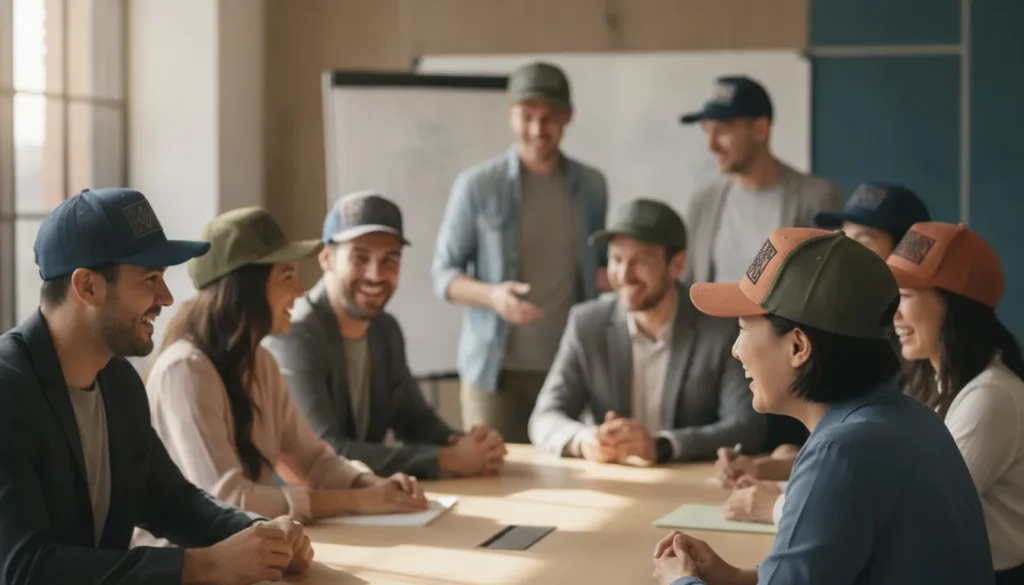
A company hat can become a dependable part of a team uniform, event kit, onboarding package, or everyday brand presence. The right choice depends on more than the logo: buyers need to balance fit, fabric, decoration area, wear context, and the consistency required across teams and locations.
Choosing custom company hats for businesses starts with matching the hat style and decoration method to how employees will wear it, where the brand will appear, and how the program needs to scale. A thoughtful program protects brand consistency while keeping comfort and quality visible in every stitch.
That decision is easier when the product is treated as part of a broader merchandise system, not an isolated giveaway. Brand Vessel supports custom apparel and end-to-end merchandise programs through Branded Merchandise Services & Company Stores. Begin by comparing the shapes, fits, and seasonal options that make sense for your audience.
Popular Styles for Custom Company Hats for Businesses
For most organizations, the best custom company hats for businesses are the styles that match the work setting, employee preferences, season, and logo treatment. Snapbacks and trucker hats suit casual, active programs; dad hats offer a softer everyday fit. Beanies support colder conditions, and structured or unstructured construction determines how prominently the hat presents the brand.
Start with the way people will wear the hat, rather than choosing a silhouette from a catalog. A warehouse, field, or event team may need breathable coverage and an adjustable fit, while an office onboarding program may call for a low-profile cap that feels natural outside work. Businesses can also offer two coordinated styles for different roles while keeping colors and decoration consistent. Brand Vessel can help connect those choices to broader Branded Merchandise Services & Company Stores.
- Snapback: The adjustable closure and structured front make this a practical choice for event teams, casual company apparel, and audiences with varied head sizes. The front panels provide a clear area for a bold embroidered logo or patch.
- Dad hat: With a softer, relaxed profile, this style works well for office teams, lifestyle programs, and everyday wear. Its unstructured front creates a more understated presentation and pairs naturally with smaller embroidery.
- Trucker hat: The mesh backing supports airflow, making it useful for outdoor events, field teams, summer programs, and active work settings. Its front panel can accommodate embroidery or a patch while the back adds ventilation.
- Beanie: A beanie is suited to colder seasons, outdoor crews, winter events, and employee gifts intended for practical use. Its flexible surface means decoration should suit the knit and available placement area.
- Structured cap: A structured crown holds its shape and gives a logo a more defined, polished presentation. It can be a strong fit for customer-facing teams, company stores, and programs where a consistent uniform appearance matters.
- Unstructured cap: A softer crown conforms more easily to the wearer and has a casual, approachable look. It is often appropriate for culture merchandise, recruiting events, and general employee wear where comfort is a priority.
Decoration area is part of the style decision. A structured front can support a prominent mark, while a soft cap or knit may call for a smaller treatment or a different placement. Review the logo at actual size, confirm the desired fit across employee groups, and approve a physical sample when consistency matters. The right program balances wearability with the quality and visibility of every branded detail.
Which Decoration Method Fits Your Corporate Hat Design?
Embroidery is usually the strongest choice for a polished logo with clear shapes and moderate detail. Patches work well when the design should feel dimensional, tactile, or highly distinctive. Screen printing and heat transfer suit flat, bold artwork on compatible surfaces. The right method depends on logo complexity, hat construction, intended wear, and the level of consistency your program requires.
Start with the artwork, not the decoration trend. A simple wordmark or icon can translate cleanly into stitched thread, while a large graphic with gradients or fine lines may need a printed treatment or a carefully simplified version. Ask for a production-ready proof on the actual hat style so stakeholders can review scale, placement, color, and legibility before approval.
| Method | Best fit | Key consideration |
|---|---|---|
| Embroidery | Professional logos, initials, and simple brand marks | Thread density and small details must suit the hat surface |
| Custom patches | Distinctive, dimensional, or heritage-inspired designs | Patch material, edge finish, and attachment method affect the result |
| Screen print | Bold artwork and larger graphic treatments | Works best when the panel and fabric provide a stable print area |
| Heat transfer | Detailed or multi-color artwork on suitable panels | Confirm surface compatibility, finish, and expected wear conditions |
When embroidery is the better choice
Embroidery remains a dependable option for business headwear because it gives logos a structured, professional finish and holds up well under regular use. It is especially effective on the front panel of a structured cap, where a clean mark can become the visual focal point. Keep fine lettering and tightly packed details under review, since thread has physical thickness and very small elements may lose clarity.
When patches or print create more impact
A custom patch can give a corporate hat a more designed, collectible feel. Fabric, leather, and PVC patches create different visual and tactile effects, while a shaped edge can reinforce the identity of a campaign, team, or event. Screen printing or heat transfer can be more appropriate for bold, flat artwork that needs broader coverage. For a deeper method-by-method review, see the Screen Printing vs Embroidery Business Apparel Guide.
Brand Vessel can help translate approved logo artwork into a decoration plan that fits the blank, audience, and distribution model. For an enterprise program, document the approved thread or ink colors, logo dimensions, placement, and proof standards. That reference makes repeat orders easier to review and helps different employee groups receive hats that still look like one cohesive brand system.
How Should You Choose Hats for Your Brand and Employees?
The best custom company hat program balances brand consistency with the way employees will actually wear the product. Evaluate the approved logo, work setting, climate, fit, decoration method, proof requirements, and replenishment needs before selecting one style or a coordinated assortment.
Use this five-point decision filter:
- Start with the brand system. Confirm the approved logo lockup, colors, and any simplified mark that remains legible at the intended size. Decide whether each style needs the full wordmark, a symbol, or a short team designation.
- Match the hat to the wear context. Structured caps can suit conferences, client meetings, and polished field teams. Unstructured caps may fit internal events and everyday wear, while breathable trucker styles or beanies can support seasonal and outdoor programs.
- Check fit and comfort for each audience. Review the closure, crown height, fabric feel, ventilation, and available size range. Adjustable designs can simplify distribution across a mixed workforce, but a sample should still be tested for comfort and stability.
- Approve decoration at production size. Compare embroidery, patches, or print against the hat’s surface and the logo’s level of detail. Review a physical sample or realistic production proof for logo scale, placement, color accuracy, and finish before approving the run.
- Plan for the full program, not only the first order. Document the approved blank, color, logo treatment, decoration location, inspection standard, and replenishment process. A controlled assortment gives employees useful options while keeping every piece recognizably part of the same brand.
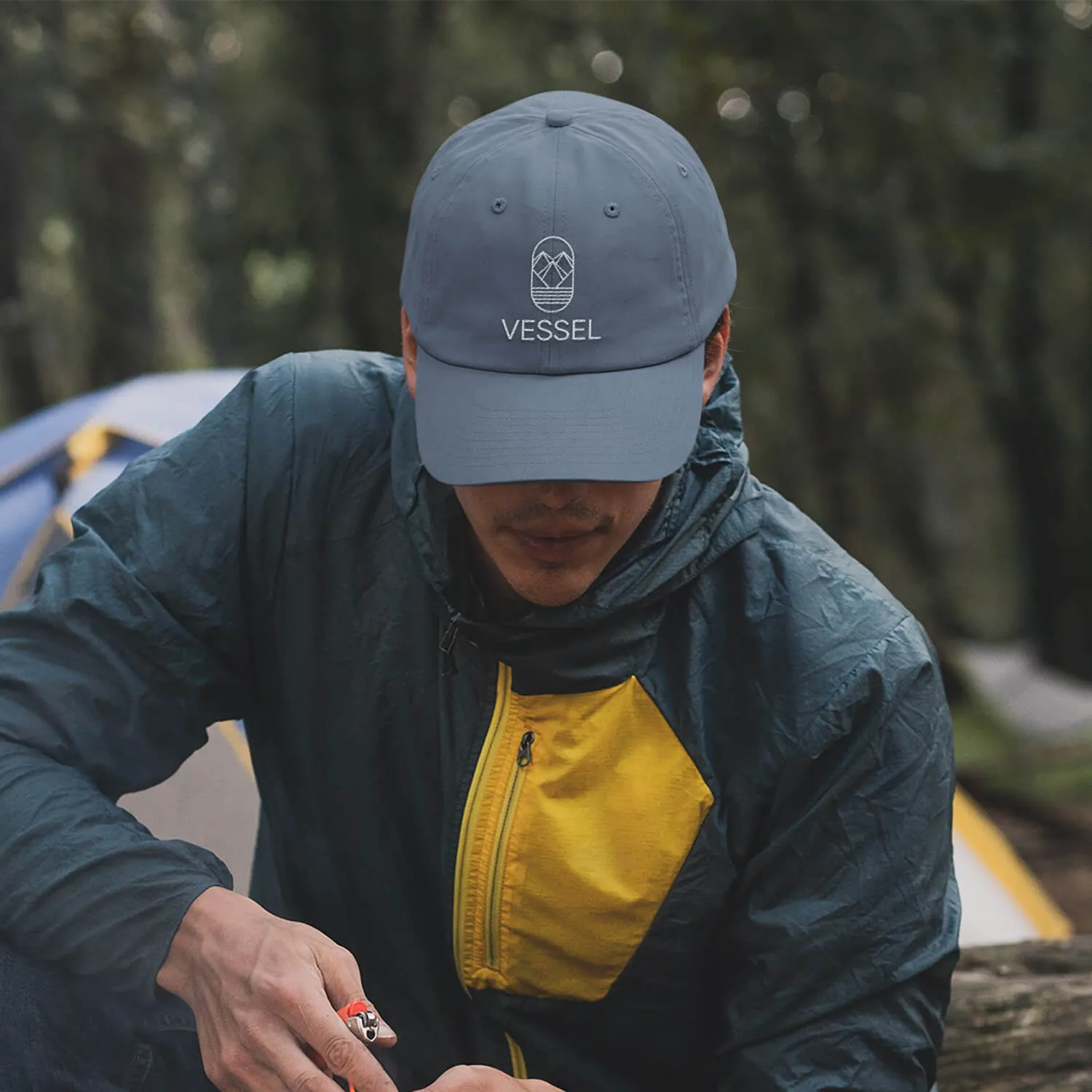
For an enterprise or multi-location program, connect product selection to the broader merchandise workflow. Brand Vessel can help coordinate custom apparel and Branded Merchandise Services & Company Stores so the approved standards remain clear as teams order, replenish, kit, and distribute merchandise.
Brand Vessel takes a documented premium apparel approach, using brands such as Nike, The North Face, and Marine Layer without implying that any one brand is right for every program. The goal is quality you can see in every stitch, supported by creative design and practical merchandise guidance. For a broader view of scalable quality decisions, see Corporate Swag for Large Companies: Scale and Quality.
Minimum Order Quantities for Custom Branded Hats
There is no universal minimum for custom branded hats. The quantity depends on the blank hat, decoration method, setup requirements, artwork complexity, and whether the order is a one-time production run or part of a continuing program. Confirm the minimum for each specific style and decoration combination before approving a quote.
Why do hat minimums vary?
A supplier may source different blanks for a structured cap, an unstructured dad hat, a trucker style, or a premium performance option. Each blank can have different availability, decoration space, and production requirements. A logo embroidered directly onto a hat may follow a different process from a sewn patch, PVC patch, or printed treatment. Setup work, such as digitizing artwork or preparing a patch, can also affect how efficiently a run can be produced.
Production scale matters as well. A small pilot may be appropriate when a company is testing employee interest, evaluating fit, or approving a new brand treatment. It may involve fewer styles and a tightly controlled use case. An enterprise program typically needs repeatability across departments, locations, or employee groups. That can make a larger, standardized run more practical, especially when the same decoration and approved blanks will be reordered.
How should you plan a pilot versus an enterprise program?
Start with the intended audience and distribution plan rather than choosing a quantity in isolation. A pilot for one office, event, or onboarding group can help confirm comfort, color, logo scale, and decoration quality before a broader rollout. Ask for production samples or a preproduction approval process when consistency matters.
For a larger program, document the approved hat styles, color options, logo lockups, decoration locations, and replacement process. Standardized specifications reduce avoidable variation when orders are placed over time. Brand Vessel can help connect product selection with creative decorating, company store management, and broader merchandise logistics.
What should you ask for in a custom hat quote?
- What is the minimum quantity for this exact blank and decoration method?
- Does the minimum change when ordering multiple colors, sizes, or styles?
- Are artwork digitization, patch setup, sampling, or other setup services included?
- What happens if the final quantity changes after artwork approval?
- Can the supplier support repeat orders using the same approved specifications?
- How will quality be checked across the production run?
- Can inventory be stored, replenished, kitted, or distributed to multiple locations?
A clear quote should separate the product, decoration, setup, fulfillment, and distribution assumptions. That detail makes it easier for procurement, marketing, and People Ops to compare options accurately without treating a single advertised minimum as a rule for every custom hat project.
How Do Lead Times and Rush Options Affect Hat Orders?
Lead times depend on more than the decoration step. Artwork approval, blank-hat sourcing, production, inspection, kitting, and distribution each need to align before custom company hats for businesses are ready for employees, events, or customers. Rush service may be possible for some combinations of product and quantity, but availability must be confirmed against the actual brief rather than assumed.
The schedule starts with a production-ready design. Your team may need to approve logo placement, thread or patch colors, decoration size, and the selected hat style before work can move forward. Artwork that looks clear on a screen may need adjustment for a curved front panel or a smaller decoration area. Resolving those details early helps avoid rework later.
Sourcing is the next variable. The preferred color, fit, brand, or material may not be immediately available in the required quantity. A comparable option can sometimes protect the project date, but that tradeoff should be reviewed by the brand and procurement teams before substitution. More labor-intensive techniques may also require additional production coordination. As a general manufacturing principle, higher-quality hand-stitching is not always the fastest approach, even though it can support a durable finish. NIST describes the quality and process tradeoffs in custom headwear production.
Inspection should be part of the plan, not an afterthought. A useful review checks decoration placement, color consistency, stitching or patch application, and the condition of the finished hats. If the order is being prepared for multiple offices or employee groups, kitting adds another dependency. Hats may need to be paired with other merchandise, packaged by recipient, or labeled for different destinations before they ship.
Distribution planning matters just as much for an international program. Brand Vessel combines creative services with logistics, kitting and fulfillment, global distribution, and in-house customs brokerage. That depth can help teams coordinate the movement of merchandise across locations, while still requiring accurate destination, quantity, and delivery information. The goal is a realistic project plan that accounts for every handoff.
Rush requests are best evaluated at the beginning. Share the in-hand date, delivery locations, approved artwork status, preferred and acceptable alternate blanks, decoration requirements, and whether individual kitting is needed. Brand Vessel can then assess the available path and identify the decisions that need to happen first, without promising a fixed timeline before sourcing and production are confirmed.
Frequently Asked Questions
What are the best custom company hats for businesses?
The best choice depends on where the hats will be worn and how your team wants the brand to feel. Structured caps create a defined, uniform profile, while unstructured dad hats offer a more relaxed fit. Trucker hats add breathability, and beanies can extend a headwear program into colder seasons. Consider comfort, employee roles, seasonality, logo placement, and the quality of the blank before choosing one style for every audience.
How do I choose the right decoration method for custom company hats?
Start with the logo, hat material, and desired visual effect. Embroidery provides a durable, professional finish for many standard logos. Patches can create a more dimensional or premium look, while screen printing may suit bold, detailed artwork on appropriate lighter-weight surfaces. Request a proof at the intended decoration size so stakeholders can review legibility, thread or ink colors, and placement before production.
Are there minimum order quantities for custom business hats?
Minimums vary by hat blank, decoration method, setup requirements, and production run. A small pilot may use a different process from an enterprise order distributed across offices or employees. Ask for the minimum quantity by style and decoration method, plus any setup, sample, packaging, kitting, or distribution requirements. This gives Procurement a more useful comparison than evaluating unit quantity alone.
How can I ensure my brand logo looks good on custom hats?
Prepare approved artwork in the correct format, identify the logo lockup for headwear, and confirm the minimum readable detail at the selected size. High contrast usually improves visibility, but the right treatment may be a simplified mark, patch, or alternate colorway rather than the full logo. Review a physical or realistic digital proof before approving the complete run.
What is the typical lead time for custom company hats?
Lead time depends on artwork approval, blank-hat availability, decoration, quality inspection, and the delivery plan. Kitting, multiple destinations, and international distribution can add coordination. Rush production may be possible for some combinations, but it should be confirmed against current inventory and the event date. Share the required in-hand date early so your merchandise partner can recommend a realistic schedule.
Ready to Start a Custom Hat Project?
A clear project brief helps align hat styles, decoration, brand requirements, quantities, and timing before production begins. Brand Vessel can help you shape a business apparel program that fits how your teams and customers will use it. Start a Project to share your goals, preferred timeline, and program details with the team.