
Custom Corporate T-Shirts: How to Order for Your Company
A corporate t-shirt program has to work beyond the launch event. Employees need comfortable garments they will wear, while procurement and marketing teams need consistent decoration, dependable sizing, and fulfillment across locations. For custom corporate t-shirts, the best buying decision connects the shirt itself with the operating plan behind it.
Start a project with Brand Vessel
Start by defining the audience, use cases, locations, and timing. Then approve the blank, decoration method, colors, size guidance, samples, inventory ownership, and distribution plan. Brand Vessel’s Custom Apparel for Business Teams Will Actually Wear service connects creative decorating with the practical requirements of a repeatable apparel program.
- Define who will wear the shirts and when they will use them.
- Approve the blank, decoration, colors, sizes, and physical sample.
- Confirm production, storage, fulfillment, and replenishment requirements.
- Review demand and feedback before the next order or catalog update.
How Do You Choose the Right Blank for Custom Corporate T-Shirts?
Choose a blank by balancing comfort, intended use, brand presentation, and program longevity. Review fabric feel, weight, fit, color, construction, and decoration compatibility together. Brand Vessel treats wearability as a business requirement because a shirt employees avoid cannot support onboarding, events, culture, or everyday brand visibility.
Start with the environment in which people will wear the garment. A soft, breathable fabric may suit office teams, onboarding, and casual workdays. A performance-oriented material may work better for field activity, active events, or warmer conditions. Ask how the fabric should feel and perform after repeated laundering.
- Fabric and weight: Compare lightweight, midweight, and heavier options based on climate, layering, and presentation. Request physical samples before standardizing the choice.
- Fit: Decide whether the program needs a unisex cut, gender-specific options, or both. Review body length, sleeve profile, and ease of movement.
- Color: Select a practical palette employees will wear in more than one setting. Confirm how each color works with the decoration and logo treatment.
- Durability: Review collar recovery, seam construction, fabric stability, decoration compatibility, and care guidance.
- Wearability: Consider travel, team gatherings, volunteer events, and casual workdays. Comfort and color versatility often matter more than novelty.
For an enterprise program, document the approved blank, color standards, size chart, decoration parameters, and sample sign-off. This gives procurement, creative, and regional teams a shared reference as the program expands.
Which Decoration Method Fits Your Corporate T-Shirt Design?
Choose decoration by balancing the artwork, garment, order profile, and wearing context. Screen printing suits bold graphics and larger quantities, while embroidery creates a dimensional finish for smaller marks and compatible garments. Patches offer another branded treatment. Brand Vessel can align these choices with the broader apparel program instead of treating decoration as an isolated production step.
| Method | Best fit | Review before approval |
|---|---|---|
| Screen printing | Bold artwork, graphic-led designs, and larger quantities | Ink color, placement, and contrast on the selected shirt |
| Embroidery | Small, structured marks and a dimensional treatment | Fabric weight, stitch density, logo scale, and puckering risk |
| Patches | Distinctive badges, limited graphics, or separate applications | Patch size, edge finish, attachment method, and expected wear |
Approve a physical sample before production
Review a physical sample or decoration proof before production. Confirm placement, color treatment, scale, texture, and the relationship between the design and shirt color. Record those decisions in the item specification so future reorders remain consistent. Brand Vessel’s Branded Merchandise Services & Company Stores connect creative decisions with program operations.
Discuss your custom apparel requirements with Brand Vessel
What Should You Confirm About Sizing Before a Bulk Order?
Before approving a bulk apparel order, confirm that employees can choose from a useful size range and understand how each garment fits. Brand Vessel recommends combining measurement guidance, physical samples, employee feedback, and a replacement plan. This reduces exchanges and stock imbalances while giving procurement a stronger basis for the size mix.
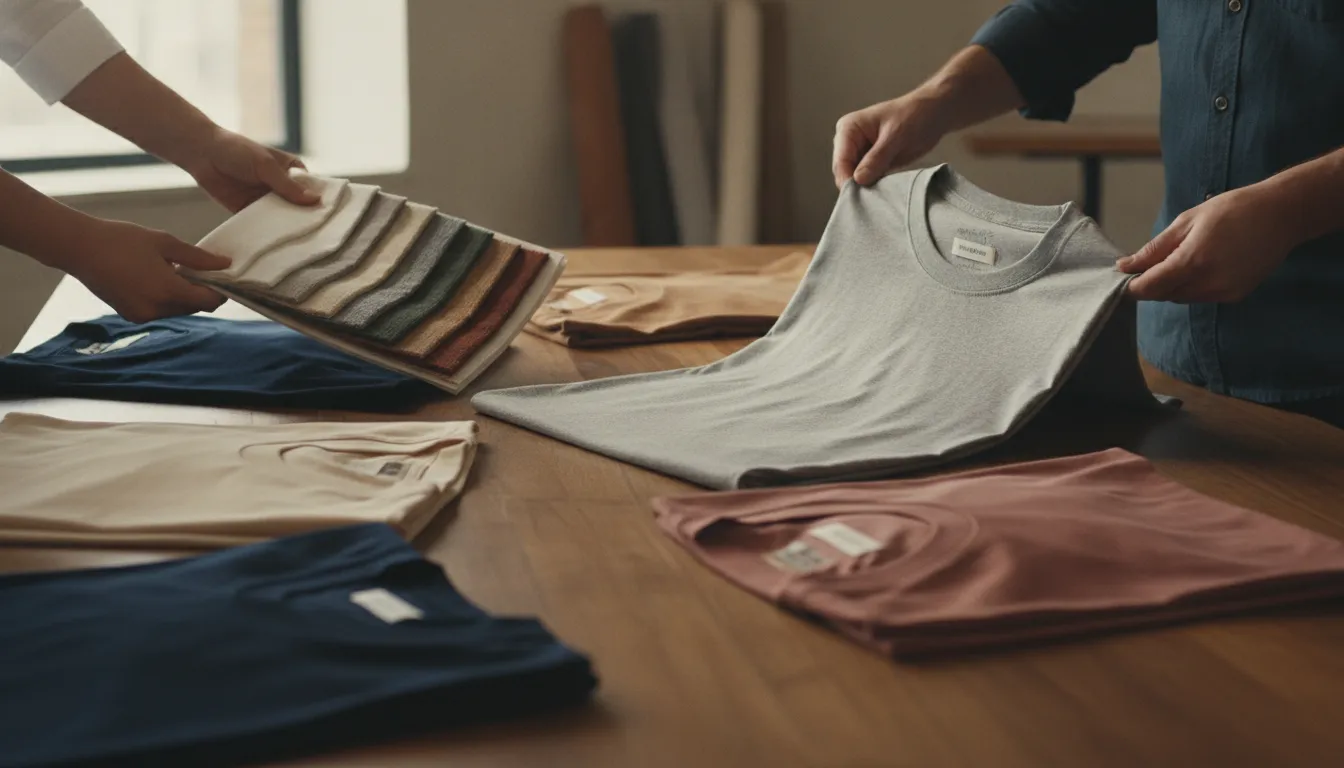
Do not assume that the same labeled size fits consistently across brands, fabrics, or cuts. Request the supplier’s current measurement guide and specify whether measurements refer to the garment or the person. The buying record should identify:
- Available sizes for each style and color, including extended sizes where offered
- Chest, waist, length, and sleeve measurements in a consistent unit
- Whether each garment is unisex, men’s, women’s, relaxed, fitted, or oversized
- Fabric behavior after laundering, including expected shrinkage or changes in drape
- How exchanges, replacements, and discontinued sizes will be handled
Use samples to test the real fit
A measurement chart is useful, but it cannot show how a shirt feels across different body shapes. Organize a fitting session with employees who reflect the actual workforce. Ask participants to evaluate shoulder placement, chest ease, torso length, sleeve length, fabric weight, and movement rather than choosing by label alone.
Record feedback in a shared sizing matrix. If the program serves office staff, field teams, and event personnel, one cut may not satisfy every use case. Offering unisex and gender-specific options can improve comfort when the choices remain simple for employees to understand.
How Do Minimum Order Requirements Work for Company T-Shirts?
Minimum order requirements for company t-shirts are program-specific rather than universal. A supplier may evaluate blank availability, decoration setup, total quantity, size and color mix, and the way shirts will be stored or fulfilled. Brand Vessel helps buyers review production and operational requirements together instead of selecting a minimum that creates problems later.
For a one-time event, the main constraint may be whether the selected blank and decoration method can be prepared efficiently for the requested quantity. An ongoing employee apparel program introduces different considerations, including consistent blanks, approved artwork, replenishment, multiple sizes, and several shipping destinations.
Questions to ask before approving a minimum
- Can we run a pilot? Confirm whether a limited order can test the blank, fit, decoration, employee response, and distribution process.
- How will reorders work? Ask whether the same blank, color, artwork, and decoration specifications can be maintained.
- Can we mix sizes and colors? A total unit count may not show preparation or inventory needs for each variation.
- Which setup charges apply? Request an explanation of artwork preparation, screens, digitization, samples, and recurring charges.
- What happens to excess inventory? Establish where remaining shirts will be held and how future fulfillment will work.
Separate the production minimum from the operational minimum. A decoration process may be workable at one quantity, while a distributed fulfillment model may call for a different inventory approach.
How Can You Manage T-Shirt Inventory for an Ongoing Program?
Manage an ongoing t-shirt program as an operating system, not a series of isolated orders. Brand Vessel recommends keeping dependable core styles available, rotating limited selections with purpose, and using demand, hiring plans, location data, and reorder history to guide purchasing.
Build a focused catalog and fulfillment plan
Start with proven shirts for onboarding, events, and everyday team wear. Keep colors, fits, and decoration treatments focused enough to forecast accurately and protect consistency. Add rotating styles for campaigns without allowing temporary demand to overwhelm the permanent assortment.
Forecast each item using hiring schedules, event calendars, regional demand, and campaign timing in addition to order history. Set a safety-stock policy for core sizes and locations. Then define who approves exceptions when demand moves beyond the forecast.
An integrated company store gives employees a clear place to select approved products and sizes. Brand Vessel’s Custom Company Stores page explains related store and logistics considerations. Plan downstream work with the purchase as well. Kitting can combine a t-shirt with welcome or event materials, while fulfillment should account for individual orders, bulk shipments, returns, and replenishment. Learn more about What Is Corporate Kitting? Guide for Enterprise Teams when apparel is part of a larger package.
Set ownership rules before the catalog opens. One person should maintain approved products, artwork, size guidance, and ordering permissions. Another can monitor stock and replenishment. Employee support should have a clear route for sizing questions, exchanges, and missing deliveries.
Use a regular review cadence rather than waiting for a shortage. Compare demand with available stock, upcoming hiring, planned events, and regional needs. If a core blank changes, compare fit, fabric, color, decoration, and measurements with the outgoing item before updating the size guide and product information.
Make replenishment measurable
Choose a small set of signals for every core shirt: units issued, units remaining, order frequency, stockouts, exchanges, and demand by location. These measures help a procurement team distinguish a genuine increase in demand from a one-time event or a sizing problem. Review the signals on a regular schedule and record the decision behind each reorder.
It is also useful to separate inventory by purpose. Core onboarding shirts may need steady availability, while event shirts can be purchased against a defined date and audience. Limited designs should have an owner, a sunset date, and a plan for remaining stock. This keeps temporary campaigns from becoming permanent storage obligations.
When a program serves distributed teams, fulfillment details matter as much as unit counts. Confirm whether orders are shipped individually, consolidated for a local coordinator, or packed with other merchandise. Establish the destination data, return process, and support path before launch. Brand Vessel’s storage, company store, and fulfillment capabilities can help connect these decisions into one operating plan.
Document the handoff from purchase to delivery
Inventory planning should include the handoff after production. Record when goods arrive, who checks quantities, where they are stored, and how exceptions are reported. A receiving checklist can catch carton discrepancies, decoration issues, incorrect sizes, or damaged garments before the products enter available stock.
For a company store, define the product data employees see before they order. Include the approved style name, fit description, measurement guidance, available colors, care information, and any ordering limits. Keep the store description aligned with the approved item specification so employees are not making decisions from conflicting information.
Coordinate apparel with the wider merchandise program
A t-shirt may be ordered for onboarding, a conference, a field event, or a recognition moment. Map those uses before selecting products so the apparel program supports the broader merchandise experience. Brand Vessel’s Branded Merchandise Services & Company Stores combine merchandise planning with company store and logistics support.
Build a simple escalation path for unusual demand. A hiring surge, office opening, customer event, or regional campaign can change the forecast quickly. The program owner should be able to check available stock, identify a substitute, approve a controlled rush, or communicate a realistic delivery expectation. That process is more dependable than treating each urgent request as an exception with no record.
Frequently Asked Questions
How do I choose the best material for custom corporate t-shirts?
Start with how employees will wear the shirt, where it will be used, and how often it will be washed. Compare fabric feel, weight, breathability, color availability, fit consistency, and durability. A premium blank employees want to wear can support stronger adoption than a disposable-feeling option.
Are there minimum order requirements for custom corporate t-shirts?
Minimums are program-specific. The required quantity can depend on the blank, decoration method, setup requirements, size and color mix, and whether inventory will be held for future fulfillment. Confirm the minimum for the initial order and ask how it affects pilots and reorders.
What is the difference between screen printing and embroidery for corporate apparel?
Screen printing is generally suited to larger graphic areas and multicolor artwork, while embroidery creates a dimensional finish for smaller logos and select garments. Choose based on the artwork, fabric, wear conditions, and desired brand presentation.
How should a company confirm shirt sizing before a bulk order?
Request samples, publish a clear measurement guide, and test the proposed fit with representative employees before finalizing quantities. Review whether a unisex option works across teams. A structured fitting process reduces exchanges and supports a more accurate size mix.