Companies choosing custom patches corporate uniforms need a decoration plan that holds up across garments, wear conditions, and replenishment cycles. This guide compares patch constructions, application methods, placement decisions, approval steps, and fulfillment considerations so procurement and brand teams can make a clear choice.
Start a project with Brand Vessel to discuss custom patches, apparel, and program requirements.
Brand Vessel treats patch work as part of a broader custom apparel and creative decorating program. Its approach connects decoration with garment selection, approvals, storage, fulfillment, and distribution. For the wider apparel planning context, read Custom Apparel for Business Teams Will Actually Wear.
What Are the Main Types of Custom Patches for Corporate Uniforms?
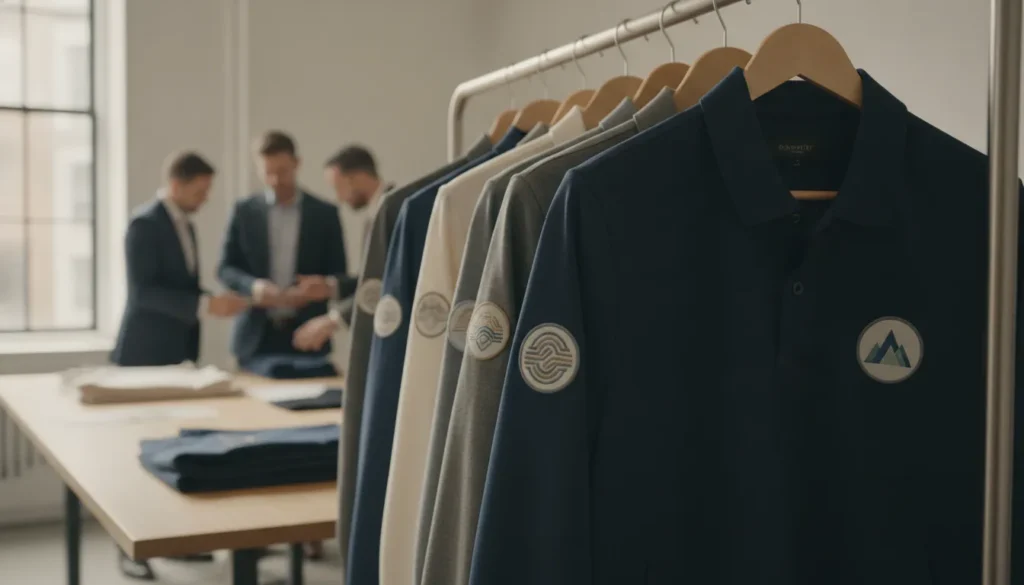
Corporate uniform patches generally fall into embroidered, woven, and rubber or PVC-style constructions. Each creates a different combination of texture, detail, flexibility, and visual weight. The best choice comes from matching the patch to the artwork, garment, wear environment, care routine, and brand standards.
Start by defining the role of the patch. A program may use one design for company identity, another for a department or location, and a third for a campaign or event. Common applications include:
- Company identity: A logo or wordmark creates a consistent signal across jackets, polos, hats, and work shirts.
- Team or department identification: A secondary mark distinguishes groups without changing the core brand system.
- Name, role, or location details: Variable information can support recognition when it remains legible at the finished size.
- Event and campaign apparel: A limited-run patch adds a program layer while the base garment remains useful after the event.
- Partner or collaboration marks: A jointly approved patch can recognize a relationship while preserving clear brand rules.
Embroidered patches offer a classic, tactile appearance through visible thread and raised texture. Woven patches create a flatter surface that can suit fine shapes or a cleaner profile. Rubber or PVC-style patches provide a bold, dimensional finish that may fit utility apparel or modern outerwear.
Review every option at the intended finished size. Fine lettering, narrow strokes, and crowded details can lose clarity when reduced. A patch that looks excellent on a large digital proof may need simplified artwork, stronger contrast, or a different shape before production.
How Should Teams Compare Woven, Embroidered, and Rubber Patches?
Compare patch constructions against four practical criteria: visual character, artwork detail, garment compatibility, and care requirements. Embroidered patches bring texture, woven patches provide a flatter profile, and rubber or PVC-style patches create dimension. A sample on the actual garment is more useful than a screen-only comparison.
| Patch type | Potential fit | Review before approval |
|---|---|---|
| Embroidered | Traditional, textured branding for uniforms, jackets, and workwear | Fine detail, thread colors, border, finished size, and laundering conditions |
| Woven | Flatter designs that need controlled detail or a clean profile | Contrast, legibility, dimensions, edge finish, and garment surface |
| Rubber or PVC-style | Bold, dimensional marks for utility apparel and outerwear | Flexibility, surface feel, heat exposure, edge profile, and brand fit |
Embroidered patches
Embroidered patches are a strong option when the uniform should feel traditional, substantial, and visibly crafted. Thread gives the design depth, but the artwork must account for the limits of a stitched surface. Small type and intricate internal shapes deserve special review before approval.
Woven patches
Woven patches can suit designs that benefit from a flatter finish. They may work well when a lighter garment needs a less raised decoration or when the brand prefers a cleaner surface. Confirm spacing, contrast, and the finished dimensions with a physical or production-ready sample.
Rubber or PVC-style patches
Rubber or PVC-style patches can support a contemporary, dimensional look on outerwear, utility garments, and durable team apparel. Consider how the material flexes, feels against the garment, and responds to the intended care routine. Do not select this construction solely because it looks distinctive in a digital mockup.
Brand Vessel supports custom patch creation and application within its broader decoration capabilities. Teams comparing patches with direct embroidery or screen printing can also review the Screen Printing vs Embroidery Business Apparel Guide before finalizing a decoration system.
A useful approval conversation separates visual preference from program requirements. Ask whether the patch must match an existing decoration system, whether employees will wear the garment indoors or outdoors, and whether the item will be washed at home or through an industrial process. These answers narrow the construction options before the team spends time refining artwork.
Also review how the patch will sit with other brand elements. A company mark may share a garment with a name identifier, department mark, sponsor mark, or safety element. Define the visual hierarchy in advance. The primary brand should remain clear, while secondary information should be sized and placed so it does not compete with the main identity.
For larger programs, document the approved construction as a repeatable specification. Include the patch type, dimensions, border, backing, colors, placement, application method, garment styles, and care notes. This record gives procurement and operations a common reference when a new location, employee group, or replenishment order is added later.
Keep one approved sample with the specification. A physical reference helps teams compare future production against the accepted texture, edge, color, and placement. It also gives a new stakeholder a faster way to understand the intended result than a folder of disconnected artwork files.
How Are Custom Patches Applied to Apparel?
Custom patches are commonly applied with heat-seal or sewn methods, while removable hook-and-loop systems may suit a specific operational need. The correct method depends on the garment construction, wear conditions, care process, and whether the identifier needs to change. Application should be specified at the same time as the patch.
Heat-seal application
Heat-seal application can create a clean finish when the garment fabric and care instructions support it. Confirm the required conditions with the production team. Review seams, pockets, zippers, curved panels, stretch areas, and textured surfaces before approving the placement.
Sewn application
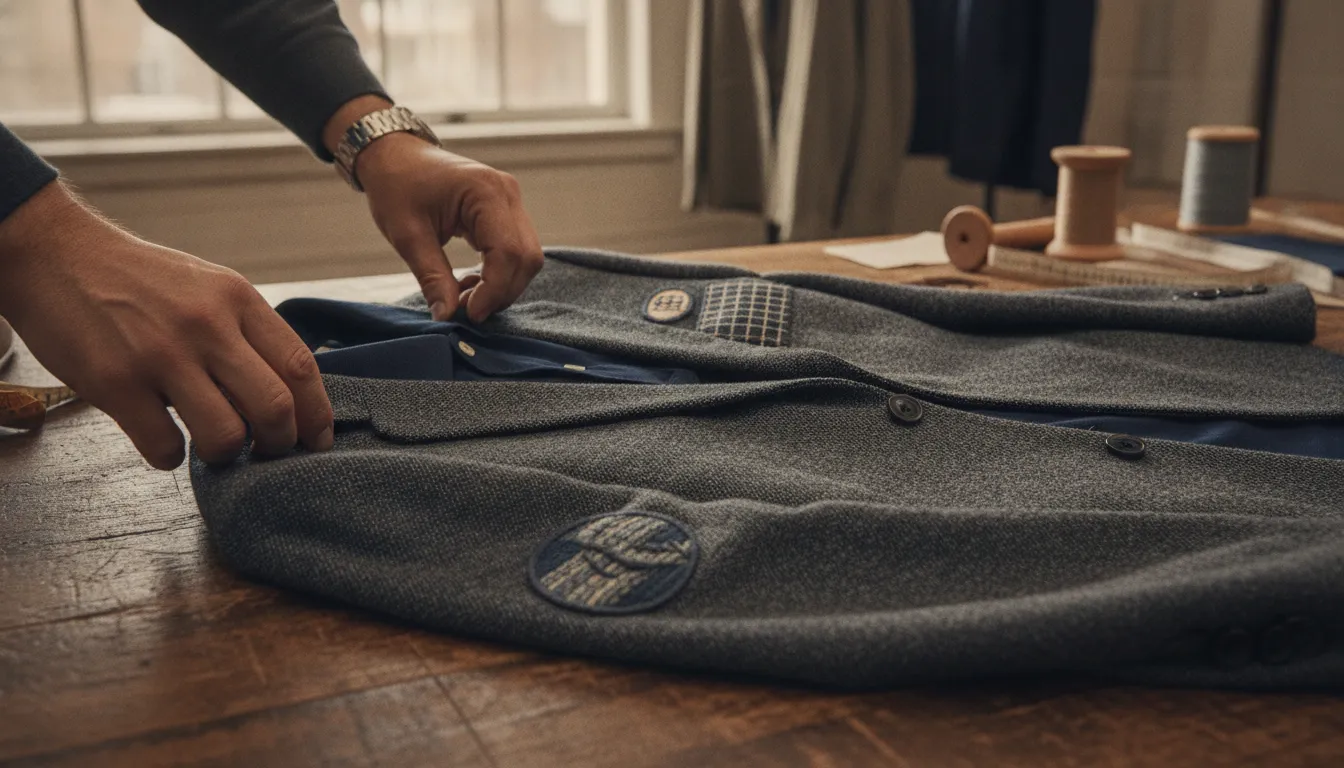
Sewing can be appropriate when a program prioritizes a mechanically secured patch or the garments will see demanding wear. The stitch path should follow the border without interfering with garment function. Check the interior finish as well as the outside appearance, since comfort matters in a uniform program.
Removable systems
Hook-and-loop backing may make sense when employees need interchangeable names, roles, or assignments. It adds a compatible receiving surface and can affect comfort, storage, noise, and washing. Use it when the operational benefit is clear rather than treating it as a default attachment method.
Before production, confirm the garment fabric, patch backing, application temperature or stitch path, care instructions, and quality approval process. Brand Vessel’s documented service capabilities include custom patch creation and application, with apparel planning and fulfillment available around the decoration decision. Its broader Branded Merchandise Services & Company Stores can be evaluated when the program also needs storage, ordering, or distribution support. The broader Custom Apparel for Business Teams Will Actually Wear pillar also explains how garment selection and decoration work together.
Where Do Corporate Patches Work Best?
Corporate patches work best where a consistent, visible identity needs to travel across several apparel categories. They can support field uniforms, outerwear, headwear, team apparel, employee programs, and distributed workforces. The best use case balances brand expression with comfort, care, durability, and replenishment.
- Field and service uniforms: A clear company identifier can support recognition while role details remain easy to read.
- Outerwear: Jackets and vests provide structured surfaces for a larger patch or layered identity system.
- Hats and headwear: Curved panels require careful review of size, shape, placement, and text.
- Team and event apparel: Department or campaign patches can add distinction without changing the base wardrobe.
- Employee and partner programs: Patches can give company-store apparel a more considered, wearable finish.
- Distributed teams: A documented decoration specification helps maintain consistency across locations and replenishment orders.
Brand Vessel’s documented work includes custom patch creation and application for DoorDash North Face jackets. That example illustrates the type of coordinated apparel work the company supports. It is not a promise that every project will use the same garment, patch construction, or outcome.
For a broader view of Brand Vessel’s client work, visit Work. When a program ships to multiple destinations, the operational plan matters as much as the decoration. Brand Vessel supports storage, in-house shipping, global distribution, and customs brokerage, so teams can evaluate apparel and delivery together.
How Should You Plan Custom Patch Orders?
Plan an order by defining the artwork, garment assortment, patch construction, attachment method, approval path, quantity by size, and delivery schedule. Minimums and lead times vary by design complexity, sampling, garment availability, application method, order size, and distribution requirements. Confirm current requirements for the specific program before committing.
- Define the wearer, use case, garment, and decoration objective.
- Approve artwork at finished size and test it on the intended apparel.
- Confirm attachment, care, replenishment, and distribution requirements.
- Record the final specification and request current production timing.
1. Prepare the artwork and brand rules
Gather the approved logo or mark, brand colors, clear-space rules, acceptable variations, and any text that must remain legible. Request a proof at the intended finished size. Decide whether the design needs a simplified version for hats, smaller garments, or curved surfaces.
2. Choose garments and placement together
List each garment style, fabric, color, size range, and intended wearer. Map the patch location and finished dimensions on each item. A design that works on a flat jacket chest may need a different treatment on a hat, polo, stretch panel, pocket, or seam.
3. Approve a sample before production
Review texture, color, border, attachment, comfort, and visual scale on the actual apparel. Include the brand owner, apparel lead, and operations lead in the approval. Record the final specification so future replenishment orders do not depend on an old email or an informal description.
4. Build the quantity and replenishment plan
Separate initial quantities from expected replenishment. Account for size distribution, new hires, replacements, event demand, and location-specific requirements. If the program uses a company store, decide whether inventory is centralized, allocated by location, or managed through a fulfillment partner.
5. Confirm delivery and international requirements
Clarify who receives finished apparel, whether patches are applied before shipping, how items are packed, and whether orders go to one or many destinations. For international programs, ask about customs documentation and country-specific delivery requirements. Brand Vessel’s storage, logistics, shipping, and customs brokerage capabilities can be evaluated as part of this conversation.
For related apparel planning, see Custom Corporate T-Shirts: How to Order for Your Company. The same discipline applies to patches: define the use case, approve the details, document the specification, and plan fulfillment before the order becomes urgent.
Start a project with Brand Vessel to review patch options, apparel, application, quantities, and timing.
FAQs: Custom Patches for Corporate Uniforms
What are the benefits of custom patches for corporate uniforms?
Custom patches create a consistent, tactile brand treatment that can move across jackets, polos, hats, and work shirts. They can identify a company, team, role, location, or campaign while giving a program more placement flexibility than direct decoration on every garment.
Are embroidered patches better than direct embroidery?
Neither is universally better. Patches can provide flexible placement and a repeatable decoration specification across garments, while direct embroidery can suit a logo that should sit directly on the fabric. Compare artwork detail, garment type, attachment, care requirements, and the intended visual result.
How do I choose the right patch size and shape?
Choose size and shape from the garment surface, artwork detail, placement, and wearer experience. Review the design at finished size on the actual apparel. Curved panels, seams, pockets, stretch zones, and small text may require a different shape or a simplified version.
How are custom corporate patches attached to uniforms?
Common options include heat-seal and sewn application. Hook-and-loop systems may suit removable identifiers when the garment has a compatible receiving surface. The best method depends on fabric, wear, laundering, heat exposure, comfort, and whether the patch needs to be replaced or changed.
What should I ask about minimums and lead times?
Ask how construction, artwork complexity, samples, garment availability, application, order quantity, and destination affect the schedule. Minimums and lead times vary by program, so request current requirements for the exact patch, apparel assortment, approval path, and fulfillment plan.
Start a project with Brand Vessel to plan a custom patch and corporate apparel program.