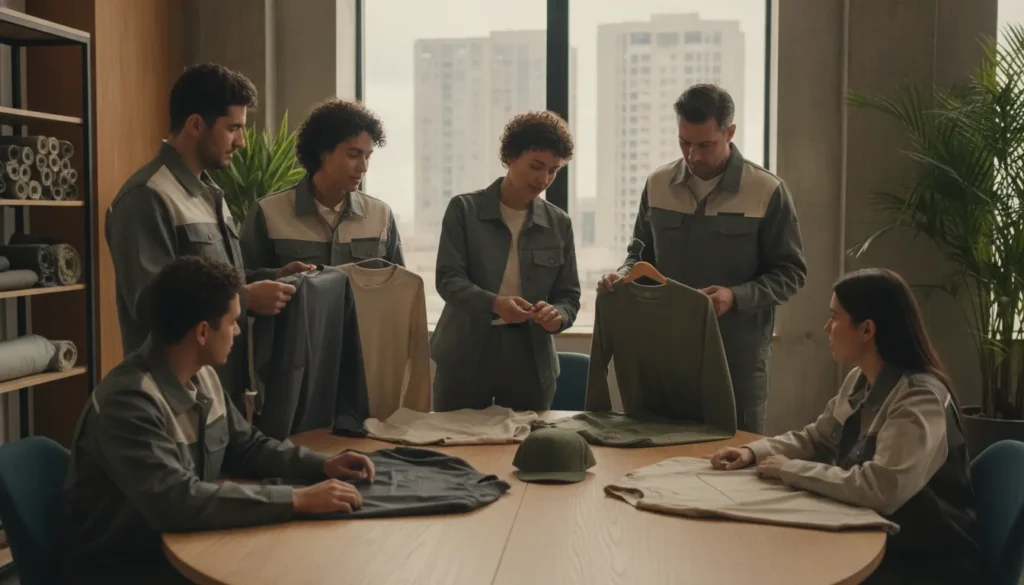
For a multi-location workforce, uniforms are not a one-time apparel order. They are an operating system for how employees receive the right garments, in the right sizes, with a consistent standard as teams grow, move, and change roles. This guide builds on Custom Apparel and Creative Decorating for Corporate Brands with the program-management decisions that keep apparel consistent after launch.
Plan your corporate uniform program with Brand Vessel
A corporate uniform program is a managed apparel system that combines garment and decoration standards with sizing, ordering, fulfillment, replacement, and turnover processes. Unlike a general merchandise program, it must support recurring employee needs and dependable distribution across locations.
That distinction changes the planning brief. Before choosing garments or decoration methods, enterprise teams need a clear definition of what the program owns. Who it serves, and how each part will be managed over time.
What Is a Corporate Uniform Program?
A corporate uniform program is a managed system for outfitting employees with approved workwear across roles, locations, and employment stages. It connects garment standards and fit requirements with ordering, inventory, fulfillment, replacement, and policy communication. The goal is a reliable operating process, not simply a preferred shirt or jacket.
A corporate uniform program is an ongoing apparel operating system. It defines what employees wear, how garments are selected and sized, how orders are routed and fulfilled, and how items are maintained, replaced, and retired. Unlike a one-time apparel order, it accounts for new hires, role changes, employee turnover, location-specific needs, and consistent brand presentation over time.
Plan your corporate uniform program with Brand Vessel
How is it different from a one-time apparel order?
A one-time order ends when the shipment arrives. A program begins with role requirements and garment standards, then establishes fit testing, approved decoration, and an ordering path employees and managers can use. It also defines how inventory is held, how exchanges are handled, and when replacement stock should be replenished.
That lifecycle matters for enterprise teams managing 500 to 5,000 or more employees. Manual coordination becomes difficult when multiple locations, job functions, sizes, and start dates are involved. A structured program gives procurement, HR, operations, and the fulfillment partner shared rules for handling those recurring decisions.
How does it differ from general merchandise management?
General merchandise programs often organize branded products for events, gifting, campaigns, or employee engagement. Uniform programs have more persistent operational requirements. Apparel must align with job roles, fit and comfort expectations, presentation standards, and the practical realities of wear, maintenance, replacement, and employee turnover.
Communication is part of the system. Employees need clear guidance on approved items and ordering, while program managers need visibility into demand and fulfillment. Brand Vessel can connect custom apparel planning with storage, kitting, and fulfillment so the program functions as an extension of the enterprise team. The program can also build on Custom Apparel and Creative Decorating for Corporate Brands when teams set standards for garments and decoration.
Why Standardize a Corporate Uniform Across Locations?
Standardizing uniforms across locations gives an enterprise a shared visual language while making the program easier to manage. Employees know what to expect, managers can work from an approved assortment, and procurement teams can coordinate decisions instead of handling disconnected local orders. For organizations with hundreds or thousands of employees, that consistency matters operationally as well as visually.
Talk with Brand Vessel about planning a coordinated corporate uniform program.
A standardized uniform program creates a consistent professional identity across offices, facilities, and customer-facing teams. The goal is not to make every location identical when roles or climates differ. It is to establish clear standards for approved garments, decoration, colors, ordering rules, and support, with enough flexibility for legitimate local requirements. Professional uniform attire can contribute to an organization’s professional identity, while a coherent system helps employees represent the brand with confidence.
One standard reduces procurement friction
When each location selects apparel independently, the organization often inherits multiple vendors, approval paths, decoration specifications, and replacement processes. Consolidating design, store management, storage, and logistics simplifies vendor communication and gives procurement a clearer operating model. It also makes it easier to review the program as one system, rather than assembling incomplete information from regional contacts.
Brand Vessel approaches this work as an extension of the enterprise team, not as a commodity transaction. That partnership model is useful when uniform decisions involve marketing, HR, operations, facilities, and procurement. A shared owner can coordinate brand standards with the practical details employees experience every day.
A consistent experience supports adoption
Employees are more likely to use a uniform program when the available options are clear, the garments reflect their roles, and help is coordinated across locations. Standardization supports that experience by aligning approved choices, communications, ordering guidance, and replacement expectations. It also creates a foundation for coordinated fulfillment as the workforce changes.
The strongest case for standardization is therefore broader than appearance. It combines brand consistency, lower vendor complexity, clearer accountability, and a more dependable employee experience. Those benefits distinguish a managed uniform program from a general merchandise initiative that is not designed around sizing, role-based apparel, and ongoing wear.
How Do You Build the Right Uniform Catalog?
A strong uniform catalog maps each role to apparel that looks professional, feels comfortable, and works with the demands of the job. The process should cover garment selection, decoration, fit, care, accessibility, and approval rules before items reach employees. Treat the catalog as a governed system that can be maintained as roles, locations, and brand needs change.
Plan your corporate uniform program with Brand Vessel.
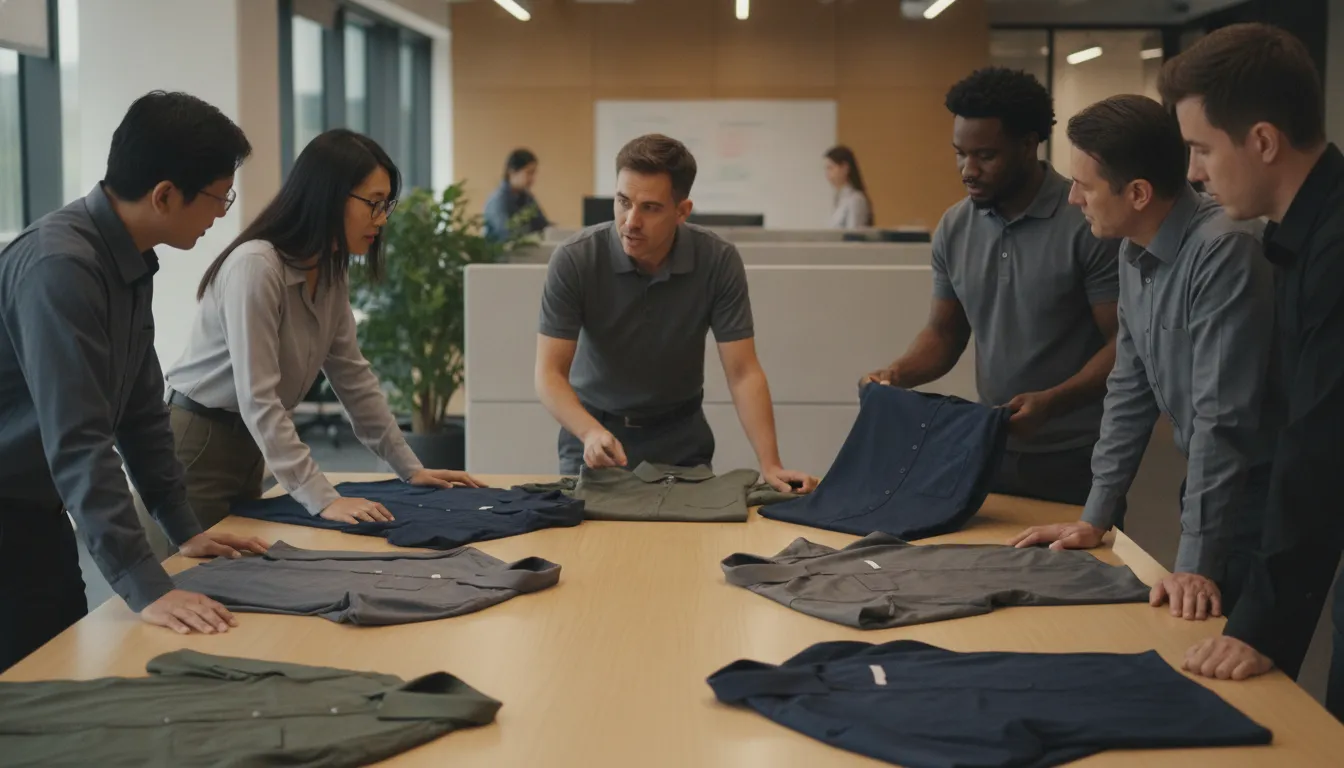
Start with the people who will wear the uniform, not a generic product list. Group roles by work environment, visibility, movement, and customer interaction. Then test representative garments with employees from relevant locations and body types before approving the assortment. This helps procurement balance a consistent professional identity with real-world comfort and fit.
- Role coverage: Define the required garments and layering options for each job, location, and work context.
- Garment standards: Evaluate quality, professional appearance, fabric compatibility, comfort, and expected use before approval. These standards should support the organization’s identity without turning the catalog into a collection of unrelated items.
- Decoration method: Match the branding technique to the garment and the desired appearance. The Screen Printing vs Embroidery Business Apparel Guide can help teams compare the decision, while the Custom Embroidery Corporate Apparel: A Complete Guide covers embroidery in more depth.
- Fit testing: Review samples across sizes and gather wearer feedback before launch. Keep fit notes by garment, since sizing can vary between styles.
- Accessibility: Include options that accommodate different bodies, mobility needs, modesty preferences, and ways of putting on or removing garments.
- Care guidance: Publish clear washing, drying, storage, and repair instructions so employees and managers can protect the appearance and useful life of approved apparel.
- Branding flexibility: Where appropriate, assess custom patches for corporate uniforms alongside other decoration approaches, checking compatibility with the selected fabric and the program’s durability expectations.
- Approval governance: Assign owners for catalog changes, establish an approval path, and record the current approved version so locations do not order outdated or untested items.
Brand Vessel can support this process as an extension of the team, connecting apparel selection and creative decorating with the operational controls needed to manage a multi-location catalog.
How Should Ordering and Distribution Work?
A well-run corporate uniform program connects employee ordering with approvals, inventory controls, storage, kitting, fulfillment, and destination-specific routing. The process should give employees a clear way to access approved garments while giving procurement visibility into demand, stock, replacements, and international requirements. That lifecycle view prevents ordering from becoming a series of disconnected transactions.
Brand Vessel can structure the ordering experience through a Custom Company Store: Build One Employees Use, then connect activity to the operational work behind each shipment.
Plan your corporate uniform program with Brand Vessel.
- Publish the approved catalog. Give each employee group access to the garments, decoration, sizes, and quantities that fit its role. Keep catalog ownership with the program manager, who controls approved changes and communicates updates to employees.
- Route orders through the right approvals. Set rules for manager approval, department or location allocation, and new-hire access before an order enters fulfillment. The employer owns policy decisions, while the store platform records order information and reduces manual processing for procurement.
- Connect demand to inventory and storage. Use order activity to inform replenishment and replacement planning. A fulfillment partner can receive, store, and organize approved uniform inventory so the program manager is not coordinating separate vendors for every stage.
- Assemble complete orders. When an order includes multiple garments or accessories, kitting brings those components together before shipment. Brand Vessel’s logistics and kitting capabilities support the handoff from store activity to coordinated fulfillment.
- Fulfill by employee location. Route shipments according to the employee’s approved destination, whether that is a workplace, regional office, or another authorized address. Location rules should be visible to the program owner and fulfillment partner so exceptions can be resolved without creating duplicate orders.
- Plan international delivery and customs. Global distribution requires country-aware routing and customs coordination, not just an international shipping label. Brand Vessel offers in-house customs brokerage, which can support programs serving employees across multiple countries.
Ownership should remain clear at every handoff: the employer governs policy and approvals. Employees provide accurate order and address details, and the fulfillment partner manages inventory movement, assembly, shipping, and customs coordination. This division makes the program easier to operate as locations, headcount, and uniform needs change.
How Do You Manage Sizing, Returns, and Replacements?
A corporate uniform program needs lifecycle controls that continue after the first order. The operating model should capture fit data, define exchange rules, anticipate new-hire and role-change needs, and maintain replacement stock. It should also connect returns, inspection, storage, and maintenance to one accountable program owner.
A scalable uniform program manages apparel from initial fit selection through replacement or disposal. It uses structured sizing data, documented return and exchange rules, and inventory reserved for onboarding, role changes, employee turnover, and normal wear. Inspection, storage, and maintenance become repeatable controls rather than informal employee or location-level decisions.
Plan your corporate uniform program with Brand Vessel.
Build fit data into the ordering process
Do not treat sizing as a one-time survey. Record the garment, cut, size, and fit feedback associated with each role or location, then use that information to improve the approved catalog. A controlled sample process can help teams identify fit issues before a broad launch. While clear guidance gives employees a practical way to request an exchange without creating ad hoc exceptions.
Fit and comfort are especially important where a uniform is worn for extended periods. In PPE contexts, the CDC notes that fit and comfort are relevant considerations when selecting protective clothing. Safety-critical apparel should follow the applicable workplace assessment and product requirements rather than a general corporate apparel policy. CDC guidance on protective clothing can support that review.
Plan replacement stock around workforce changes
Replacement demand comes from more than damaged garments. New hires need an initial issue, employees may change roles or locations, and departing employees may return unused or reusable items. Track these triggers by garment and location so procurement can distinguish predictable onboarding demand from genuine replenishment needs. The result is a more deliberate stock plan and fewer urgent, one-off orders.
Make inspection and maintenance part of governance
Returned items should have a defined disposition: restock, repair, recycle, or retire. For PPE, inspection, storage, and maintenance programs are established lifecycle considerations under OSHA guidance. The same discipline can inform the broader uniform operation without extending PPE claims to ordinary branded apparel. Keep ownership, review cadence, and exception handling visible to procurement, HR, and local managers.
How Do You Govern and Measure the Program?
A corporate uniform program needs an operating cadence, not only a product catalog. A quarterly scorecard gives procurement, HR, operations, and the fulfillment partner a shared view of adoption, inventory, order accuracy, returns, replacements, fulfillment consistency, and stakeholder feedback. The goal is to identify friction early and assign an owner before it affects employees across locations.
Talk with Brand Vessel about building a measurable uniform program.
A uniform program also deserves a different management lens from a broad merchandise program. General merchandise management often emphasizes vendor coordination, branding, and distribution. Uniform management adds a continuous lifecycle: employees need the right fit, new hires need access, worn garments need replacement, and inventory must remain usable across locations. That distinction matters when designing the scorecard.
| Measure | Uniform program question | Generic merchandise comparison |
|---|---|---|
| Catalog adoption | Are employees selecting approved garments, sizes, and decoration options? | Are teams using the approved branded assortment? |
| Inventory health | Are core sizes and replacement units available where they are needed? | Are stock levels aligned with campaign or event demand? |
| Order quality | Are orders accurate, complete, and routed to the correct location? | Are shipments accurate and delivered as requested? |
| Lifecycle service | Are returns, replacements, turnover, and garment condition being resolved consistently? | Are returns and fulfillment exceptions being closed? |
| Stakeholder feedback | What do employees, managers, and fulfillment teams report about fit, access, and service? | How do stakeholders assess the broader merchandise experience? |
Review the scorecard with the partner responsible for design, store management, storage, and logistics. Consolidating those conversations can reduce vendor complexity, while clear communication between program owners, employees, and the fulfillment partner keeps corrective actions practical. Brand Vessel approaches that work as an extension of the enterprise team, with governance tied to the realities of multi-location inventory and service.
Frequently Asked Questions
How often should a corporate uniform catalog be reviewed?
Review the catalog on a defined schedule and whenever roles, locations, brand standards, or garment performance change. Include employee feedback, fit data, return patterns, decoration quality, and inventory movement. This keeps the assortment relevant while preserving approved standards for appearance, comfort, and operational use.
What should happen when an employee changes size or role?
Use a documented exchange and replacement process rather than treating each request as an exception. Confirm the employee’s role and approved options, route the return for inspection, update inventory, and trigger replenishment when stock reaches its control point. This lifecycle approach covers ordering, replacement, and turnover.
Can a company store support a multi-location uniform program?
Yes. A company store can centralize approved products, ordering rules, and employee access while connecting orders to storage, kitting, and fulfillment. For distributed teams, the operating model should also define location-based routing, inventory ownership, and international requirements. Brand Vessel identifies global distribution and in-house customs brokerage as supported capabilities (Branded Merchandise Services & Company Stores).
Which metrics indicate that the program is working?
Track adoption by role and location, order accuracy, inventory availability, exchange and return patterns, fulfillment exceptions, replacement volume, and stakeholder feedback. Review the scorecard quarterly with procurement, HR, operations, and the fulfillment partner. The goal is consistent service and controlled administration, not an assumed savings percentage.
Get Started With a Corporate Uniform Program
A well-managed uniform program gives enterprise teams a clearer way to coordinate apparel, ordering, fulfillment, and ongoing replacements across locations. Brand Vessel can help connect those operational requirements into a practical program that fits your team’s structure. To plan a corporate uniform program with Brand Vessel, get started here and share your goals, locations, and priorities.