
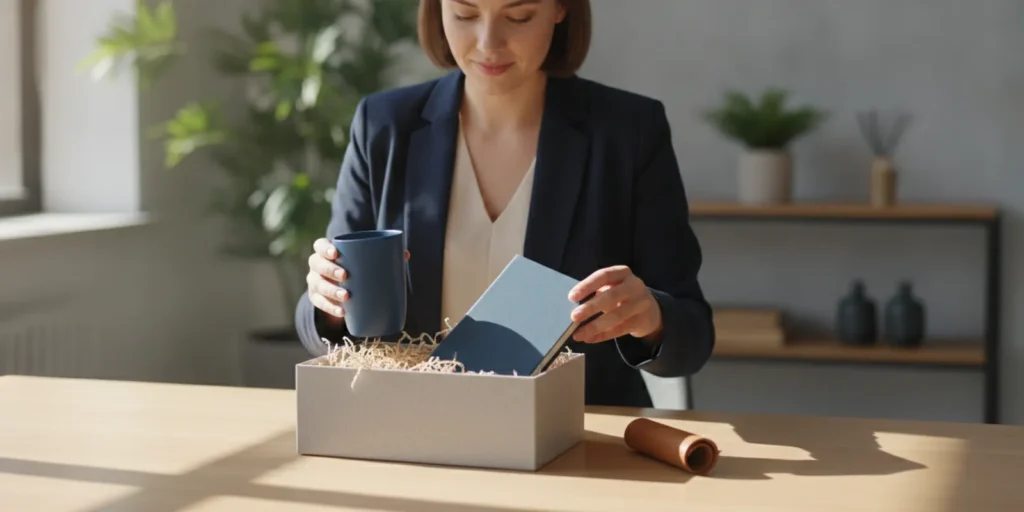
Does branded merchandise help with customer retention? It can support a stronger customer relationship when it is useful, relevant, and connected to a thoughtful experience. It is not a substitute for a good product or service, and sending an item alone cannot guarantee that a customer will stay. The practical question is how merchandise can reinforce value your team already delivers.
Discuss a customer merchandise program
For procurement, customer success, and brand teams, the best starting point is a defined retention goal and a specific audience. Decide which customer moment matters, what the recipient would genuinely find useful, and how you will learn whether the experience helped. Brand Vessel supports merchandise programs across creative, stores, and logistics; its Branded Merchandise, Company Stores & Fulfillment Services | Brand Vessel page outlines the service path.
Does branded merchandise help with customer retention?
Branded merchandise can contribute to retention by making an existing customer experience more personal, useful, or memorable. Its value depends on the relationship and the moment: a relevant thank-you after a meaningful milestone may feel considered, while an unrelated giveaway can feel like noise. Treat merchandise as one touchpoint in a broader retention plan, not as a standalone retention tactic. Decide first what customer need or relationship moment the program should serve, and be willing to conclude that no item is needed.
There is no universal item or timing that works for every customer. Start by identifying a group with a clear shared context, such as customers completing onboarding, reaching a service milestone, or participating in a customer advisory event. Then ask whether an item improves that moment or merely adds a shipment. The answer may be that a thoughtful note or service follow-up is more appropriate.
Separate possible objectives before choosing products:
- Recognition: Acknowledge a customer’s tenure, contribution, or milestone.
- Practical support: Provide a useful item related to the customer’s work or experience.
- Relationship continuity: Create a reason for a relevant conversation or follow-up.
- Shared identity: Reinforce belonging in a customer community or event.
- Experience quality: Make onboarding, renewal, or another interaction feel more considered.
Each objective implies a different design. A welcome item should arrive at a point when the customer can use it. A milestone gift should acknowledge the milestone rather than appear to be an automatic promotional mailing. A relationship-building item should be accompanied by a human follow-up that has a clear purpose. Avoid attaching a sales demand to a thank-you; the recipient should not have to interpret a gift as leverage.
Before ordering, map the customer journey and identify one moment where a physical item adds meaning. For example, a software provider might consider a welcome package after implementation, but only if the package complements onboarding rather than distracting from setup. A business serving a distributed customer base should consider whether recipients can receive and use the item equally easily. If the answer is unclear, test the experience with a small group first.
Look for evidence in ordinary customer conversations, not only in campaign metrics. If account teams hear that a customer is struggling with implementation, a box of merchandise is unlikely to address the core issue. Resolve the service concern first. If a customer has completed an important shared project and the relationship is in good standing, a modest, relevant acknowledgment may fit naturally. The sequence matters: service quality earns trust; the item can recognize the relationship but cannot replace that work.
How should a team design merchandise for a customer relationship?
Design the program around the recipient, the relationship stage, and the intended experience. Choose merchandise only after establishing who receives it, why the moment matters, and how delivery fits the customer’s context. A focused brief helps teams avoid generic items and makes approvals, distribution, and evaluation easier to manage. It also creates a record that procurement, customer success, brand, and fulfillment can use consistently.
Build a one-page brief with these decisions:
- Audience: Define the customer segment and eligibility rules. Use only the recipient information needed to deliver the program.
- Moment: Name the relevant interaction, such as onboarding completion or a service milestone.
- Purpose: State what the recipient should experience or be able to do, rather than simply writing “increase loyalty.”
- Item criteria: Describe usefulness, quality, brand treatment, packaging, and practical restrictions.
- Delivery: Determine who confirms addresses, sends packages, and resolves delivery exceptions.
- Follow-up: Identify who contacts the recipient and what useful conversation should follow.
- Evaluation: Choose a small set of signals and a review date before launch.
Use the brief to compare approaches rather than jumping to a product. A high-quality drinkware item may suit some customer audiences, while a compact desk item or useful kit may work better for others. Consider recipient location, workplace policies, accessibility, and whether the customer is likely to want the item. If the program includes several products, ensure the set has a coherent purpose rather than filling a box to meet a visual target.
| Program moment | Potential merchandise role | Planning question | Possible signal to review |
|---|---|---|---|
| Customer onboarding | Welcome or practical support | Does it help the recipient feel prepared without interrupting setup? | Recipient feedback and onboarding context |
| Service milestone | Recognition | Does the item acknowledge a specific achievement or relationship? | Response to acknowledgment and follow-up quality |
| Customer event | Shared experience or useful event item | Will attendees value it during or after the event? | Participation feedback and usefulness comments |
| Renewal conversation | Relationship touchpoint | Is the gift appropriate and separate from pressure to renew? | Customer feedback considered with account context |
Use a recipient-centered selection test. First, name the situation where the item will be used. Next, consider whether the recipient has a practical reason to keep it, whether size or format creates barriers, and whether a no-gift option should be available. Then assess decoration: is the brand treatment appropriate for an item the customer might use at work or at home? A restrained mark can be more suitable than oversized branding when the purpose is relationship care rather than broad promotion.
Plan the message as carefully as the object. A concise note can explain why the customer is receiving it and connect the item to a real moment. Avoid generic language that could be sent to anyone. For a customer advisory participant, for instance, thank the person for a specific contribution; for a completed implementation, recognize the collaboration without suggesting the package is a reward for a business decision. Keep the language warm, direct, and free of promises about future outcomes.
Quality and execution shape the experience. Review a representative sample for construction, decoration, packaging, and usefulness before approving a larger run. If different customer segments receive different items, document the criteria and approvals so the program remains fair and consistent. Ask the fulfillment team to walk through address collection, packing, shipment updates, and what happens when delivery details are incomplete.
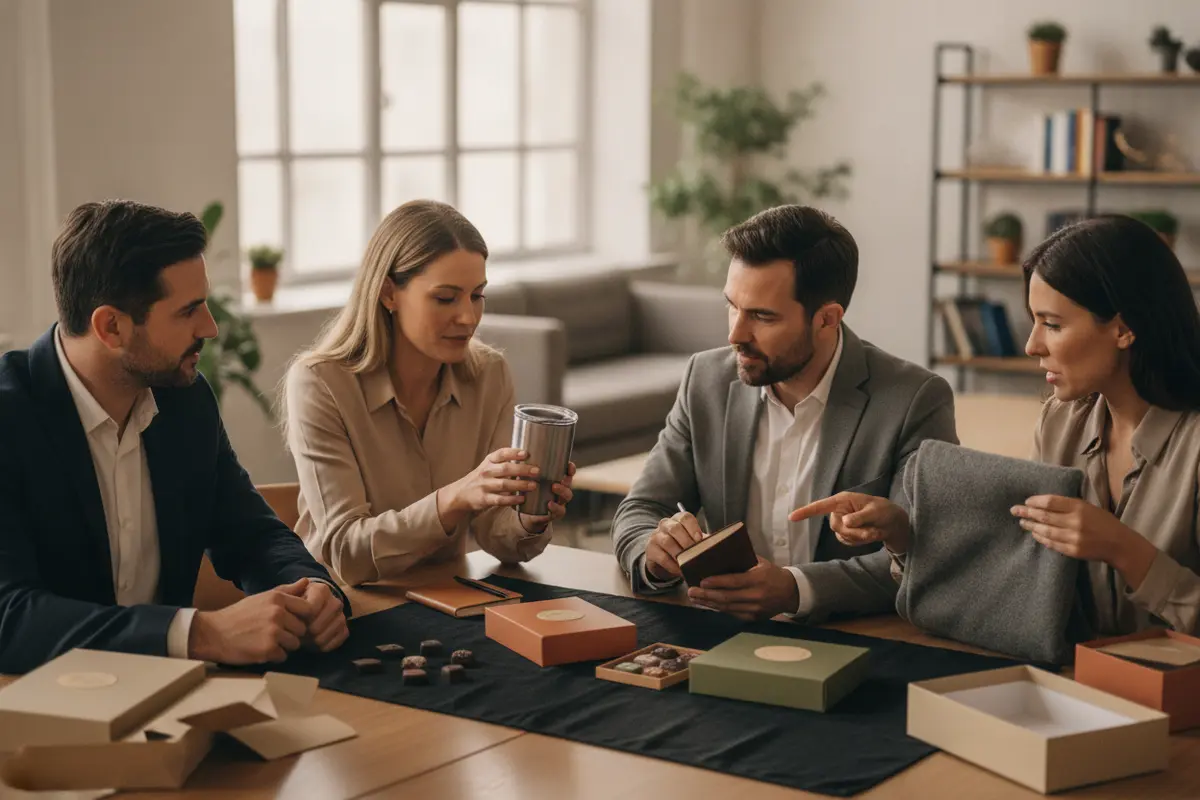
For a multi-item package or a repeatable customer send, define the contents and packing sequence clearly. Brand Vessel’s Corporate Kitting & Fulfillment Guide | Brand Vessel is a useful reference for planning assembled packages. If customer recipients order from an approved assortment, a Custom Company Stores for Enterprise Teams | Brand Vessel model may be worth evaluating; confirm that its access and ordering rules match the customer use case rather than assuming an employee store translates unchanged.
How can teams evaluate whether merchandise supports retention?
Evaluate the experience first, then review customer relationship outcomes alongside other business context. Establish a baseline, choose a comparison that is fair and practical, and record what else may affect the result. This helps teams learn whether recipients value the merchandise without claiming a gift caused a renewal or prevented a departure. Define what would count as a useful learning before the first package ships.
Before launch, document the intended audience, reason for selection, delivery date, and follow-up plan. Record a baseline relevant to the group, such as its existing renewal pattern or customer feedback process, but do not treat a historical average as a direct control group. Customers selected for a gift may already have different engagement or account characteristics from those who do not receive one.
For a small pilot, use a simple evaluation plan:
- Confirm a specific audience and one customer moment.
- Use an item and message that fit the moment, with a documented approval process.
- Track whether the package reached the intended recipient and whether delivery issues occurred.
- Invite brief, optional feedback about relevance and usefulness.
- Review customer conversations and relationship indicators with account context.
- Record costs and operational effort, including coordination and exception handling.
- Decide in advance what would prompt a change, continuation, or pause.
For example, imagine a team considering a welcome package for newly onboarded customers. It could first test a single practical package with a defined cohort, then ask recipients whether the items were useful and whether delivery timing worked. The account team can note whether the package supported a natural onboarding conversation. If customers report that it arrived too early or contained items they could not use, revise timing or contents before sending it more widely.
Make the pilot deliberately small enough to learn from. Select a manageable group with a shared onboarding process, assign an owner to record delivery and feedback, and set a review date after recipients have had time to use the items. If one group receives the package and another does not, document why each group was selected. Do not present the difference in later renewal outcomes as proof of impact if the groups differ in account size, engagement, or support needs.
Do not compare only recipients who responded with everyone who received a package. Response rates can be uneven, and people who choose to respond may have different experiences. Combine feedback with operational records and account-team observations. If the team compares renewal or repeat-purchase patterns, note the cohort definition, time window, and other changes in service, pricing, or customer mix that could influence the result.
Choose measures that answer separate questions:
- Was it delivered correctly? Review delivery completion, address problems, damage, and timing.
- Was it welcome? Review optional comments and direct customer feedback without treating silence as approval.
- Was it useful? Ask whether recipients used or kept the item, and what they would change.
- Was the process manageable? Record staff time, approvals, exceptions, stock needs, and coordination points.
- Did the relationship change? Consider account feedback and renewal context, while recognizing other influences.
This separation prevents an easy-to-count shipment from standing in for a meaningful result. A program can have smooth delivery and still feel irrelevant; recipients may like an item without changing their business relationship. Report the observations plainly. For example: “Most surveyed recipients described the package as useful, while several addresses required correction; renewal outcomes were not attributed to the package.” That is more actionable than a claim that merchandise improved retention.
Operational scale matters as well. A one-time pilot may be manageable through a coordinated shipment, while a recurring program can require reliable stock, recipient-data handling, packaging specifications, and clear ownership. Brand Vessel’s Swag Inventory Management for Procurement Teams and Employee Gift Fulfillment for Distributed Teams pages can help teams frame inventory and distribution questions. For examples of merchandise work, browse Branded Merchandise Work & Case Studies | Brand Vessel.
Before expanding, conduct a short review with customer success, procurement, brand, and operations. Ask whether recipients found the item useful, whether timing supported the relationship, and whether fulfillment worked as intended. Identify avoidable friction, such as unclear eligibility, late address changes, or inconsistent packaging. Expansion should follow evidence that the experience is welcome and that the operating model is repeatable.
Make the scale decision explicit. Continue if the intended audience values the gesture, execution is reliable, and the relationship purpose remains clear. Adjust if feedback points to a correctable issue such as item choice, message, timing, or address workflow. Pause if recipients find the program intrusive, if the team cannot maintain consistent fulfillment, or if the merchandise distracts from unresolved service problems. A pilot is useful even when the best decision is not to expand.
For recurring programs, assign clear ownership at each handoff. Customer success can identify the moment and confirm eligibility; brand can approve the message and decoration; procurement can oversee product selection; operations can manage packing and delivery; and an account owner can gather feedback. Teams may combine roles, but every step needs an accountable person. A simple checklist prevents a successful pilot from becoming a confusing recurring obligation.
Brand Vessel brings branded merchandise, company stores, storage, logistics, kitting, and fulfillment together as a merchandise partner. Teams considering a program can use its About Brand Vessel | Enterprise Merchandise Partner page to understand the company’s approach, then connect the program requirements to a service conversation. Share the audience, delivery geography, timing, item criteria, and operational constraints before asking for product recommendations.
Plan a customer merchandise program
Frequently asked questions about branded merchandise and customer retention
Can branded merchandise guarantee that a customer will renew?
No. A gift cannot guarantee a renewal or replace reliable products, responsive service, and a useful customer relationship. It may contribute to a positive touchpoint when it fits the customer and the moment.
When is a customer gift most appropriate?
Consider a moment with a clear relationship purpose, such as onboarding, a meaningful milestone, or a customer event. Make sure the timing is welcome and the item supports the experience rather than distracting from it.
How should a team choose what to send?
Start with recipient needs and context, then assess item usefulness, quality, brand treatment, delivery, and packaging. A small set of well-chosen options is easier to govern than an assortment selected only for variety.
What should teams measure?
Track delivery success, recipient feedback, operational effort, and relevant account context. Renewal or repeat-purchase patterns can be reviewed, but they do not establish that merchandise caused a customer to stay.
Branded merchandise is most defensible as one carefully designed part of a customer experience. Define the relationship moment, deliver something appropriate, and use feedback and operational evidence to decide whether the program deserves to grow.