Custom branded bags for companies can turn a useful product into a consistent brand touchpoint across conferences, employee programs, recruiting, travel, and customer gifting. Brand Vessel’s Branded Merchandise Services & Company Stores connect product selection with decoration and fulfillment. The right choice depends on how the bag will be used, what it needs to carry, how it will be decorated, and how orders will be distributed. This guide helps enterprise buyers evaluate the product and program decisions before requesting a quote.
Start A Project with Brand Vessel to plan a branded merchandise program around your audience, use case, and distribution needs.
Types of Custom Branded Bags for Companies: Totes, Backpacks, Duffels
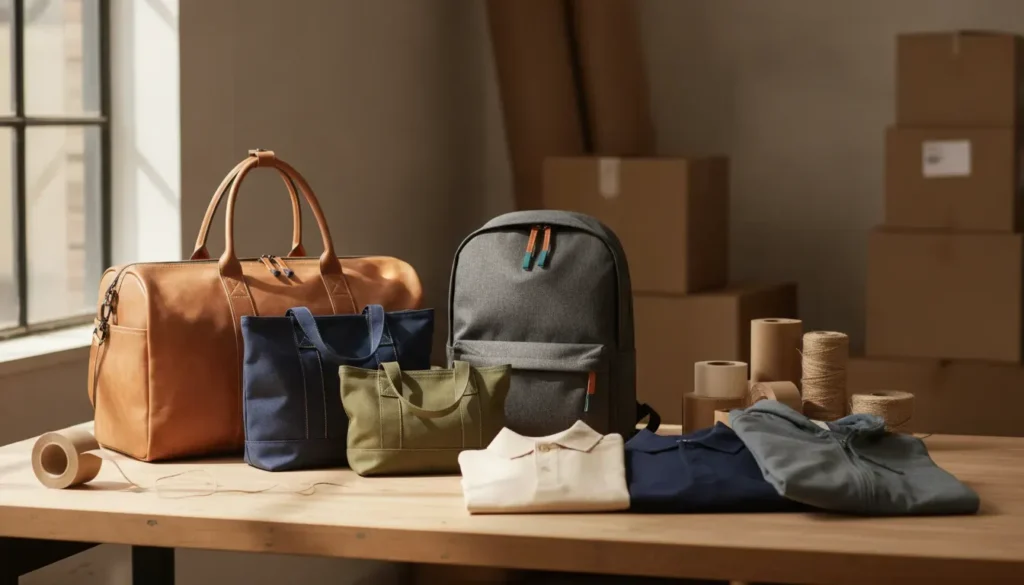
Corporate branded bags work best when the style matches the recipient’s routine and the program’s distribution setting. Totes suit events and everyday carry, backpacks support commuting and employee onboarding, and duffels fit travel, wellness, and team programs. Structured bags can support a premium gift experience, while lightweight styles make sense for larger event distributions.
Choosing a bag by appearance alone can create avoidable problems. A bag that looks appealing in a catalog may not have the capacity, organization, decoration area, or durability required by the program. Start with the job the bag must perform, then narrow the selection by material, construction, color, and decoration method.
- Tote bags: Totes offer a broad decoration area and are easy to carry at conferences, customer events, recruiting days, and community programs. Canvas and other flexible materials can create a relaxed, approachable feel.
- Laptop backpacks: Backpacks are useful for new hires, hybrid teams, travel, and premium employee gifting. Look for practical organization, comfortable straps, and a protected laptop compartment when the bag will become part of a workday routine.
- Duffel bags: Duffels work well for retreats, fitness programs, travel kits, and team apparel. Their larger capacity can make them useful when the bag is distributed with additional merchandise.
- Drawstring bags: Drawstring styles are compact and easy to distribute for races, campus programs, camps, and high-volume events. They are a practical option when portability and scale matter more than structure.
- Crossbody and messenger bags: These styles can support commuting, field work, or client gifts when recipients need hands-free access and a more structured silhouette.
| Bag type | Best fit | Decoration considerations | Program note |
|---|---|---|---|
| Tote | Events, conferences, customer gifts | Broad surface for bold artwork | Easy to distribute in volume |
| Backpack | Employee onboarding, commuting, travel | Structured panels may suit embroidery | Evaluate comfort and organization |
| Duffel | Retreats, fitness, travel programs | Review seams, panels, and placement | Useful when bundled with merchandise |
| Drawstring | Races, camps, campus events | Lightweight fabric favors simple graphics | Practical for high-volume distribution |
For a company program, assess the bag as part of the complete merchandise set. A backpack may pair with apparel and onboarding materials, while a tote may carry event collateral or a curated customer gift. Brand Vessel can also help connect bag selection with Branded Merchandise Services & Company Stores, decorating, storage, kitting, and distribution.
How Do You Choose the Right Bag for Your Brand Use Case?
The right branded bag is the one that fits the recipient’s activity, carries the intended contents, supports the brand experience, and can be delivered through the program’s operational model. Buyers should evaluate use case, audience, capacity, construction, decoration area, color, budget parameters, and distribution before choosing a style. A short selection brief helps suppliers recommend a better fit.
Use the following questions to define the requirement:
- Who will use the bag? Employees, event attendees, customers, partners, and candidates may value different levels of structure, capacity, and finish.
- Where will it be used? A trade show tote, commuter backpack, travel duffel, and field-service bag face different demands. Consider weather exposure, frequency of use, and whether the recipient will carry it in public.
- What must it hold? List the actual contents, such as a laptop, apparel, notebooks, bottles, product samples, or printed materials. The contents determine internal organization and minimum usable capacity.
- What should the bag communicate? A clean, understated decoration may suit executive or client gifting, while a larger, more visible mark may make sense for an event or community program.
- How will it be ordered and delivered? A single event shipment has different requirements from an employee program with orders going to home addresses, offices, or multiple countries.
A useful buying brief should also identify preferred bag colors, the logo format, artwork deadlines, estimated quantity, recipient locations, and whether individual packaging is needed. If the bag will be bundled with other items, specify the complete kit so the decoration and fulfillment plan can be evaluated together.
Brand Vessel’s Custom Company Store: Build One Employees Use is relevant when employees or distributed teams need an ongoing way to order approved merchandise. A company store can extend the usefulness of a branded bag program beyond one event by organizing products, controlling brand presentation, and supporting repeat ordering.
Which Decoration Options Work Best for Custom Branded Bags?
The best decoration method depends on the bag’s material, surface, construction, artwork, quantity, and desired visual effect. Screen printing can create bold graphics on suitable fabric surfaces, embroidery adds texture to structured bags, and heat transfer or digital methods can support detailed multicolor artwork. The decoration plan should be approved against a sample or production-ready proof.
Common approaches include:
- Screen printing: A strong option for bold artwork on compatible canvas, cotton, or synthetic surfaces. It can work well when the design has clear shapes and a defined imprint area.
- Embroidery: Embroidery adds a raised, tactile finish that can suit structured backpacks, duffels, and premium gifts. Very small details may need to be simplified for clean stitching.
- Heat transfer: Transfers can support detailed or multicolor artwork across many bag types. Confirm how the surface, seams, coating, and intended use affect the finished result.
- Digital decoration: Digital methods may be useful for intricate art or shorter program runs when the bag material and production process support them.
- Patches and specialty treatments: Patches can create a distinct apparel-inspired look and may help a program use a consistent badge across multiple bag styles.
Artwork preparation matters as much as method selection. Supply vector artwork when available, identify approved brand colors, confirm the imprint dimensions, and ask how the decoration will sit relative to seams, pockets, zippers, and handles. Brand Vessel’s Custom Embroidery Corporate Apparel: A Complete Guide provides additional context on choosing embroidery for branded products.
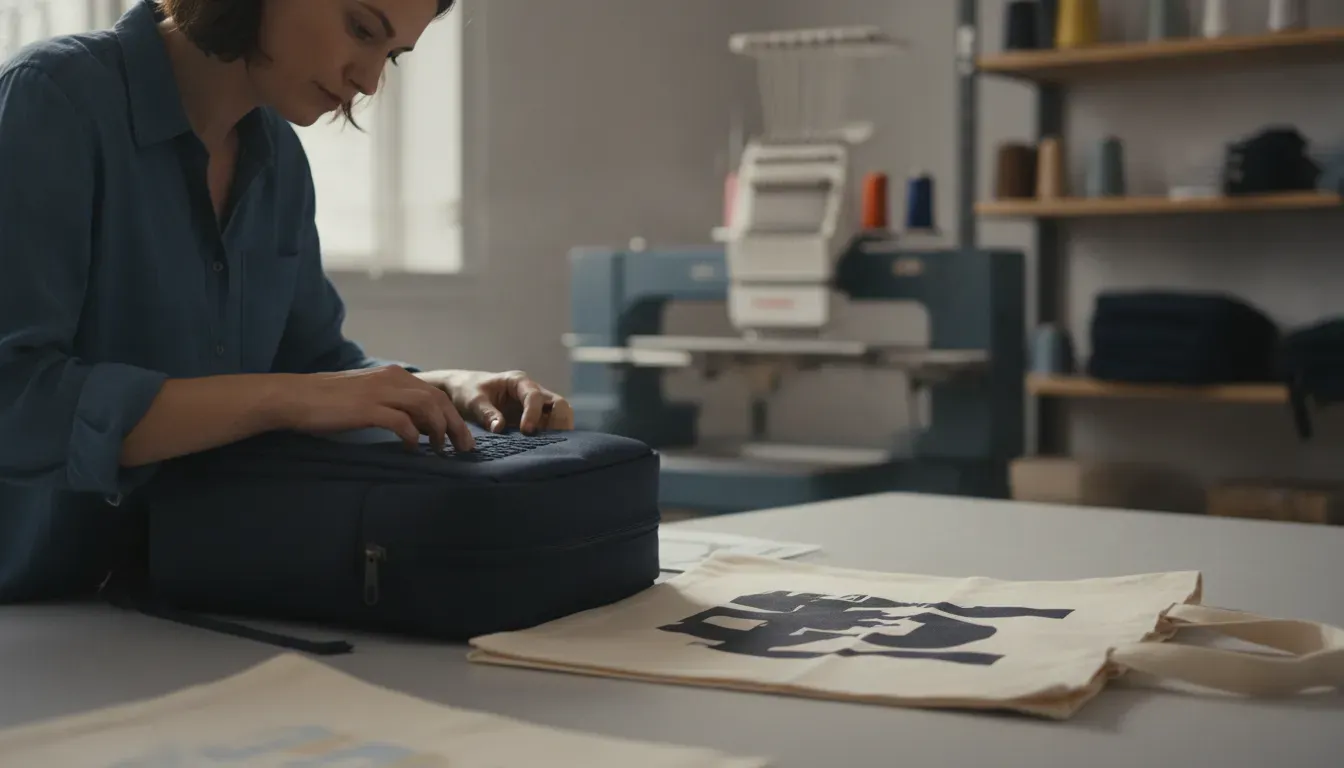
Ask for a digital proof and, when the program is high visibility or the material is unfamiliar, a physical sample. A sample review can reveal issues that a flat logo file does not show, including thread density, ink coverage, color contrast, placement, and how the mark looks on a curved or padded surface.
Start A Project with Brand Vessel when you need help matching bag construction, decoration, and distribution to a broader merchandise program.
What Are Minimum Orders and Lead Times for Branded Bags?
Minimum orders and lead times for branded bags vary by product, supplier availability, decoration method, quantity, artwork readiness, packaging, and delivery requirements. There is no single timeline that applies to every bag program. Buyers should confirm current availability and a production schedule after the supplier understands the exact style, decoration, quantity, destinations, and approval process.
Before requesting a quote, prepare these details:
- The bag styles, colors, sizes, and approximate quantity
- The decoration locations, artwork files, and preferred decoration methods
- The date and location of the first required delivery
- Whether the order is for one event, a campaign, or an ongoing company store
- Any kitting, individual packing, labeling, storage, or international distribution requirements
Lead time typically has several decision points: product selection, availability confirmation, artwork review, proof approval, decoration, packing, and transportation. If a program includes multiple destinations, the logistics plan may also require address collection, shipping rules, customs documentation, or coordinated release dates. Asking about these stages early gives the team time to adjust the style or rollout plan if needed.
Minimums should be evaluated against the full program, not only the first event. A smaller initial order may be appropriate for a pilot, while a broader employee or customer program may benefit from a repeatable product plan. If inventory will be held for future orders, discuss storage and replenishment expectations before committing to a quantity.
Adding Bags to Your Company Store Catalog
A company store makes branded bags easier to manage when approved products need to remain available for employees, teams, offices, or customer programs over time. A strong catalog groups bags by use case, shows clear product information, preserves approved branding, and connects ordering with storage, fulfillment, and shipping rules. The result is a more consistent buying experience than separate one-off requests.
When adding bags to a company store, organize the catalog around how people shop. Useful groupings can include employee onboarding, travel, events, client gifts, field teams, and seasonal campaigns. Each item should have a clear product name, dimensions or capacity information, decoration description, available colors, and ordering guidance that helps buyers select confidently.
Plan the operational details at the same time as the product page:
- Define which audiences can order each bag and whether approval is required.
- Set rules for inventory, replenishment, and discontinued styles.
- Decide whether items ship individually, in kits, or in bulk to an event location.
- Document domestic and international delivery requirements before launch.
- Review the catalog periodically so outdated colors, products, and artwork do not remain available.
Brand Vessel combines branded merchandise, creative decorating, company stores, storage, kitting, fulfillment, and distribution. That broader operating model matters when the bag is part of a program rather than a single purchase. Explore Work for examples of how merchandise programs can support real business moments, then define the audience and use case for your own catalog.
FAQs: Branded Bags for Companies
Corporate buyers usually get better results when they settle the use case, decoration, approvals, and distribution plan before selecting a bag. The questions below summarize the decisions that most often affect product fit, schedule, and program consistency.
What is the most versatile branded bag for a company?
A tote is often versatile for events, conferences, customer gifts, and everyday carry because it is easy to distribute and offers a visible decoration area. A backpack may be the better choice for employee onboarding, commuting, travel, or recipients who need more organization and support.
Can one company use different bag styles in the same program?
Yes. A company can use different styles for different audiences or moments while keeping the artwork, color system, and quality standard consistent. For example, a tote may support event distribution while a structured backpack supports new hires. A company store can organize those options under one approved catalog.
How should a buyer prepare artwork for a branded bag?
Provide the highest-quality logo files available, identify approved colors, and explain the preferred decoration location. The supplier should confirm the imprint area, artwork scale, and production method. Request a proof and consider a physical sample when the bag is high visibility or the decoration surface is complex.
Can branded bags be included in a kitting or fulfillment program?
Yes. Branded bags can be packed with apparel, drinkware, onboarding materials, event supplies, or other merchandise. Confirm the kit contents, packaging, labeling, inventory plan, delivery locations, and release dates early so the bag choice supports the entire fulfillment workflow.
Start A Project with Brand Vessel to evaluate custom branded bags for companies alongside your merchandise, company store, kitting, and distribution needs.