
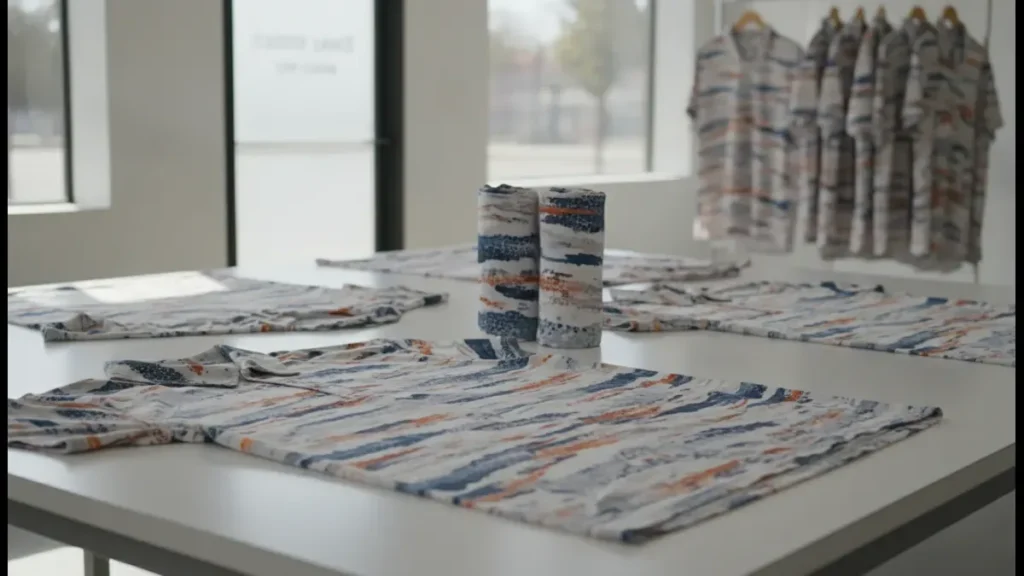
Choosing a decoration method for a corporate merchandise program starts with the garment, artwork, and use case. Sublimation printing corporate merchandise can produce vivid, detailed designs on suitable polyester apparel and hard goods, but it is not a universal replacement for every decorating method. The right decision protects brand consistency without sacrificing wearability or operational fit.
Start A Project with Brand Vessel to review your apparel decoration and distribution requirements.
This guide explains what dye sublimation does, where it performs well, how it compares with direct-to-garment printing, screen printing, and embroidery, and what enterprise buyers should confirm before approving a production run.
What Is Sublimation Printing for Corporate Merchandise?
Sublimation printing is a heat-transfer process that turns dye into a gas and bonds it to polyester fibers or specially coated hard goods. The color becomes part of the compatible surface instead of forming a raised layer on top. For corporate merchandise, the method supports detailed, full-color designs and broad print coverage.
Dye sublimation begins with artwork printed onto transfer paper using specialized dye-based inks. Heat and pressure then move the dye from the paper into the polyester material or polymer coating. After cooling, the design remains integrated with the compatible surface. The exact equipment and settings vary by decorator, so a physical sample remains important for brand approval.
The material requirement is the first screening question. Sublimation works best on white or light-colored polyester because the process adds color but does not provide an opaque white base. Cotton fibers do not bond with sublimation dye in the same way. A polyester-rich blend may be possible, but the result can be softer or less saturated than a 100% polyester fabric.
That technical boundary matters for a corporate buyer. A design that looks accurate on a digital proof may respond differently on a textured knit, a darker garment, or a blend. Brand Vessel can help teams evaluate the garment, decoration, artwork, and intended distribution plan together through its Custom Apparel and Creative Decorating for Corporate Brands program, which is currently being developed as the cluster pillar for this topic.
How Does Sublimation Compare with Screen Printing and DTG?
Sublimation is generally strongest for light polyester garments, performance apparel, gradients, and all-over artwork. DTG is typically better suited to detailed designs on cotton garments, while screen printing fits repeatable spot-color graphics and embroidery fits stitched decoration. The best method depends on fabric, coverage, artwork, order profile, and the desired hand feel.
Corporate programs often compare processes too early, before confirming the material. Use the fabric and artwork as the first filter, then consider coverage, quantity, replacement needs, and how the item will be worn. Brand Vessel’s Direct to Garment Printing Corporate: A Buyer Guide covers the DTG decision in greater depth, while the table below keeps the methods distinct.
| Method | Best material or surface | Design strengths | Common corporate fit |
|---|---|---|---|
| Sublimation | Light polyester or coated hard goods | Vivid color, gradients, fine detail, broad coverage | Performance apparel, event uniforms, all-over designs |
| DTG | Cotton and cotton-rich garments | Detailed digital artwork and multicolor prints | Small or varied apparel runs, cotton tees, onboarding kits |
| Screen printing | Many garment types, depending on ink and process | Strong spot colors and repeatable placement | Large runs with consistent, relatively simple artwork |
| Embroidery | Structured textiles and suitable garments | Tactile stitched logos and durable brand marks | Polos, jackets, hats, uniforms, and premium workwear |
Screen printing and sublimation also differ in how they handle coverage. Screen printing is often planned around defined print areas and a controlled set of inks. Sublimation can support edge-to-edge patterns on a suitable cut-and-sew garment, although seams, panels, and construction still affect the final result. Ask for an art template that reflects the actual garment pattern rather than approving a flat image alone.
Embroidery creates a different visual and tactile signal. It can be a strong choice for a polished logo on a polo, cap, jacket, or structured piece, but it is not the right tool for photo-like gradients or large areas of color. Brand Vessel’s Screen Printing vs Embroidery Business Apparel Guide provides a fuller comparison for teams evaluating those two methods.
Which Products Work Best for Corporate Sublimation?
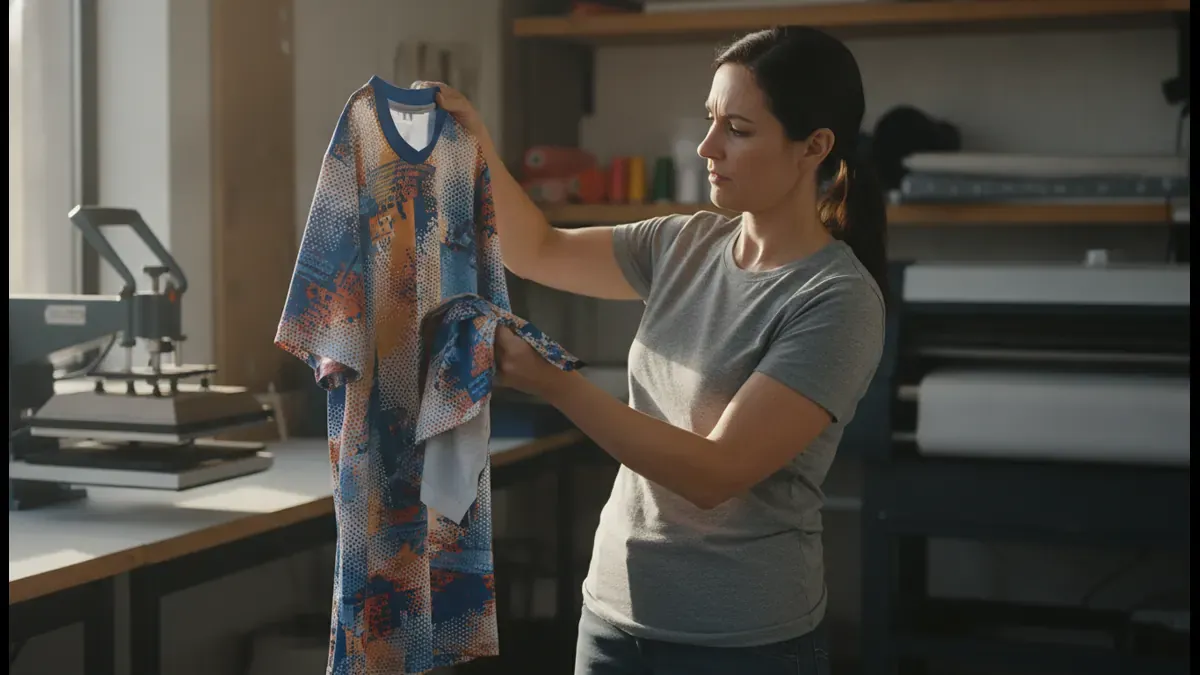
The strongest corporate sublimation products are light-colored polyester apparel and polymer-coated items that can accept the dye. Common examples include performance tees, team jerseys, polos, activewear, event uniforms, mouse pads, drinkware, and select accessories. Product suitability depends on the substrate, coating, construction, and the design’s intended coverage.
Product selection should begin with the employee or recipient experience, not just the decoration effect. A breathable performance shirt may suit a field event, while a structured embroidered jacket may better fit client meetings. For sublimation, ask whether the item is purpose-built for the process and whether the supplier can provide a blank sample before decoration.
- Performance tees and polos: Useful for events, field teams, training, and active work environments where a lightweight printed garment is appropriate.
- Team jerseys and event uniforms: A practical fit for color-coded groups, branded activations, and designs that need broad visual coverage.
- All-over printed apparel: Suitable when the design extends across panels rather than staying within a chest, sleeve, or back print area.
- Shorts and active accessories: Consider these when the program needs coordinated apparel beyond a single top, while checking stretch and seam placement.
- Coated hard goods: Select mugs, drinkware, mouse pads, and similar items can accept sublimation when their coating and heat tolerance are specified for the process.
Corporate buyers should also separate one-time event merchandise from a replenishable apparel program. An event may prioritize visual impact and broad coverage. A company store may need repeatable sizing, replacement availability, consistent color approval, and a decoration method that remains practical across multiple product drops.
Brand Vessel’s Branded Merchandise Services & Company Stores connect custom apparel decisions with company-store management, storage, and distribution. That wider view helps a procurement team evaluate not only whether a product can be sublimated, but also how it will be ordered, held, packed, and delivered to employees or event locations.
Schedule a consultation with Brand Vessel before approving a multi-product decoration plan.
What Color and Resolution Results Can Buyers Expect?
Sublimation can produce saturated color, gradients, fine detail, and photo-like artwork when the substrate, profile, and file are appropriate. It performs best on white or light polyester and does not create an opaque white layer for dark garments. Final color depends on fabric, coating, heat settings, and production calibration.
Resolution is only one part of a reliable result. Artwork should be supplied at the intended print size, with clean edges, correct color references, and enough detail for the final application. A high-resolution file cannot correct an unsuitable garment or a design that depends on white ink over a dark base.
Before production, ask the decorator to confirm:
- Which color profile and file format should the brand team provide?
- How will the chosen polyester or coating affect saturation and contrast?
- Does the design include white areas that will become the fabric color?
- Where will seams, zippers, collars, handles, or curved surfaces interrupt the artwork?
- What physical proof will the approvers review before the full run?
- How will repeat orders be matched to the approved sample?
A color review should include the actual garment whenever possible. Compare the printed sample under the lighting where the merchandise will be used, especially for trade shows, retail environments, and branded events. Brand Vessel’s emphasis on quality custom apparel and creative decorating makes sample review a useful checkpoint before the merchandise enters a broader company store or fulfillment program.
Buyers should avoid promising identical appearance across every substrate. A white polyester jersey, a coated drinkware item, and a polyester blend will not necessarily reproduce a brand color in the same way. Document approved tolerances, retain the physical sample, and connect future replenishment orders to that reference.
When Is Sublimation the Right Corporate Merch Choice?
Sublimation is a strong corporate merchandise choice when the program uses light polyester or coated products, needs vivid multicolor artwork, and benefits from broad or all-over coverage with little added print texture. It is a weaker fit for dark cotton, opaque white logos, or programs centered on stitched decoration and structured workwear.
Use sublimation when the following conditions align:
- The substrate is compatible: The product is light polyester or a specified coated hard good, and the decorator confirms the process.
- The artwork benefits from digital color: The design includes gradients, illustrations, photographic detail, or a pattern that would be constrained by a small print area.
- The hand feel matters: The program favors an integrated print on performance apparel instead of a raised surface layer.
- The coverage supports the objective: The garment or product can carry the intended design without seams or construction undermining it.
- The operating model is ready: Sampling, sizing, approvals, inventory, replacement ordering, and distribution have owners.
Choose another method when the brand standard depends on a bright white mark over a dark garment, cotton is central to the assortment, the design is a simple repeatable spot-color graphic, or the program calls for a stitched logo on a polo, hat, or jacket. A hybrid program can be more useful than forcing every item into one technique.
For example, an enterprise event might use sublimated polyester jerseys for the event team, embroidered jackets for client-facing staff, and screen printed cotton tees for a large volunteer group. The decoration decision then follows the role and garment rather than treating the merchandise catalog as one uniform production problem.
Brand Vessel can coordinate the creative decorating decision with product sourcing, company-store operations, storage, kitting, and global distribution. That matters when the same brand system must work for a local event, remote employees, and future replenishment orders. The goal is a merchandise program that looks intentional at approval and remains manageable after delivery.
Frequently Asked Questions About Sublimation Printing
Can sublimation printing be used on cotton corporate apparel?
Direct sublimation is generally intended for polyester fibers or specially coated products, not standard cotton apparel. Cotton does not bond with disperse dye in the same way. If a cotton-first assortment is important, ask Brand Vessel to compare DTG, screen printing, embroidery, or another suitable decoration method.
Does sublimation work on dark corporate shirts?
Sublimation is generally best on white or light-colored substrates because the process does not add an opaque white underbase. A dark shirt can overwhelm the transferred colors. For dark corporate apparel, Brand Vessel can assess whether screen printing, DTG, embroidery, or a different garment provides the required contrast.
Is sublimation durable for employee and event merchandise?
On a compatible substrate and with a properly controlled production process, sublimated color is integrated into the polyester surface rather than sitting as a thick layer on top. Durability still depends on the fabric, coating, laundering, heat settings, and use. Approve a physical sample and request care guidance before a large program.
Can sublimation reproduce a corporate logo accurately?
Sublimation can reproduce detailed logos, gradients, and multicolor artwork, but the substrate and production profile affect the result. Brand teams should approve a physical sample on the final product, not only a digital proof. Confirm how white artwork, brand colors, seams, and repeat orders will be handled.
What should a corporate buyer ask a sublimation supplier?
Ask which products are compatible, how the artwork should be prepared, how colors will be approved, whether a physical sample is included, how seams or coatings affect the design, and how repeat orders will be matched. Also confirm sizing, packaging, inventory, replacement, and distribution requirements before the program is released.
Start A Project with Brand Vessel to compare sublimation with the decorating methods and logistics model your corporate merchandise program requires.
Sublimation is most valuable when it solves a specific product and artwork problem: vivid color on compatible polyester, broad coverage, and a smooth integrated finish. Start with the substrate, validate the sample, and then connect the decoration choice to the way your organization will store, order, and distribute the finished merchandise.