
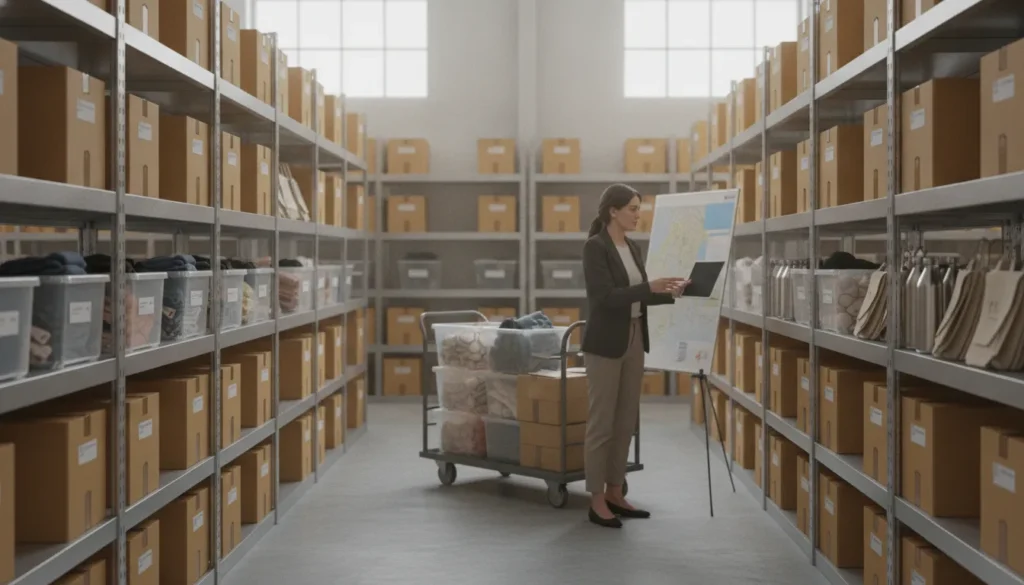
International fulfillment services help businesses move branded merchandise from production and storage to employees, customers, events, and offices across multiple countries. For procurement, People, and brand teams, the right partner coordinates inventory, customs, documentation, shipping, delivery visibility, and support as one operating program rather than a series of disconnected handoffs.
Ready to plan a cross-border merchandise program? Contact Brand Vessel to start a project.
The distinction matters when a company needs consistent quality and brand control across regions. A parcel can leave a warehouse on time and still create friction if the destination requirements, product documentation, duties, or recipient experience were not considered before the order was released.
What are international fulfillment services?
International fulfillment services are the coordinated storage, preparation, customs, shipping, delivery, and support activities required to distribute products across national borders. For branded merchandise, the service may also include company-store ordering, kitting, packaging, inventory control, and direct-to-recipient delivery. The goal is a repeatable operating model that gives a business one accountable path from merchandise planning to destination-country delivery.
That scope is broader than placing an order with an international carrier. A carrier transports a shipment. An international fulfillment partner helps determine how merchandise should be stored, picked, packed, documented, declared, shipped, tracked, and supported for the intended recipients.
Why branded merchandise needs a coordinated model
Corporate merchandise programs often combine custom apparel, promotional products, onboarding kits, event materials, awards, and employee orders. Those items may have different decoration methods, packaging requirements, dimensions, values, and destination restrictions. A partner must preserve the intended presentation while also preparing the shipment for the operational requirements of each market.
For distributed teams, the delivery pattern can be just as important as the product. A business may need individual employee shipments, regional replenishment, bulk deliveries to an office, or kits assembled for a specific event. The fulfillment model should support those use cases without forcing every order through the same workflow.
How the service fits into a merchandise program
International fulfillment typically connects several stages:
- Program planning: Define products, destinations, recipients, order rules, packaging, and service responsibilities.
- Inventory management: Receive, store, count, reserve, and replenish merchandise against an agreed program.
- Order preparation: Pick products, assemble kits, check quantities, and package shipments for the destination and recipient.
- Trade coordination: Prepare the information and documentation needed for the shipment, then coordinate customs responsibilities.
- Transportation and delivery: Select the appropriate shipping path, monitor movement, and communicate exceptions.
- Program support: Handle questions, returns, replacement needs, reporting, and future replenishment.
This integrated model is different from a generic shipping tutorial. If you need a shipment-level explanation of duties, documents, and destination restrictions, see How to Ship Branded Merchandise Internationally: A Logistics Guide. This article focuses on how to evaluate the partner and operating model behind a recurring program.
What should buyers expect from an international fulfillment partner?
A capable international fulfillment partner should make responsibilities clear across inventory, customs, transportation, recipient support, and reporting. Buyers should be able to explain what happens when an order is placed, who prepares the shipment, who owns the documentation, how exceptions are communicated, and how the program will be measured. Clear ownership is as important as the warehouse or carrier used.
Inventory control that matches the program
Ask how the partner receives merchandise, records quantities, separates products by program or region, and reports inventory status. A useful process should make it easier to answer questions such as:
- Which products are available for each audience or region?
- What inventory is reserved for onboarding, events, or scheduled campaigns?
- How are low-stock conditions and replenishment needs identified?
- How are damaged, returned, or replacement items recorded?
Inventory accuracy supports both the employee experience and procurement planning. It also helps a team avoid treating every urgent request as a special project.
Flexible order and delivery patterns
International programs rarely have one delivery pattern. A buyer should confirm whether the partner can support the specific mix of orders the program requires, such as:
- Individual shipments to employees or customers.
- Bulk deliveries to offices, conferences, or regional teams.
- Pre-assembled kits for onboarding, recognition, or internal campaigns.
- Company-store orders with defined products, approval rules, or budgets.
- Replacement shipments when an item is damaged, missing, or incorrectly delivered.
Brand Vessel combines merchandise, company stores, storage, logistics, kitting, and fulfillment. Its Branded Merchandise Services & Company Stores page is the relevant service overview for teams considering an integrated merchandise partner.
Visibility for people beyond the warehouse
Procurement, People, marketing, finance, and regional stakeholders may all need different information. Ask what reporting is available for order status, inventory, shipment exceptions, recipient locations, and replenishment activity. A partner does not need to expose every operational detail to every user, but the program should provide a reliable way to answer business questions without reconstructing the history across emails and carrier portals.

How do customs and documentation fit into international fulfillment?
Customs and documentation are core parts of international fulfillment because merchandise must be prepared for the rules and requirements of its destination. The buyer should confirm who gathers product information, supports classification, prepares shipment details, coordinates with brokers, and communicates questions or holds. Responsibilities should be defined before the first shipment, not discovered when a parcel is delayed.
Product information must be usable
Branded merchandise can include apparel, bags, drinkware, electronics accessories, packaged kits, and other product categories. The partner needs accurate information about what each item is, how it is made, how it is packaged, and where it is going. That information supports the documentation and review process for the shipment.
A buyer should ask how product information is collected and maintained as the catalog changes. The answer should cover new products, decorated goods, replacement items, bundled kits, and regional variations. It should also explain what happens when a destination raises a question about an item or shipment.
One accountable path reduces handoff risk
Cross-border fulfillment can involve a merchandise supplier, warehouse, packer, carrier, customs broker, local delivery provider, and internal program owner. More parties do not automatically create a better result. They create more points where information can be lost unless one partner owns coordination.
Brand Vessel offers in-house shipping and customs brokerage as part of its storage and logistics capabilities. Buyers evaluating that model can review What Is Customs Brokerage for Branded Merchandise? for a focused explanation of the related service area.
Duties, taxes, and fees need a defined process
The amount and treatment of duties, taxes, and fees can vary by product, destination, shipment details, and applicable rules. Avoid selecting a partner based on a broad promise that every shipment will be simple or inexpensive. Instead, ask how the partner identifies potential charges, communicates responsibility, and handles questions before release.
The same principle applies to restricted or destination-sensitive items. A partner should explain how it reviews product and destination requirements, what information it needs from the buyer, and how it escalates an item that requires additional review. That process is more useful than an unsupported blanket claim about every country.
Which operating model fits a cross-border merchandise program?
The right operating model depends on the program’s order patterns, geographic reach, inventory needs, and internal ownership. A business with occasional bulk shipments may need coordination and documentation support. A distributed enterprise may need an ongoing combination of company-store ordering, centralized inventory, individual delivery, kitting, reporting, and replenishment.
Centralized fulfillment with distributed delivery
A centralized model keeps program inventory and operating standards under one fulfillment process, then sends orders to individual recipients or regional destinations. This can make sense when the business wants consistent product selection, packaging, and brand presentation while serving employees in multiple locations.
The buyer should still ask how destination-specific requirements are handled. Centralization does not remove the need to understand the shipment’s final destination, recipient details, product information, and delivery expectations.
Company-store ordering with fulfillment support
A company store can give authorized users a defined place to order approved merchandise. Fulfillment support then connects those orders to inventory, packing, shipping, and reporting. This operating model can help a People or marketing team reduce manual order coordination, especially when programs include recurring onboarding or employee engagement needs.
Do not evaluate the store separately from the operational program. Ask how the platform, inventory, fulfillment, and customer support work together. The technology should reinforce the delivery model, not create another disconnected system.
Kitting for a controlled recipient experience
Kitting groups selected items into a planned package for a defined use case. It can support onboarding, recognition, events, launches, or internal campaigns where the order needs a consistent presentation. Buyers should confirm how the partner manages component availability, assembly instructions, packaging, quality checks, and changes to the kit.
For a deeper look at that adjacent capability, see Kitting and Assembly Services: What Businesses Need to Know. The international fulfillment decision should focus on how kitting fits into the broader cross-border program.
How should you evaluate international fulfillment services?
Evaluate international fulfillment services by testing the partner’s accountability, operational depth, destination-country process, visibility, and fit with your merchandise program. A strong evaluation moves beyond a list of carrier names and asks how the partner will manage the complete experience from inventory planning through exception resolution.
Questions to ask before selecting a partner
- Scope: Which parts of storage, kitting, fulfillment, customs coordination, shipping, and support are handled directly?
- Destinations: How does the process change when products are sent to different countries or recipient types?
- Inventory: How are counts, reservations, low-stock alerts, returns, and replenishment managed?
- Merchandise: Can the partner support custom apparel, promotional products, kits, and packaging requirements?
- Ordering: Can the program support individual orders, bulk deliveries, and company-store workflows?
- Documentation: Who collects product information and coordinates customs-related requirements?
- Visibility: What reporting is available for orders, shipments, inventory, and exceptions?
- Support: Who is accountable when a shipment is delayed, held, returned, or delivered incorrectly?
- Growth: How can the operating model change as destinations, recipients, products, or order volume change?
What a useful evaluation process looks like
Start by documenting the program rather than asking for a generic fulfillment quote. List the merchandise categories, expected destinations, recipient types, order patterns, packaging needs, company-store requirements, and reporting stakeholders. Then ask each potential partner to describe the workflow, responsibilities, information requirements, and exception process for the same scenario.
That approach creates a more useful comparison. It shows whether a provider understands branded merchandise as a managed experience, rather than treating it as an undifferentiated parcel. It also gives internal stakeholders a clear basis for discussing service fit, risk, and operational ownership.
Brand Vessel serves businesses that need branded merchandise, custom company stores, and storage, logistics, kitting, and fulfillment support. Teams can review Product Fulfillment Services: From Storage to Delivery for a related view of the fulfillment workflow, then define the international requirements specific to their program.
Frequently Asked Questions
What do international fulfillment services include?
International fulfillment services can include inventory storage, order preparation, kitting, packaging, customs coordination, shipping, delivery tracking, returns, replenishment, reporting, and recipient support. The exact scope depends on the program. Buyers should confirm which activities the partner performs directly and which responsibilities remain with the merchandise team, carrier, broker, or regional stakeholder.
What is the difference between international fulfillment and international shipping?
International shipping usually refers to transporting a shipment across a border. International fulfillment is the broader operating process that includes inventory, order preparation, documentation, customs coordination, shipping, delivery, exceptions, and support. For a recurring branded merchandise program, fulfillment connects the shipment to the catalog, company store, packaging, reporting, and recipient experience.
Why does customs expertise matter for branded merchandise?
Customs expertise matters because merchandise can include varied products, decorated goods, bundled kits, and destination-specific requirements. A partner with customs depth can help define the information and responsibilities needed before a shipment is released. That does not eliminate destination rules or possible charges, but it creates a clearer process for reviewing and coordinating them.
Can a company store support international fulfillment?
A company store can support international fulfillment when its ordering rules, inventory, recipient information, shipping process, and reporting connect to the operational program. The store should not be evaluated as a separate storefront alone. Ask how approved products become orders, how orders are fulfilled for each destination, and how exceptions, returns, and replenishment are managed.
What should a buyer ask an international fulfillment partner?
Ask about inventory accuracy, destinations served, order patterns, kitting, packaging, customs responsibilities, documentation, shipment visibility, support, returns, replenishment, and reporting. Also ask who owns an exception from the first notice through resolution. The best answers will be specific to your merchandise categories, recipients, destinations, and program workflow rather than generic assurances.