Branded merchandise fulfillment is rarely just a matter of putting a package in the mail. A strong program connects inventory control, order handling, presentation, shipping, and delivery so procurement, People teams, and brand stakeholders can operate from one coordinated process. Brand Vessel combines these capabilities with merchandise expertise, company stores, kitting, and logistics support.
Start a Project when you are ready to evaluate a connected merchandise program.
Product fulfillment services can cover receiving merchandise, storing and managing inventory, processing orders, assembling kits, packing products, shipping individual or bulk orders, coordinating returns, and supporting delivery. For branded merchandise, the right partner also protects presentation, brand standards, and the operational details behind each shipment.
The scope depends on your program, but understanding each handoff makes it easier to identify gaps and compare partners. The process begins with what happens before an order is placed: how merchandise enters the program, where it is stored, and how inventory remains ready for the next request.
What Are Product Fulfillment Services?
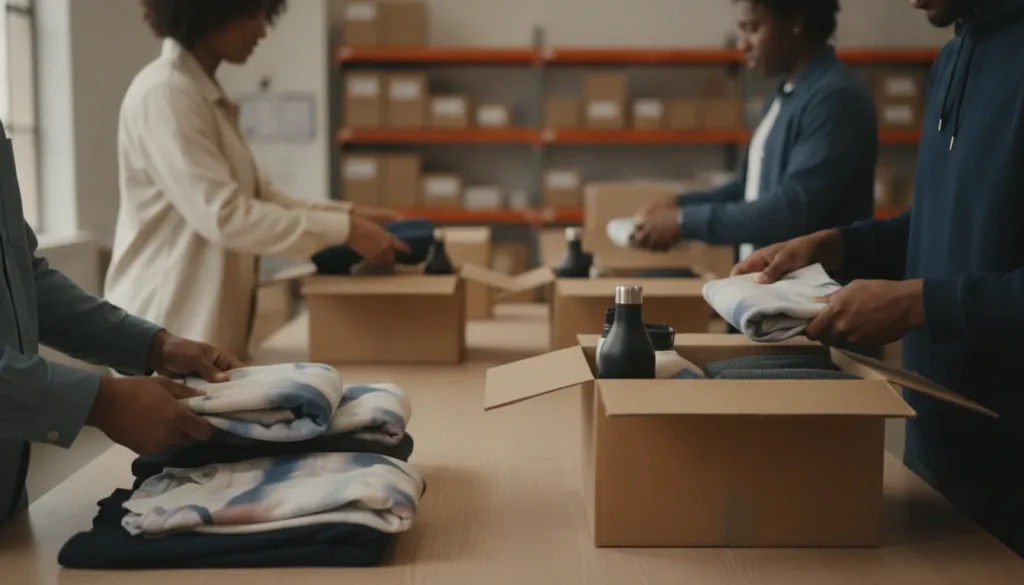
Product fulfillment services manage the merchandise lifecycle from the point inventory enters a program through the moment it reaches the intended recipient. For branded merchandise, that lifecycle can include receiving, storage, inventory handling, order processing, kitting, packing, shipping, returns, and delivery. The exact mix depends on how the program operates, but the goal is to coordinate these connected stages rather than treat each shipment as an isolated transaction.
For a broader view of how these capabilities connect, see Branded Merchandise Services & Company Stores.
Product fulfillment services coordinate the complete flow of merchandise, including receiving, storage, inventory control, order processing, packing, shipping, returns, and delivery. In a branded merchandise program, they may also connect custom apparel, company-store orders, kitting, packaging, and customs support so each item or kit moves through a defined operational process.
How product fulfillment differs from parcel shipping
Parcel shipping is one part of fulfillment. A carrier transports a prepared package from one address to another, while a fulfillment service may help determine what belongs in the package, where inventory is stored, how an order is picked, and how the shipment is prepared. It may also support returns or coordinate multiple delivery types, such as individual employee orders and bulk shipments for an event.
That distinction matters for merchandise programs because the operational work often begins before an order exists. Inventory may need to be received, counted, stored, allocated, and made available through an ordering channel. A company may also need apparel decorated consistently, several products assembled into one kit, or packaging selected for a launch or employee moment.
What the lifecycle can include
A complete program can connect several functions:
- Receiving and storing branded merchandise
- Inventory handling and order processing
- Picking, packing, and custom kitting
- Individual, bulk, or direct-to-recipient shipping
- Returns, exchanges, and related inventory decisions
Not every program needs every service. A procurement team may need storage and bulk distribution for an event, while a People Operations team may need a repeatable flow for employee onboarding kits. Brand Vessel combines merchandise capabilities with storage, packing, in-house shipping, and customs brokerage, allowing the operating model to be shaped around the program rather than around parcel movement alone.
Which Steps Belong in a Product Fulfillment Program?
A product fulfillment program can connect receiving, storage, inventory control, order handling, assembly, packing, shipping, delivery, and returns. The exact workflow depends on the merchandise, ordering channels, recipient groups, and program goals. Some programs need individual employee shipments, while others focus on bulk distribution or event kits.
- Receive and store merchandise. Products enter the program through an organized receiving process, then move into appropriate storage. For branded merchandise, this may include custom apparel, promotional products, event materials, or kit components. Brand Vessel offers storage solutions and warehousing as part of its merchandise logistics services.
- Record and control inventory. Inventory management should account for receipts, allocations, transfers, and employee orders in one system. Teams may also separate core merchandise from seasonal or event-specific stock, then use usage data to inform reorder points and budget forecasts. The guide Corporate Merch Inventory Management explains these controls in more detail.
- Handle orders from the appropriate channel. Orders may come from a company store, an internal request process, a campaign list, or a bulk purchase. The fulfillment team confirms the items, quantities, recipient details, and any rules attached to the order before picking begins. A company store can help connect approved merchandise with individual ordering and fulfillment, but it is not required for every program.
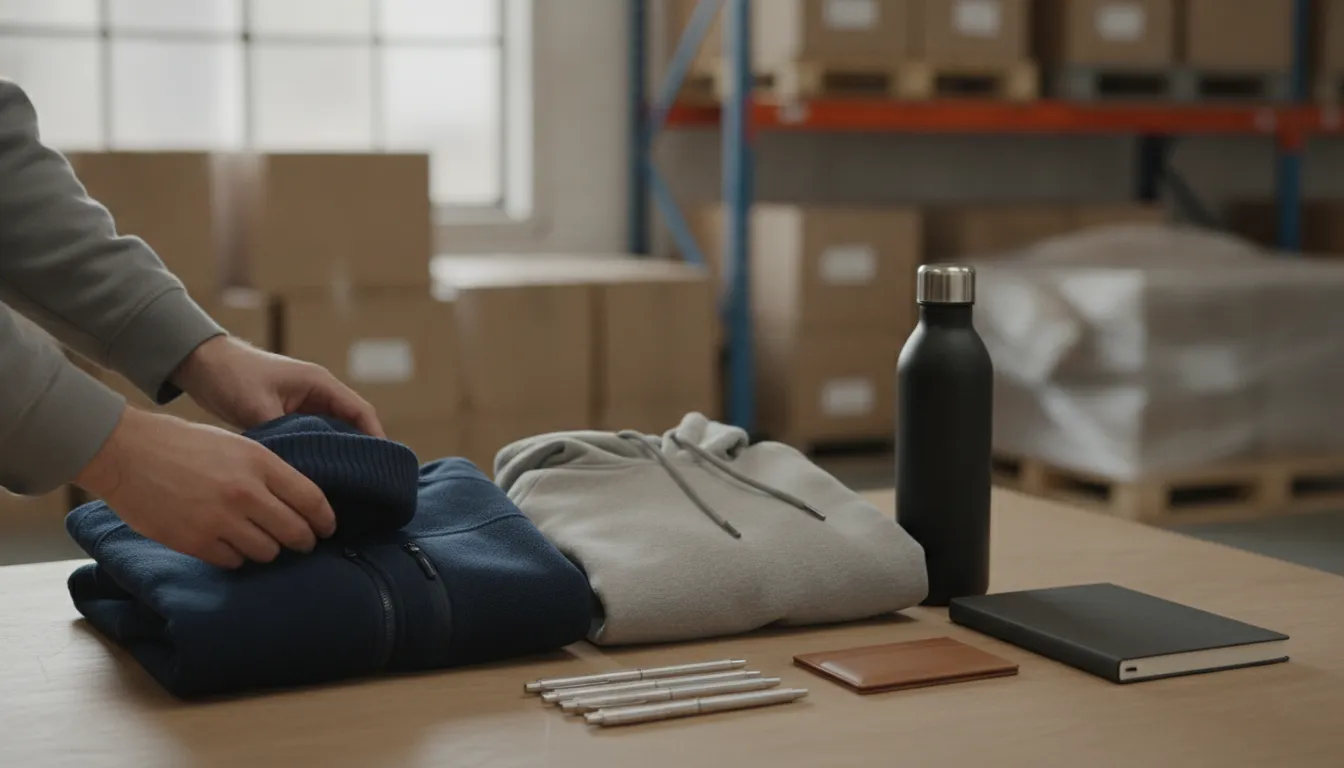
- Assemble kits when needed. Kitting combines multiple items into one cohesive package, such as apparel, office supplies, technology accessories, printed materials, or event essentials. Components may vary by role, department, region, or campaign. For a closer look at this stage, see What Is Corporate Kitting?
- Pick and pack each shipment. Staff select the correct items and prepare them for their destination. Packing requirements can range from efficient protective packaging to a carefully designed presentation for a launch, onboarding experience, or employee moment. Corporate Merchandise Packaging: Boosting Brand Impact covers how packaging supports the recipient experience.
- Ship and manage delivery. Programs may involve individual shipments, bulk orders, direct-to-employee delivery, national distribution, or international shipping. Brand Vessel provides in-house shipping and customs brokerage for relevant international shipments. These capabilities do not mean every program uses every destination or follows the same transit schedule, so distribution requirements should be defined in advance.
- Process returns and exceptions. A complete workflow assigns ownership for returns, exchanges, damaged goods, and obsolete stock. The team can then update inventory records, determine the next action, and keep the program from losing visibility when an order does not finish as planned.
When these stages are designed together, product fulfillment services become more than storage and parcel handoff. They create a controlled path from merchandise arrival to recipient delivery, with room for the specific channels and exceptions a branded program requires.
How Should You Evaluate Product Fulfillment Services?
Evaluate product fulfillment services as an operating system for your merchandise program, not as a warehouse with a shipping label. The right partner should connect product expertise, inventory control, ordering, kitting, delivery, returns, and reporting. That lifecycle view is different from comparing warehouse space or selecting a conventional 3PL by geography alone.
| Evaluation criterion | What to look for | Why it matters for branded merchandise |
|---|---|---|
| Merchandise expertise | Experience with apparel, promotional products, decoration, and brand standards | Protects quality and consistency before products reach storage or shipment |
| Inventory visibility | Clear records for receipts, allocations, transfers, orders, and replenishment | Gives teams a reliable view of available and committed merchandise |
| Order channels | Support for employee, event, bulk, and direct-to-recipient ordering | Matches fulfillment to how different audiences actually receive merchandise |
| Kitting and packaging | Assembly, custom packaging, pick-and-pack, and campaign-specific configurations | Turns separate products into a coordinated launch, onboarding, or event experience |
| Domestic and international shipping | Individual and bulk distribution, global shipping support, and customs expertise | Helps coordinate complex destinations without promising universal coverage or timing |
| Returns management | Defined ownership for returns, exchanges, damaged goods, and obsolete stock | Prevents exceptions from disappearing between the warehouse and program team |
| Reporting | Order, inventory, shipment, exception, and usage reporting that stakeholders can act on | Supports forecasting, reorder decisions, budgets, and program accountability |
| Scalability | Processes that support routine orders, launches, seasonal demand, and larger distributions | Allows the program to grow without rebuilding every operational handoff |
Look beyond the warehouse handoff
A warehouse or 3PL comparison may focus on storage footprint, carrier access, integrations, and fulfillment mechanics. Those factors still matter, but a branded merchandise buyer also needs to know who manages decoration standards, approved assortments, recipient rules, packaging, and exceptions. A provider that only moves cartons may leave the most brand-sensitive decisions with an already busy internal team.
Brand Vessel connects merchandise, storage, packing, in-house shipping, customs brokerage, and company-store capabilities. Its Custom Company Stores can provide an ordering channel for approved merchandise, while reporting and operating rules can support budgets, shipping, and seasonal updates. For a broader view of the connected model, review Branded Merchandise Services & Company Stores.
During evaluation, ask each provider to map one realistic order from product selection through delivery and, if needed, return. That exercise reveals whether the service is genuinely integrated or simply a set of disconnected warehouse activities.
How Do Product Fulfillment Services Support Branded Merchandise?
Product fulfillment services support branded merchandise by connecting the creative, operational, and distribution stages of a program. The work can include receiving decorated apparel, organizing inventory, processing company-store orders, assembling kits, packing shipments, and sending individual or bulk orders to the right recipients. That connected workflow helps teams protect brand standards after production is complete.
For a branded merchandise program, fulfillment is not only a matter of moving cartons. It is also the point where apparel quality, decoration details, approved assortments, packaging, and delivery instructions need to remain aligned. Brand Vessel combines merchandise expertise with storage, inventory handling, packing, shipping, and fulfillment support so buyers can manage the program as one coordinated operation.
How does fulfillment protect merchandise quality and brand consistency?
Quality control begins before an order leaves storage. Custom apparel may use embroidery, screen printing, patches, or other decorating methods, and each finished item needs to match the approved design and intended use. A fulfillment workflow should preserve those standards through receiving, storage, picking, and packing rather than treating every product as interchangeable stock.
Inventory rules also help keep the assortment coherent. Core merchandise can be managed separately from event-specific or seasonal items, while receipts, allocations, transfers, and employee orders are recorded in one system. These controls give program owners a clearer view of what is available and which items are reserved for a particular team, campaign, or location.
For a deeper look at the operational side, see Corporate Merch Inventory Management.
How do company stores connect ordering with fulfillment?
A company store gives employees, teams, customers, partners, or event attendees a controlled way to order approved merchandise. Its operating rules can define approvals, budgets, shipping, reporting, and seasonal updates. When the store connects to inventory and individual fulfillment, each order can move into the appropriate pick, pack, and shipping workflow without requiring every recipient to coordinate separately with the merchandise team.
This model supports both direct-to-employee orders and larger shipments for events, offices, or regional programs. A kit may combine apparel, office supplies, technology accessories, printed materials, or event essentials. Brand Vessel can assemble and distribute those components according to the intended audience, department, region, role, or campaign. Learn more about the ordering channel on Custom Company Stores.
How can distribution adapt to different audiences?
Some programs need one bulk delivery, while others require individual shipments to distributed employees. Fulfillment services can support both approaches, along with storage, packing, in-house shipping, and global distribution where the program calls for it. Brand Vessel also offers customs brokerage for international shipments, without implying that every destination or shipment follows the same process.
Start a project with Brand Vessel to discuss the merchandise, ordering, and distribution workflow your program requires.
What Should You Ask Before Choosing a Fulfillment Partner?
A fulfillment partner should be able to explain how your merchandise moves from inbound receipt to the recipient, including who owns each decision and exception. Before selecting a provider, clarify inventory ownership, order channels, kitting rules, lead-time inputs, destinations, returns, reporting, and customs responsibilities. The answers reveal whether the operating model fits your program.
Start with these implementation questions:
- Who owns the inventory? Confirm who purchases, stores, allocates, replenishes, and approves transfers. Ask how receipts, employee orders, returns, exchanges, damaged goods, and obsolete stock are recorded and assigned.
- How will orders enter the system? Identify whether orders will come through a company store, internal request process, event roster, purchase order, or another channel. If employees or distributed teams will order individually, ask how approvals, budgets, shipping details, and order status are managed. Custom Company Stores can connect approved merchandise ordering with program rules and fulfillment workflows.
- What are the kitting and packing rules? Define the exact components, substitutions, personalization requirements, packaging, inserts, and quality checks. If kits vary by department, region, role, or campaign, document those rules before inventory arrives.
- What inputs shape the lead time? Review decoration, receiving, inventory availability, kit assembly, address validation, order volume, carrier handoff, and destination requirements. Merch Fulfillment Lead Times: What to Expect explains why a useful schedule depends on more than the final shipping leg.
- Where must orders go? Separate individual and bulk shipments, domestic and international destinations, event deadlines, and direct-to-employee delivery. Ask which party handles address issues, carrier exceptions, duties, documentation, and customs coordination. Brand Vessel includes in-house customs brokerage within its logistics offering, but responsibilities should still be documented for each destination and shipment type.
- How will returns and reporting work? Establish the return window, inspection process, disposition rules, exchange handling, and escalation owner. Request sample reports showing inventory balances, order status, shipment activity, exceptions, and program-level trends.
Finally, ask what the first implementation milestone is and which data the partner needs from your team. Brand Vessel can connect merchandise, storage, kitting, shipping, and customs through its Branded Merchandise Services & Company Stores, while keeping the operating rules visible to the teams responsible for the program.
Why Use an Integrated Merchandise and Logistics Partner?
Integrated product fulfillment services connect merchandise decisions with the operational work that follows. Instead of coordinating separate suppliers for sourcing, decorating, storage, kitting, shipping, and customs, a company can work with one partner across the lifecycle. That reduces handoff complexity and gives procurement, marketing, and people teams a clearer view of ownership.
Brand Vessel combines these capabilities through its Branded Merchandise Services & Company Stores, connecting custom merchandise with storage and logistics support.
Fewer handoffs across the merchandise lifecycle
Every handoff creates an opportunity for information to be lost. An apparel specification may not reach the decorating team exactly as intended. A store order may require a separate warehouse request. A kitting brief may arrive without the inventory or packaging details needed to complete it. An integrated partner can keep these requirements connected as the program moves from sourcing to delivery.
Brand Vessel’s documented capabilities include custom apparel and promotional products, creative decorating, storage, packing, in-house shipping, kitting, and customs brokerage. Not every program needs every service, but the same partner can coordinate the relevant stages when the program does. This is especially useful when a merchandise program includes both planned bulk shipments and individual orders for employees, customers, or event attendees.
One operating model for stores, kits, and distribution
A company store can provide an ordering channel for approved merchandise, while the fulfillment operation manages the inventory and delivery work behind those orders. For onboarding or campaign launches, the same program may require multiple items assembled into kits, custom packaging, and shipments to recipients in different locations. Keeping those activities within one operating model helps teams align approvals, inventory, packing instructions, and delivery requirements.
Brand Vessel’s portfolio includes merchandise projects for brands such as Tesla, DoorDash, Samsung, Netflix Games, and Uber Eats. These examples demonstrate the range of branded merchandise work in its portfolio, not a guarantee of fulfillment results for every program. For international shipments, Brand Vessel also describes in-house customs brokerage as part of its logistics offer. Buyers should still confirm destination requirements, documentation, and program-specific responsibilities before launch.
The practical benefit is accountability. Rather than asking which vendor owns the next step, teams can establish a shared workflow for merchandise, inventory, kitting, shipping, and exceptions. That makes an integrated partner worth considering when a program has multiple recipients, locations, order channels, or delivery stages.
Frequently Asked Questions
What does product fulfillment include?
Product fulfillment can include receiving merchandise, storing and managing inventory, processing orders, assembling kits, packing shipments, coordinating delivery, and handling returns. The exact workflow depends on the program. A branded merchandise partner may also support custom apparel, company stores, packaging, domestic distribution, international shipping, and customs brokerage.
How does fulfillment support branded merchandise programs?
Fulfillment connects merchandise operations after products are sourced and decorated. A partner can hold approved inventory, assemble campaign-specific kits, pack orders for employees or events, and ship individual or bulk quantities. This keeps storage, order handling, packaging, and distribution aligned with the brand experience instead of treating each shipment as a separate task.
Can a company store connect to fulfillment?
Yes. A company store can give employees, teams, customers, partners, or event attendees an approved ordering channel, while fulfillment manages the inventory and shipment behind each order. Store rules can also support approvals, budgets, shipping, reporting, and seasonal updates, helping teams create a repeatable ordering process.
How are kits prepared and delivered?
Kitting combines multiple branded items into one cohesive package, such as apparel, office supplies, technology accessories, printed materials, or event essentials. Components may vary by department, region, role, or campaign. The fulfillment workflow then covers kit storage, pick-and-pack, and distribution to the intended recipients.
Ready to plan your fulfillment program?
A clear fulfillment plan can help align merchandise, inventory, kitting, shipping, and delivery around the way your teams actually work. Start a project with Brand Vessel to discuss your branded merchandise, company store, storage, kitting, and fulfillment needs.