
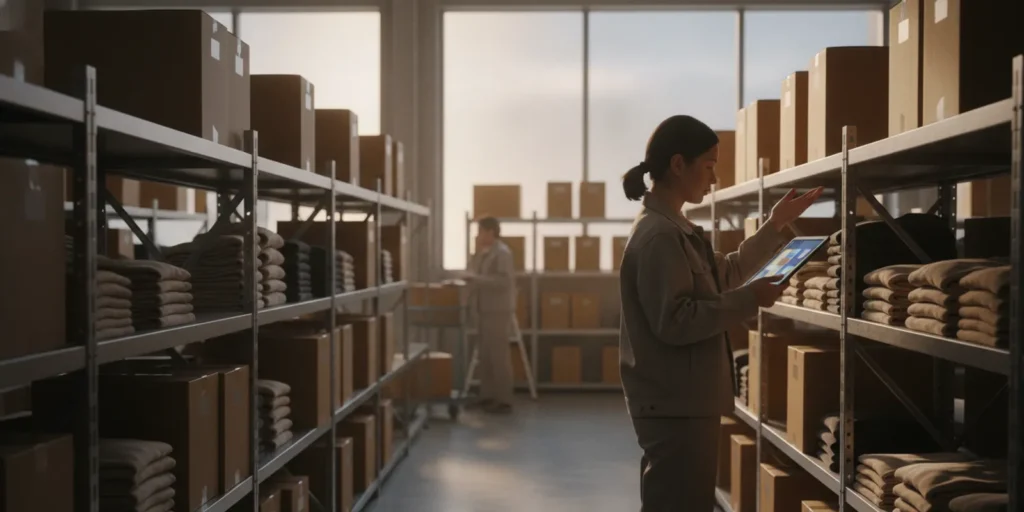
Promotional products warehousing gives a company a planned place to store branded apparel, event materials, and other merchandise between production and distribution. For multi-location brands, the important decision is not only where inventory sits; it is how teams request it, how stock is tracked, and how items reach the right people at the right time.
Plan a merchandise warehousing program
Promotional products warehousing: what it includes
Promotional products warehousing is the coordinated storage and handling of branded merchandise after it is produced and before it is distributed. A useful program connects physical inventory with ordering, stock visibility, packing, and shipping processes. Its scope can range from holding a limited event run to supporting recurring employee, recruiting, and customer merchandise needs across locations.
Warehousing is not simply extra shelf space. The operational value depends on knowing which items are in stock, what they are reserved for, and who can request them. A warehouse arrangement may be paired with a company store, kitting, fulfillment, or international distribution, depending on the program’s needs.
Typical stored merchandise includes:
- Custom apparel, such as shirts, sweatshirts, jackets, and headwear.
- Branded drinkware, bags, notebooks, and other employee or customer gifts.
- Event materials and reusable display or welcome-kit components.
- Packaging, inserts, and components waiting to be assembled into kits.
- Seasonal or campaign-specific items held for planned release.
Items may arrive from production in separate shipments, be grouped by program, or be held until a team submits a request. The storage plan should reflect how products will actually be used. For example, frequently ordered onboarding items need a dependable replenishment and pick process, while a one-time conference shipment may need a clearly defined hold date and destination list.
Warehousing can also bridge the gap between a large production order and smaller, staggered distributions. Instead of sending every unit to one office at once, the program can hold inventory and release it in planned quantities. That model is relevant when employees, offices, events, or recipients are spread across several locations. It does not remove the need to forecast demand; it makes the timing and handling of that demand a part of the operating plan.
Companies evaluating the overall service scope can review Branded Merchandise, Company Stores & Fulfillment Services | Brand Vessel. The right arrangement depends on the merchandise mix and distribution needs, not on the warehouse alone.
How should teams design a merchandise warehousing program?
Start by mapping the full path from product selection to final delivery. Define what will be stored, who may request it, how orders are approved, and how inventory will be replenished. Then set up clear records and handling rules before the first cartons arrive. These choices help procurement, people, and brand teams work from the same operating plan.
Before selecting a storage model, document the program’s requirements in a short operating brief. Include the purpose of each product, intended recipients, expected order patterns, shipping destinations, and any assembly needs. The brief should distinguish planned releases from unplanned requests. It should also identify who can approve exceptions, such as a rush shipment or a request for an item reserved for a later campaign.
- Group inventory by program and use. Separate ongoing employee merchandise from event stock, campaign items, and kit components. This makes it easier to see which stock is available for general requests and which inventory is committed to a specific use.
- Set ownership and access rules. Name the teams or roles permitted to place requests. Decide whether requests require manager or budget approval, and make the approval path clear to requesters.
- Define the inventory record. Agree what information is needed for each item: product description, size or color options, quantity received, quantity allocated, location, and any reorder or release notes. For apparel, distinguish sizes so a total unit count does not hide a shortage in popular sizes.
- Plan how orders are picked and packed. Specify whether items ship individually, in bulk to an office, or as assembled kits. Identify packaging and insert requirements before fulfillment starts.
- Set shipping and exception procedures. Determine how address corrections, partial availability, damaged goods, and timing changes are routed and communicated.
- Review stock and replenishment on a schedule. Assign an owner to compare remaining inventory with known upcoming needs and make decisions about reorders, substitutions, or retirement of outdated items.
These steps matter because inventory is useful only when the record supports a decision. A count that combines all apparel sizes, for example, may suggest adequate stock while concealing a shortage of the sizes most frequently requested. Likewise, a total quantity that includes event-reserved units may overstate what is available for an employee store.
Teams can connect requests to a Custom Company Stores for Enterprise Teams | Brand Vessel when they need a structured way to present approved merchandise and manage access. A store does not replace inventory planning. It is one possible request interface, and the underlying records, approvals, and fulfillment rules still need to be defined.
Which warehousing model fits a multi-location brand?
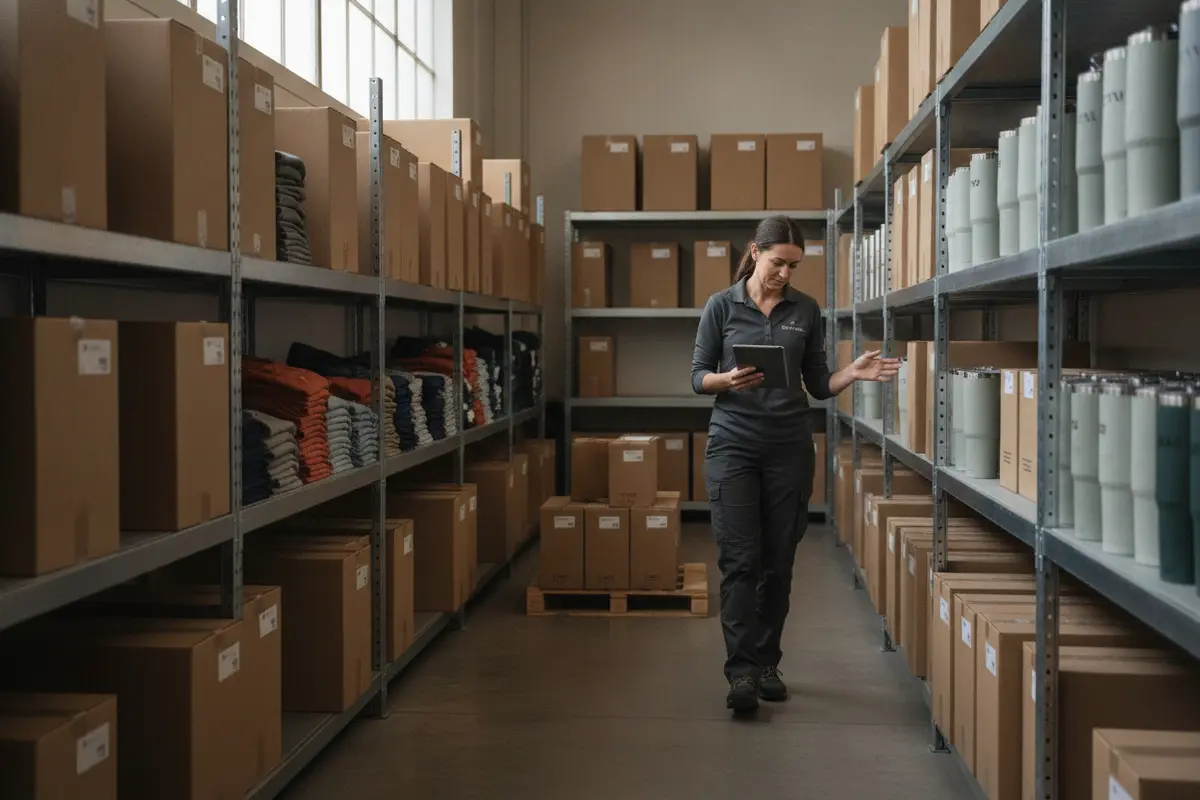
The best model depends on order frequency, recipient distribution, product variety, and how much handling each request requires. A central stock location can simplify oversight, while distributed stock may bring selected items closer to users. Many programs combine storage with company-store ordering or kitting. Compare the work each model must support, rather than choosing by location count alone.
Use the table as a starting point. These are operating patterns, not fixed packages, and a program may combine more than one.
| Program pattern | Useful when | Planning consideration | Typical handling |
|---|---|---|---|
| Centralized storage | Teams want one inventory view and planned releases to multiple destinations. | Allow for transit time from the central stock point to recipients or offices. | Hold, pick, pack, and ship orders as requests arrive. |
| Store-connected inventory | Employees or approved buyers need a consistent catalog and ordering route. | Define eligibility, budget rules, available quantities, and what happens when stock is low. | Connect a request or order flow to stock allocation and fulfillment. |
| Kit-ready components | Several products or inserts need to arrive together for onboarding, events, or campaigns. | Plan component quantities, assembly instructions, and timing before kits are due. | Store components separately, assemble to the agreed specification, then ship. |
| Scheduled bulk release | Known events or campaigns have fixed delivery dates and destination quantities. | Reserve stock and build in time for production, packing, and transportation. | Stage inventory, pack by destination, and dispatch against the release plan. |
A central model can be easier to reconcile, but it may require longer delivery windows to distant recipients. A store-connected model can make selection and requests more consistent, but it needs clear rules for catalog access and budgets. Kit-ready storage suits programs where items must arrive together, but components and assembly instructions need to be controlled. Scheduled releases work best when dates and quantities are known early.
When a program includes assembly, compare warehousing requirements with the work described in What Is Corporate Kitting? Guide for Enterprise Teams and Kitting and Assembly Services: What Businesses Need to Know. Warehousing may support that work, but storage alone does not define the kit contents, sequence, or quality checks.
What should buyers compare before choosing a warehousing partner?
Compare providers on operational fit, not just available space. Ask how inventory is recorded, how requests are approved and fulfilled, which services are handled together, and how the team responds when plans change. Your evaluation should cover real examples from your program: apparel sizes, recurring employee orders, event deadlines, destination spread, and any kit assembly or international shipping needs.
Useful buyer questions include:
- What inventory information will we be able to review? Establish which quantities, product details, allocations, and location information are visible and how often records are updated.
- How will the provider distinguish available stock from reserved stock? Confirm that campaign or event inventory cannot be unintentionally consumed by general requests.
- How are orders submitted and approved? Ask who can initiate an order, what information is required, and how the process handles incomplete requests.
- What happens when an item is unavailable? Agree how shortages, substitutions, partial shipments, and reorder decisions are communicated and approved.
- Can products be packed in different ways? Discuss individual shipment, bulk delivery, and kitting needs, including inserts, packaging, and destination sorting.
- How are international shipments managed? If recipients are in multiple countries, ask how shipping coordination and customs documentation are handled. Brand Vessel’s company context identifies global distribution and in-house customs brokerage as capabilities; confirm the requirements and scope relevant to your program.
- Who owns the program on each side? Name contacts for inventory decisions, store administration, shipping questions, and exception approvals.
- How will the arrangement adapt as needs change? Discuss new products, revised branding, changing recipient lists, and how remaining stock is reviewed when a campaign ends.
Ask providers to walk through a realistic scenario rather than answer only in general terms. For example, describe an upcoming new-hire wave across several offices, with a fixed kit and a last-minute address change. Listen for how they would confirm available stock, assemble the items, route the change, and tell your team what has happened. This surfaces handoffs that may otherwise remain unclear until an order is underway.
It is also useful to examine the relationship between storage and adjacent services. A merchandise partner may coordinate product sourcing, company stores, storage, and fulfillment under one service model. Brand Vessel describes its integrated offering on Branded Merchandise, Company Stores & Fulfillment Services | Brand Vessel. Buyers should still define responsibilities, approval steps, and service scope for their own program rather than assume every task is included.
For a view of examples of merchandise programs, visit Branded Merchandise Work & Case Studies | Brand Vessel. When assessing any provider, use examples to frame questions about product mix and execution, then confirm which processes match your specific requirements.
Review your merchandise warehousing needs
Frequently asked questions about promotional products warehousing
Buyers usually want to know what belongs in storage, how stock stays visible, whether warehousing can support a store or kit program, and how to handle changing demand. The answers depend on each company’s product mix and workflows. Establish those requirements before committing inventory, then review the process as ordering patterns and distribution needs evolve.
What types of promotional products can be stored?
Common examples include branded apparel, drinkware, bags, notebooks, event materials, packaging, and components for employee or customer kits. The right mix depends on the program. Confirm product dimensions, handling needs, size and color variations, and whether any items need to be reserved for a specific campaign or date.
Is warehousing the same as fulfillment?
No. Warehousing concerns storing and tracking goods; fulfillment includes actions that move an order toward delivery, such as picking, packing, and shipping. A provider may offer both, but buyers should define each responsibility and how an order moves from request to dispatch. See Product Fulfillment Services: From Storage to Delivery for a broader view of fulfillment activities.
Can warehousing support a company store?
Yes, storage can be part of a company-store program when inventory records and order processes are connected. Buyers should clarify which products appear in the store, how access and budgets work, how stock is allocated, and what happens when an item is depleted. The store interface and the warehouse workflow should be planned together.
How much inventory should a company hold?
There is no single quantity that fits every program. Estimate from known recipients, planned events, ordering patterns, product variations, and the time needed to produce and replenish items. Review actual usage over time, and decide who can authorize changes to the inventory plan.
What if demand changes after products arrive?
Set an exception path before it happens. Identify who can approve a revised destination, partial release, substitution, or reorder, and how the decision will be recorded. Regular inventory reviews also help teams spot outdated stock or approaching shortages early enough to make a considered choice.
Discuss your merchandise storage needs
Making warehousing work as a program
Reliable promotional products warehousing starts with a clear operating design: defined inventory groups, accurate records, controlled access, and named owners for approvals and exceptions. Connect those rules to the way products will be ordered, assembled, and shipped. A periodic review then lets the team adapt the plan as products, recipients, and distribution needs change.
For a multi-location business, treat storage as one part of a connected merchandise program rather than an isolated warehouse decision. Decide which items need to be on hand, how employees or internal teams will request them, and whether the next step is individual fulfillment, bulk delivery, or kit assembly. Then compare provider processes against those real scenarios.
Brand Vessel presents itself as a merchandise partner for branded products, company stores, storage, and logistics. To discuss how those needs fit together, About Brand Vessel | Enterprise Merchandise Partner provides company context, and the project inquiry page offers a direct next step. A well-defined brief will help make that conversation specific and useful.
When inventory rules and fulfillment responsibilities are clear, teams can make better-informed decisions about what to store, when to release it, and how merchandise reaches each audience.