
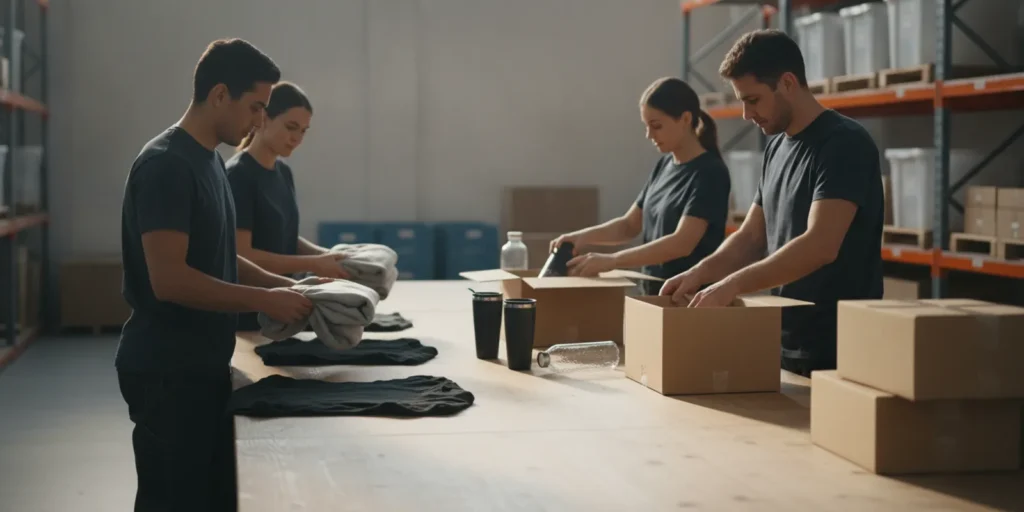
Choosing among swag fulfillment companies is not just a matter of finding a warehouse that can ship boxes. Enterprise programs may involve product sourcing, storage, employee ordering, kit assembly, domestic distribution, and international delivery. The right partner should connect the work that matters to your program and make ownership clear when an order needs attention.
Discuss your merchandise fulfillment needs
What should enterprise teams compare among swag fulfillment companies?
Compare providers across the full path from merchandise selection to delivery, rather than treating shipping as the only measure of fulfillment. Ask who owns product handling, inventory visibility, kitting, order exceptions, and international requirements. A provider that can coordinate these pieces may reduce handoffs, but the right scope depends on your program.
“Fulfillment” can mean different things from one company to another. Some providers focus on warehouse storage and parcel shipment. Others can coordinate branded merchandise, company stores, custom apparel, assembly, and distribution. Before comparing proposals, write down what you expect the provider to own and what will remain with your procurement, HR, marketing, or operations teams.
| Capability to compare | Questions to ask | Why it matters |
|---|---|---|
| Merchandise sourcing and handling | Can the provider support the product mix, decoration, receiving, inspection, and storage requirements? | Products and decoration decisions affect how goods arrive and how they should be stored and prepared. |
| Inventory visibility | How can authorized teams check stock, identify items, and understand when replenishment is needed? | Clear information helps teams plan future orders and avoid surprises when a popular item runs low. |
| Kitting and assembly | Can the partner assemble sets, accommodate recipient variations, and prepare shipments to a defined brief? | Kit contents and presentation can vary by audience, launch, or employee milestone. |
| Order handling | How are incoming requests reviewed, packed, shipped, and escalated if information is missing? | Defined responsibilities help prevent an exception from sitting between vendors or internal teams. |
| Distribution and delivery | Which destinations, shipping patterns, customs steps, and delivery requirements can the provider support? | A distributed program may need more than one shipping method or destination workflow. |
Use the comparison to identify gaps, not to award points for a long feature list. For example, a company sending one standard welcome kit to a US office may not need the same service mix as a business that supports employee ordering, periodic product drops, and delivery to multiple countries. Ask each potential partner to explain how its capabilities map to your actual use cases.
Also establish whether merchandise procurement is part of the proposed scope. A logistics provider may be able to receive goods selected elsewhere, while an integrated merchandise partner can help coordinate product selection, custom decoration, and the downstream handling plan. Brand Vessel describes its combined service offer on Branded Merchandise, Company Stores & Fulfillment Services | Brand Vessel.
Look for capability that matches the work you need, not a promise that one provider can handle every imaginable scenario. If a company says it supports global delivery, ask which destinations, customs responsibilities, and shipment types that statement covers. Confirm the specifics in the proposed scope before relying on them.
How can you evaluate service fit before selecting a fulfillment partner?
A useful evaluation starts with your program’s real order patterns, products, recipients, and service expectations. Give each candidate the same representative scenarios and ask for a clear account of responsibilities, limitations, and decision points. This makes proposals easier to compare and shows whether a provider understands the practical work behind your merchandise program.
Prepare a short brief before introductory calls. It need not predict every future order. It should give providers enough information to respond to comparable requirements and flag where they need more detail. Include the following:
- Program purpose: Explain whether merchandise supports employee onboarding, events, customer engagement, recognition, or several use cases.
- Product mix: Identify relevant categories such as custom apparel, drinkware, bags, or packaged kits, along with any handling considerations you already know.
- Order patterns: Describe expected order types, how frequently they occur, whether orders are individual or sent in batches, and who initiates them.
- Recipient and destination needs: Identify whether deliveries go to offices, events, homes, or international recipients, and note any known restrictions or timing needs.
- Presentation requirements: State whether items need sorting, personalization, inserts, packaging, or assembly as a coordinated set.
- Internal ownership: Name the teams that will approve products, provide recipient details, authorize spend, and resolve exceptions.
- Visibility expectations: Explain what information your team needs about available inventory, order status, and shipment progress.
- Change and exception cases: Give examples such as a late recipient update, a substituted item, or a delivery date change, and ask how the provider would handle each.
Then use a consistent set of questions with every candidate. Ask for a walk-through of a typical order, from receipt of product to delivery. Have the provider identify which tasks it performs, which tasks require your team, and what information must be available before work begins. Pay attention to specifics: clear answers make it easier to plan ownership; broad assurances do not tell you who acts next.
Request a sample service description or process outline if available, and compare it with your brief. Check whether the proposal includes product receiving, inventory management, kit assembly, pick-and-pack, shipping coordination, and customer support—or only selected steps. The Corporate Kitting & Fulfillment Guide | Brand Vessel can help your team distinguish assembly and kit preparation from the broader fulfillment scope.
Assess technology in terms of the work it supports. Ask how employees or internal coordinators place orders, what information is available to authorized users, and how the provider handles data updates. If a branded ordering experience is part of the need, review the relevant Custom Company Stores for Enterprise Teams | Brand Vessel details as a separate but connected part of the evaluation. A store can support ordering, while operational handling still needs a defined scope.
Request examples that resemble your own requirements rather than a general capabilities presentation. A scenario might be a new-hire kit ordered for home delivery, a batch of event merchandise sent to a venue, or apparel replenished for teams in different offices. Ask the provider to explain the assumptions, dependencies, and decisions it would need from your organization. Do not assume a sample example guarantees a specific outcome for your program.
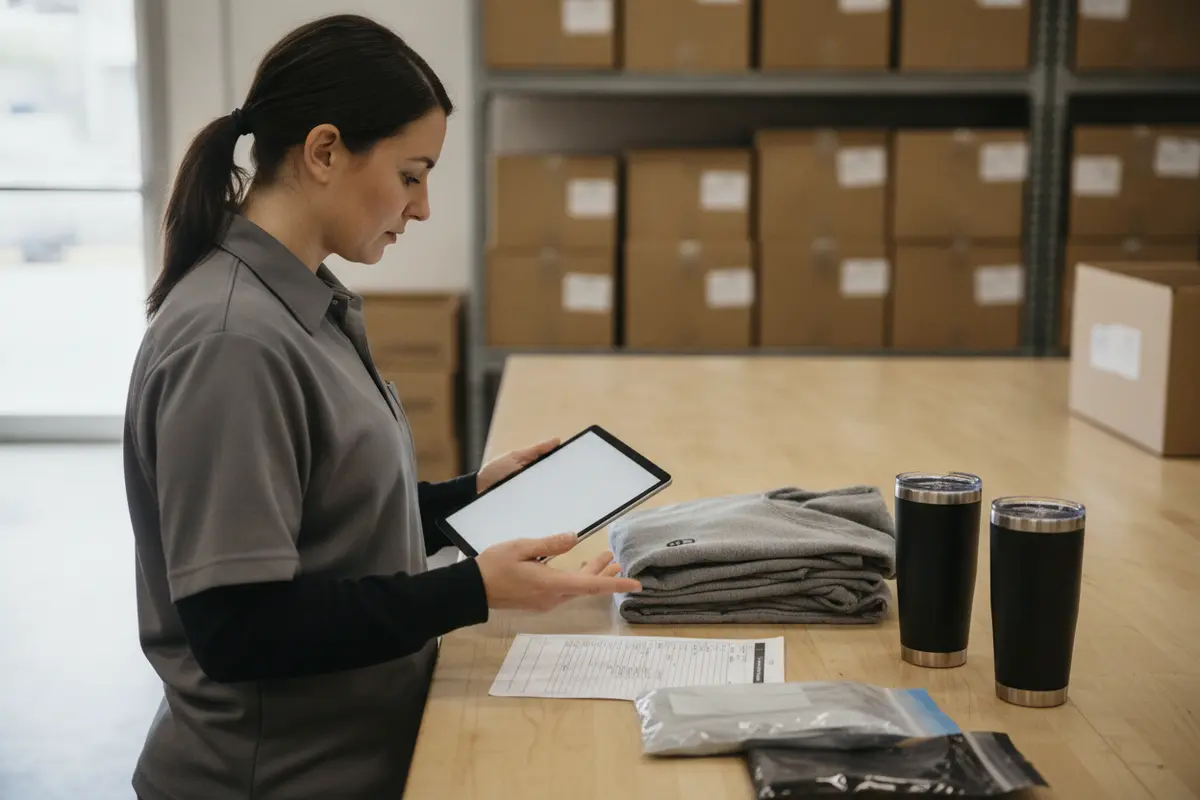
Compare how each company communicates constraints. A partner may be a strong fit even if it recommends a phased approach or identifies services that are outside its scope. What matters is that your team can see the boundaries and plan the remaining work. For an overview of a related service model, see Product Fulfillment Services: From Storage to Delivery.
Finally, distinguish measurable service commitments from informal expectations. Clarify how order questions are routed, who is your day-to-day contact, how urgent issues are escalated, and what reporting or reviews are included. If the provider’s proposal does not address a requirement in your brief, ask for an explicit response rather than filling in the gap yourself.
What should you confirm about storage, kitting, and distribution?
Before launch, confirm how inventory will be received, identified, stored, assembled, and dispatched—and how the provider will communicate when an assumption changes. These operating details connect the promise of a fulfillment service to your merchandise program. They also help your team distinguish a viable partner from a vendor whose offer covers only one segment of the work.
Start with product and inventory handling. Establish what information should accompany incoming goods, how products are identified, and who resolves a mismatch or damage concern. Ask how your team can learn what merchandise is available and what process applies when a product needs replenishment. Agree on what counts as a stock update and which decisions still require your approval.
For kits, define the assembly brief before work begins. List the items, quantities, packaging, inserts, recipient variations, and any quality checks that matter. Include a process for approving a sample or confirming a revised component if the original item is unavailable. A kit assembled for an employee milestone may need different contents from a package prepared for an event or a customer campaign.
Make the distribution plan specific. Identify the shipping destinations and types of delivery, whether goods move in bulk to a location or individually to recipients, and what timing information is required. For international shipments, ask who coordinates customs brokerage and what information is needed to prepare the shipment. Brand Vessel’s service information describes in-house customs brokerage as part of its global distribution capabilities; confirm the exact scope and destinations relevant to your program.
Ask each provider how it handles exceptions. Examples worth discussing include missing recipient details, a damaged item, an order arriving after a requested date, and a product that needs substitution. A useful answer identifies who notices the issue, who contacts your team, which choices are available, and who authorizes a change. This is not a demand that every unusual case be predicted; it is a way to understand how communication works when plans shift.
Storage and shipping should also be considered alongside the merchandise itself. Product dimensions, packaging, decoration, and kit contents can affect how goods are received and prepared. Share known constraints early, particularly for fragile items, apparel size assortments, or items that must be combined into one package. The provider can then tell you what it needs to assess the request accurately.
Evaluate the fit in a concise scorecard. Use the same criteria for each candidate and leave room for notes, assumptions, and open questions.
- Scope match: Does the proposed work cover the service steps your program needs?
- Product fit: Can the provider support your merchandise and custom apparel requirements?
- Program flexibility: Can the plan accommodate different order types, kits, or recipient groups?
- Distribution fit: Does the proposal address your actual delivery destinations and shipping patterns?
- Visibility: Can the right internal users get information needed to plan and answer questions?
- Ownership: Are responsibilities and escalation paths clear on both sides?
- Commercial clarity: Are included services, assumptions, and potential additional work explained in the proposal?
- Working relationship: Is the provider prepared to coordinate with your internal stakeholders over time?
Do not compare proposals on a single headline price without checking scope. One proposal may include merchandise coordination, storage, assembly, and distribution, while another may cover only warehouse handling and shipping. Ask each company to state what is included, what depends on your team, and what would require a separate decision. That gives procurement a more useful basis for evaluating value and fit.
For a program with recurring orders, consider whether a company store belongs in the design. It may provide an ordering path for employees or other authorized users, but it does not replace decisions about product selection, inventory, assembly, and distribution. Keep the platform and logistics scope connected in your review, while evaluating each requirement on its own terms.
For practical expectations on timing, consult Merch Fulfillment Lead Times: What Buyers Should Know. Every program has its own products, approvals, and delivery pattern, so use any timeline discussion to identify dependencies and confirm a schedule for your specific brief.
If you are comparing providers now, Brand Vessel can discuss merchandise and logistics requirements together. Use the Branded Merchandise Work & Case Studies | Brand Vessel page to review examples of the company’s work, and compare them with the audiences and scenarios your own program needs to serve.
Request a tailored quote for your program
Frequently asked questions about swag fulfillment companies
What is the difference between a fulfillment company and a merchandise partner?
A fulfillment company may focus on storing goods and preparing or shipping orders. A merchandise partner may also help coordinate product selection, branded decoration, company stores, kitting, and logistics. Services vary, so compare the actual scope instead of relying on a label.
Should we choose one provider for merchandise and fulfillment?
That depends on your program’s needs and how much coordination your team wants to manage. A combined partner can connect merchandise decisions with downstream handling. Separate vendors can also work when responsibilities, information handoffs, and issue ownership are clearly defined.
What information should we prepare before requesting a quote?
Share the program purpose, product categories, order patterns, audiences, destinations, kit requirements, timing assumptions, and internal approval roles. Include a representative scenario and identify what is known versus still undecided. This helps a provider ask focused follow-up questions and outline a relevant scope.
How do we compare proposals when the services differ?
Ask every provider to map its proposal to the same requirements and label included work, exclusions, assumptions, and responsibilities. Compare the service scope as well as commercial terms. If a requirement is not addressed, request clarification before treating the proposal as complete.
The strongest choice is the one whose stated capabilities, operating responsibilities, and service scope match the work your merchandise program actually needs. Use your brief to close open questions, then request a tailored quote based on confirmed requirements.