
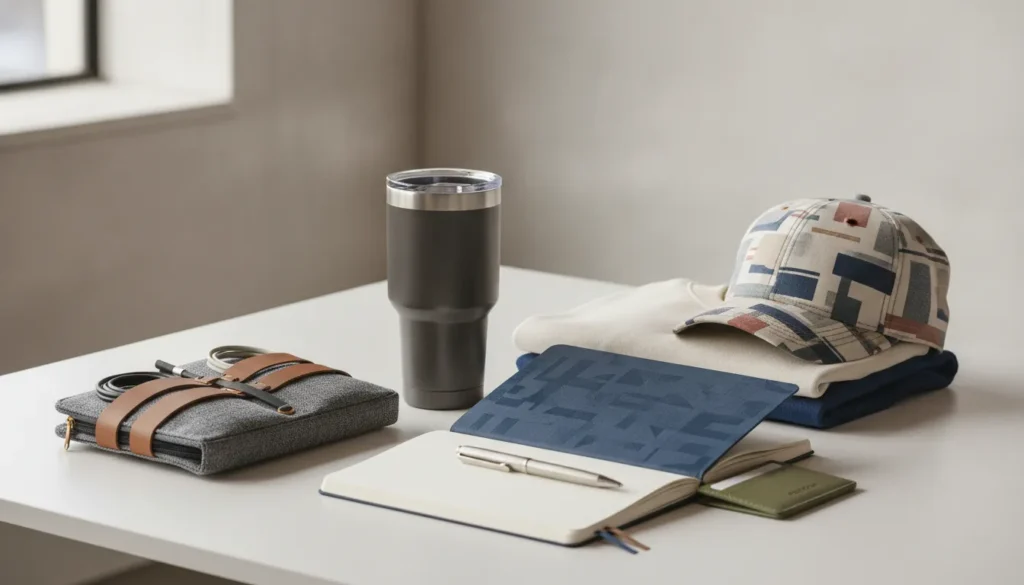
Unique promotional products should do more than look unusual in a catalog. They should fit a real audience, carry the brand cleanly, and still work when the order grows from a sample to a program. A clever item that nobody reorders is not a program asset. It is a one-time purchase with leftover inventory.
Call (408) 384-9910 or Start A Project
Brand Vessel plans branded merchandise as a connected program. That includes custom apparel, creative decorating, company stores, storage, kitting, fulfillment, in-house shipping, and customs brokerage. The same view applies when a team wants something more distinctive than a standard pen or tote. The product has to survive decoration, packing, storage, and delivery, not only a mood board.
This guide is for marketing, people, and procurement teams choosing distinctive merchandise for a corporate brand program. It is not a ranked list of gadgets. It is a way to judge whether an unusual item belongs in the assortment, who it is for, and how decorating and fulfillment keep it coherent.
What Makes Unique Promotional Products Worth Adding?
Unique promotional products earn a place when they are useful to a named audience, match the brand, and can be decorated, stored, and delivered without special chaos. Novelty alone is not enough. If the item fails any of those tests, leave it out of the core assortment.
Most search results for this topic are product roundups. Pens, mugs, bags, and novelty gadgets appear again and again. Those lists can spark ideas. They do not tell a buyer whether the item can live inside a brand system. A program needs fewer, better products that people actually use.
Use four filters before you shortlist anything:
- Audience. Name who receives it and what they already carry or wear.
- Use case. Name the moment: onboarding, recognition, recruiting, a client visit, or an approved store order.
- Brand fit. The shape, material, and decoration should look like the company, not like a trade-show prize.
- Scale. The item must reorder, store, and ship without a new process every time.
A product can be distinctive and still ordinary in the best way. A well-cut jacket, a refillable notebook, or a kit with a clear job can feel more original than a gadget people have never asked for. Distinctive means hard to confuse with a generic giveaway. It does not mean fragile, loud, or impossible to replenish.
Write the job in one sentence before you open a catalog. Example: “New hires in three offices receive a kit they will use in the first month.” That sentence rules out items that only work at a booth. It also rules out products that cannot be packed the same way every time.
How Should You Match Products to Audience and Use Case?
Match the product to the person and the moment first. Then choose the item. Employees, candidates, clients, and event guests do not want the same object, and they do not keep it for the same reason.
Start with the recipient’s setting. A distributed employee needs something that ships well and gets used at a desk or on a commute. A client contact may need a quieter gift that looks considered in an office. A recruiting event can support a lighter item, because the meeting is short and the relationship is new. Mixing those jobs in one bulk buy is how unusual products turn into leftovers.
| Audience | Typical moment | What “unique” should mean | What to avoid |
|---|---|---|---|
| Employees. | Onboarding, recognition, and team days. | Useful at a desk, on a commute, or as apparel they will wear again. | Fragile novelties and one-size items with no replenishment plan. |
| New hires. | Welcome kit in the first week. | A small set that feels personal and packs the same way every time. | A single showpiece that blows the kit budget. |
| Candidates. | Interviews, career events, and offers. | One polished item tied to the employer brand. | A bag of unrelated freebies. |
| Clients and partners. | Renewals, visits, and thank-you gifts. | Quiet quality, clear branding, and easy to accept at work. | Joke items or anything that needs an explanation. |
| Event guests. | A booth, launch, or hosted meeting. | One memorable item people can carry out. | A new product line you will never reorder. |
Keep event idea lists on the Event Swag Ideas That Impress: From Conferences to Product Launches page. Keep employee gift-set concepts on Swag Box Ideas for Employees: Creative Branded Gift Sets. Use this article to decide which of those ideas can sit in a standing program.
A practical assortment is often four to seven products, not forty. Brand Vessel helps teams organize that assortment around onboarding, recruiting, events, and customer moments, from custom apparel and hats to bags, drinkware, and useful accessories. The point is coverage of real moments, not a museum of samples.
Ask these questions for every finalist:
- Will this person use it more than once in the next month?
- Does it fit the place where they will receive it?
- Can we explain the brand connection in one line?
- Can we reorder it in the same decoration six months from now?
- Does it create a new size, battery, food, or fragile-pack problem?
If you cannot answer yes to the first four, the item is a campaign extra. Campaign extras can still be worth buying. They should not become the face of the brand program.
How Do You Keep a Distinctive Item On Brand?
Keep a distinctive item on brand by limiting decoration, matching approved colors, and rejecting products that only look good with a huge logo. The object can be unusual. The brand mark should still be calm and consistent.
Creative decorating is where many “unique” buys fall apart. Embroidery, screen printing, and patches can all look sharp on the right product. They do not look sharp on every product. A textured gadget, a curved bottle, or a dark fabric can fight the logo. Ask for a decoration plan before you fall in love with the blank item.
Use a short brand check:
- Confirm the item could appear next to your existing apparel and packaging without looking like a different company.
- Pick one primary decoration method for the program, and a backup only when the material requires it.
- Place the mark where it will survive wash, wear, or daily handling.
- Match color to the approved palette, including thread, ink, and patch edge.
- Review a physical sample in normal office light, not only in a product photo.
Quality and decoration choices for standard custom products are covered in Custom Promotional Products: Quality and Fulfillment Guide. Read that when you need the approval and storage process. Stay here when the question is whether the unusual item still looks like your brand.
Also check the story the product tells. A premium notebook says the company cares about daily work. A novelty toy says the company wanted a reaction at a booth. Both can be valid. They should not be mixed in the same welcome kit unless the kit has a clear theme. Brand Vessel’s kitting work is built to keep that theme consistent, from the items to the custom packaging around them.
Set a reject list. Good rejects include items that need a punchline, items that hide the logo, and items you would not hand to a client. A reject list saves more money than another brainstorm.
Which Product Types Can Feel Distinctive Without Becoming Novelty?
The safest distinctive products are useful items with a better material, a clearer job, or a smarter kit. You do not need a gadget nobody has seen. You need an item people are glad to keep.
These types work well inside brand programs when the spec is tight:
- Apparel with a point of view. A better fabric, a clean embroidery placement, or a patch can make a shirt or jacket feel specific. Keep fit, size range, and reorder plans in the brief. Deep apparel decisions belong on Premium Corporate Apparel Programs for Teams That Wear Them.
- Drinkware people already carry. A bottle or tumbler feels unique when the form, lid, and finish match the brand. It feels generic when every logo is slapped on the same cup. Category detail lives on Corporate Branded Drinkware for Enterprise Programs.
- Bags with a real carry job. A tote, backpack, or laptop sleeve is distinctive when the size matches the commute or event. See Custom Branded Bags for Companies: Buyer Guide before you lock a style.
- Desk tools with a long life. Notebooks, pens, and small organizers work when the paper, refill, or build quality is obvious in the hand.
- Kits instead of single heroes. A welcome or recognition kit can feel custom even when each piece is familiar, because the combination and packaging are yours.
- Program-only colorways. An approved color that is not your website hex, used only on merchandise, can make a common item feel ownable.
Be careful with electronics, food, and items that need assembly at the recipient’s desk. They can be memorable. They also add batteries, allergens, instructions, and returns. If the team cannot support those issues, choose a simpler object and put the creativity into decoration and packaging.
Look at finished work before you chase a trend. The Work page shows how branded merchandise supports real teams. Use it as a quality bar, not as a shopping list to copy.
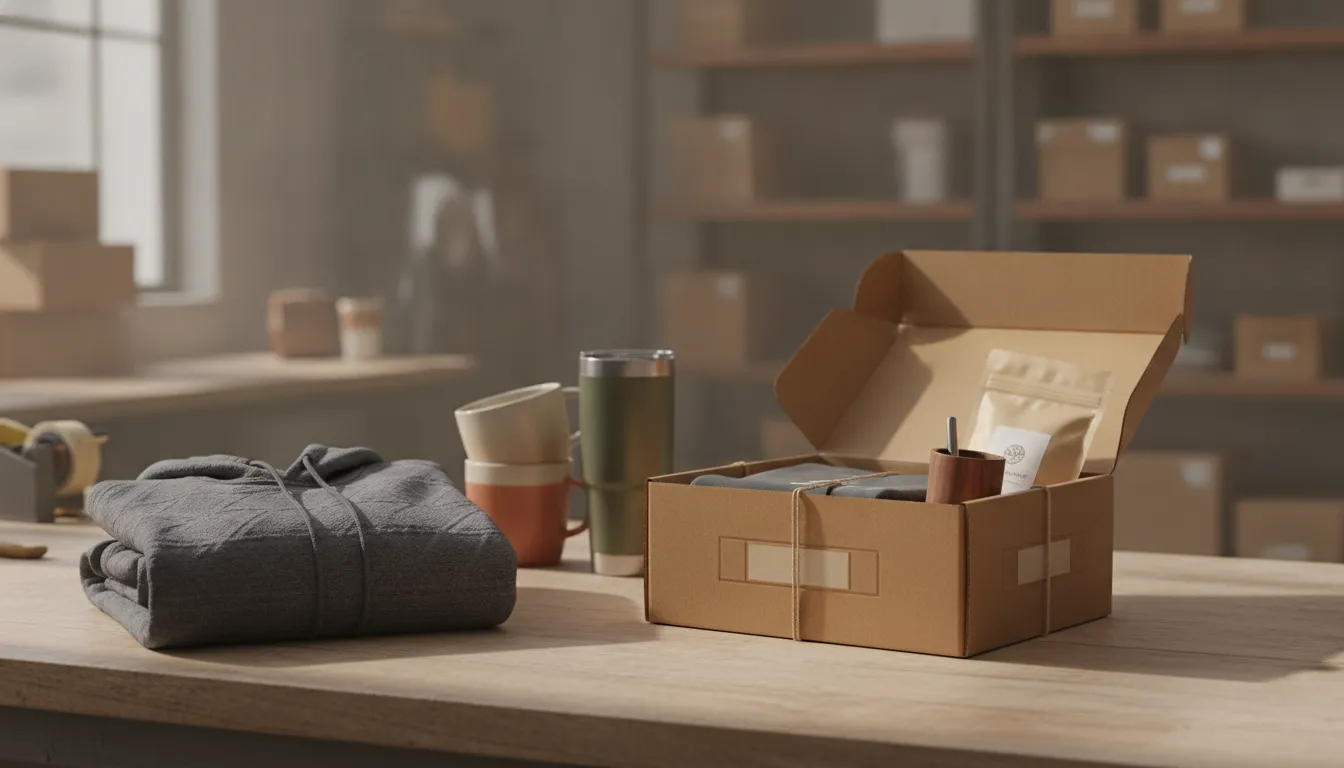
How Do Decorating and Fulfillment Turn a Product Into a Program?
Decorating and fulfillment turn a one-off into a program when every approved item has a spec, a storage plan, and a repeatable way to ship. Without that, uniqueness is just a sample on a shelf.
Write a one-page spec for each winner. Include the blank product, color, decoration method, logo placement, packaging, and who may order it. Store the spec where marketing, people ops, and procurement can all see it. A unique item with no spec will be reordered wrong.
Then test the operating path:
- Sample. Approve the real decorated unit, including packaging.
- Storage. Confirm it stacks, does not crush, and does not need odd climate rules.
- Kitting. If it joins a kit, confirm the kit can be built the same way every time. What Is Corporate Kitting? A Guide for B2B Teams explains that assembly, inventory, and delivery have to move together.
- Pick and pack. Time a single shipment, not only a bulk carton.
- Delivery. Check domestic and, if needed, international paths. Brand Vessel handles in-house shipping and customs brokerage so global orders are not a separate surprise.
- Reorder. Ask what happens when the blank is discontinued. A unique product with no backup is a future fire drill.
Company stores are the cleanest way to keep an approved unusual item available without a new email every time. A feature-rich store can hold the assortment, budgets, and shipping rules in one place. Brand Vessel connects that storefront to storage, kitting, and fulfillment so the ordering experience stays clear for employees and partners. Read Custom Company Store: Build One Employees Use when the next question is how people will order, not which object to buy.
Anchored in Campbell, California since 2010, Brand Vessel works as an extension of the team that owns the program. The service set on Branded Merchandise Services & Company Stores is the practical test. If an item cannot move through merchandise, store, storage, and kitting without a workaround, it is not ready for the core line.
How Should Buyers Decide What to Keep, Test, or Drop?
Keep items people request again, test items with a small decorated run, and drop items that create leftovers or off-brand reactions. Review the assortment on a set cadence instead of adding products whenever a catalog looks fresh.
Give every finalist one of three labels:
- Core. Approved, reordered, and available through the store or a standing kit.
- Test. Bought for one audience and one moment, with a review date.
- Out. Interesting, but wrong for brand, use, or operations.
A test needs a stop rule. Example: if less than the expected share of a pilot group uses the item, do not reorder. You do not need a lab study. You need a named owner and a date. Marketing can own brand fit. Procurement can own cost and replenishment. Operations can own pack-out and delivery. If nobody owns the review, the test becomes permanent clutter.
Measure use, not compliments in the meeting where the sample was opened. Useful signals include reorder requests, size or color feedback, kit completion time, damage in transit, and whether the item is still in circulation months later. Industry roundups often note that useful promotional products are kept for months and remembered by the recipient. Treat that as a reason to prefer useful items, not as a promise that any unusual product will perform.
Budget for the whole path. A low unit price can hide decoration minimums, extra packaging, split shipments, and dead stock. A higher unit price can be cheaper when people keep one good item instead of three ignored ones. Compare options inside the program, not as isolated catalog prices.
When the assortment is set, tell the story internally. A short note should say who each product is for, why it was chosen, and how to order it. That note keeps the next campaign from reinventing the line. If you want help turning a short list into an approved assortment with decorating and fulfillment behind it, Start A Project with Brand Vessel.
Call (408) 384-9910 or Start A Project
Frequently Asked Questions
What are unique promotional products?
Unique promotional products are branded items chosen because they feel specific to a company, not because they are random novelties. The best ones are useful, on brand, and practical to reorder. A common product can still qualify if the material, decoration, or kit makes it clearly yours.
How many unique products does a brand program need?
Most programs do better with a small approved set than with a large catalog. Four to seven core items can cover employees, recruiting, clients, and events if each item has a job. Add test items only for a named moment and a review date.
Should unusual products go in a company store?
Put an unusual product in the company store only after it is approved, decorated, and easy to ship. The store should offer the core assortment, not every sample from a brainstorm. Items that fail storage or packing tests should stay out.
How do you stop unique merchandise from going off brand?
Use one decoration standard, approved colors, and a physical sample review. Reject items that need a huge logo or a joke to make sense. Keep campaign extras separate from the core line so a one-time idea does not reset the brand.
Who should choose the products?
Marketing should guard brand fit, people teams should guard the employee or candidate experience, and procurement should guard cost and reorder risk. Operations should confirm packing and delivery before anything is called final. One owner should hold the spec.