
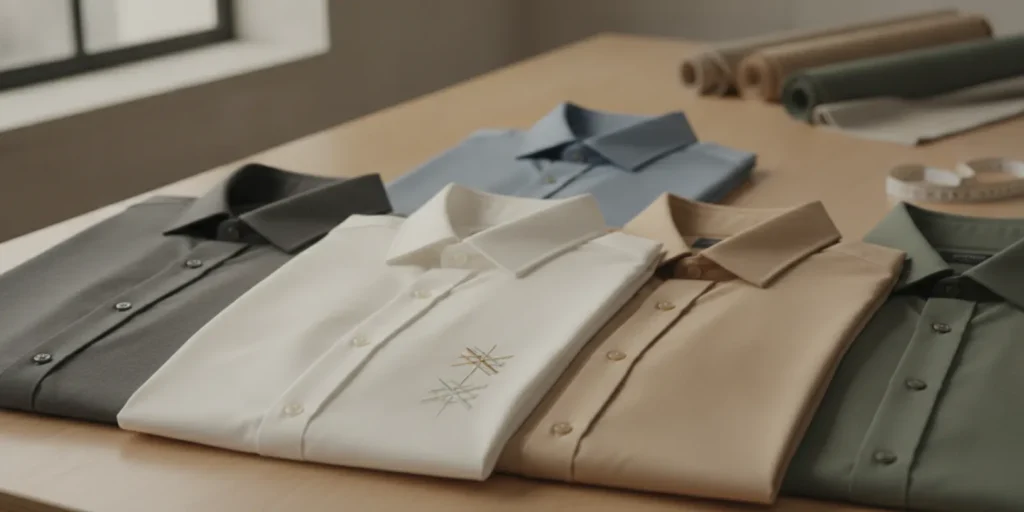
Ordering custom company shirts with logo is less about selecting a color and more about creating a repeatable standard. Business buyers need to align artwork, decoration, garment choice, sizing, and approvals before production so the first order—and the next one—meet the same expectations.
Plan your company shirt program
What should you prepare before placing a logo shirt order?
Before requesting production, assemble the approved artwork, intended use, shirt specifications, quantities by size, and delivery plan. A clear brief gives the supplier enough information to recommend a decoration method and identify issues before they affect samples or timing. Keep one controlled source of truth for each item so revisions do not split across email threads.
Start with the logo package. Provide the approved vector artwork when available, along with any brand color references and rules about clear space, minimum size, or alternate marks. If only a low-resolution image is available, ask whether it can be used as supplied or needs to be recreated. Do not assume that a file that looks sharp on screen will reproduce cleanly at small size on fabric.
- Identify the exact logo version and approved colors.
- Share vector artwork where available, plus a reference image for comparison.
- Specify whether the design may be simplified or recolored for a particular garment.
- Document the intended wearer and setting, such as employee uniforms, events, or onboarding.
- Set an expected delivery date and note any distribution or packing requirements.
Placement needs a written specification, not only an image in a presentation. State the garment area, approximate dimensions, and alignment reference. For example, “left chest, centered over the pocket area, approximately three inches wide” is more actionable than “small logo on front.” The production team can then flag constraints tied to seams, pockets, fabric panels, or the shape of the design.
Think about what must remain consistent across sizes and styles. A left-chest mark may look proportionate on a standard adult shirt but too large on a smaller garment. Decide whether the logo dimensions stay fixed or vary by size, and approve that choice as part of the art proof.
It also helps to issue a concise order brief that separates decisions from open questions. List each garment option, color, wearer group, quantity range, and required arrival date. Mark which choices are firm and which can be recommended by the supplier. If several departments will use the shirts, name the person who can resolve conflicts between local preferences and the shared brand standard.
Consider the distribution model while specifying the order. Shirts handed out at a single event may need simple carton-level packing, while a multi-office rollout may require separate quantities by destination or individual fulfillment. Capture those requirements early rather than treating them as a shipping detail after the garments are approved. Brand Vessel’s Branded Merchandise, Company Stores & Fulfillment Services describes its broader merchandise and logistics capabilities.
Which decoration method fits the design and the shirt?
The best decoration method depends on the artwork, garment fabric, desired appearance, order context, and how the shirt will be used. Embroidery can create a textured, durable look for suitable designs; screen printing can suit bold artwork and coordinated runs; direct-to-garment printing can reproduce detailed, multicolor images on appropriate garments. Ask for a recommendation based on the specific design and fabric, then evaluate a sample rather than choosing by name alone.
| Method | Often worth considering when | What to confirm |
|---|---|---|
| Embroidery | The mark is compact and a stitched finish fits the garment and brand style | Small text legibility, stitch density, backing, placement, and fabric compatibility |
| Screen printing | The artwork uses defined colors and the order can support a consistent printed run | Color matching, print area, hand feel, and how the design behaves on the selected fabric |
| Direct-to-garment printing | The design has fine detail or multiple colors and the garment is suitable | Fabric compatibility, color appearance, print location, and wash-care expectations |
| Heat-applied decoration | A particular graphic or personalization calls for an applied transfer | Transfer type, edge finish, durability expectations, and care instructions |
These are starting points, not guarantees. A detailed logo may need adjustments for stitching, while a print may appear different across garment colors. Confirm the approved production method, artwork version, and garment color together. If the shirt is part of an established program, record the decoration specification so future orders do not quietly change the look.
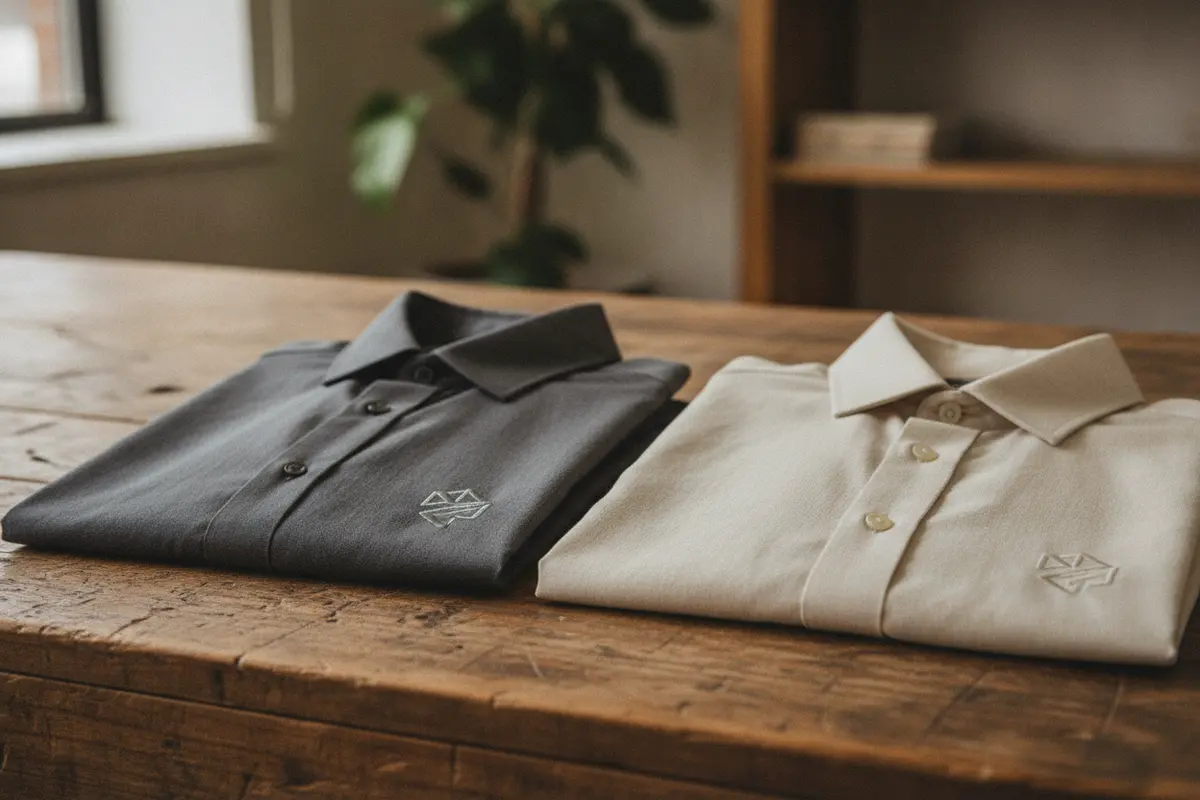
Compare the proof at actual placement and realistic size. Review the mark from a normal viewing distance, not only enlarged on a monitor. Check whether a dark garment needs a contrasting thread or underbase, and whether the treatment still reads clearly on every approved color. Brand Vessel’s Premium Corporate Apparel: Wardrobe Your Team Will Wear provides further context on garment and decoration considerations.
Build the comparison around the job the shirt must do. A small chest logo on a daily-wear polo may call for a different treatment than a large event graphic on a lightweight tee. A design with gradients, fine outlines, or small lettering deserves a specific feasibility review; ask what can be preserved, what might need simplification, and how any change will be shown in the proof. Avoid approving a method based solely on a vendor’s generic sample, because fabric, garment color, and decoration scale can all affect the result.
When two methods appear viable, compare the finished appearance, not just the process label. Ask for a side-by-side proof or samples with the same artwork and garment where practical. Check the edges, color contrast, texture, and visual balance from the distance at which people will see the shirt. Then record why the selected method fits the program, so a future buyer understands the decision rather than reopening it without context.
How do you assess shirt quality before approving a program?
Assess the whole garment, not just the logo. Fabric hand, weight, construction, fit, color availability, and care needs affect whether employees will wear the shirt and whether replacements can match it later. Choose a garment against the actual job: a field team, event crew, and office staff may need different fits or performance characteristics, even when they share a brand standard.
Request physical samples when the order size or long-term use makes touch and fit important. Compare the sample to the intended wearer, inspect seams and finishing, and view the decoration on the actual garment. A digital mockup can help review placement, but it cannot fully show fabric feel, fit, or the finished decoration.
- Fabric and weight: Does it suit the setting and expected frequency of wear?
- Construction: Do seams, collar, cuffs, and finishing appear appropriate for the intended use?
- Fit: Are the available cuts and size range suitable for the team?
- Color: Does the garment color support the logo and fit brand standards?
- Care: Are wash and maintenance instructions practical for employees?
- Availability: Can the chosen style and color be ordered again when replenishment is needed?
For a larger program, create a specification sheet with the approved style, color, fabric or model reference, decoration method, logo dimensions, placement, and care details. Record substitutions that are acceptable and those that require renewed approval. This helps procurement compare options without losing the qualities that made the original selection work.
A practical review can use a simple scorecard. Give each candidate a row for fit, fabric, construction, color choices, care, availability, and decoration compatibility. Rate each against the program’s needs rather than treating every feature as equally important. For example, a customer-facing team may place more weight on appearance and consistent replenishment, while an event crew may prioritize comfort and a broad size range. The scorecard makes trade-offs visible and reduces the chance that a low unit price dominates a decision that should account for wearability and continuity.
Review candidate garments in the colors that are actually being considered. A shirt that feels right in one color may have different availability or fabric composition in another. If a program uses multiple cuts, document which wearer group receives each style and ensure that the decoration placement remains visually coordinated. This does not require every garment to be identical; it requires each approved variation to fit a deliberate standard.
Explore Brand Vessel’s Custom Corporate T-Shirts: A Practical Ordering Guide for additional shirt-ordering considerations, and review its Branded Merchandise Work & Case Studies to see examples of merchandise programs.
How can samples, sizing, and approvals prevent order problems?
A reliable approval process checks the garment, decoration, and size plan before the full order is released. Set a named approver for artwork and another for the physical sample if those responsibilities differ. Make clear that approval applies to a specific version, style, color, placement, and decoration method—not to an informal concept that could later change.
Build a size plan from known team needs rather than ordering equal quantities in every size by default. For employee programs, collect sizing through a controlled process and account for new hires, replacements, or event distribution separately. When individual sizes are uncertain, consider whether a size run or a try-on sample set would reduce guesswork before committing to quantities.
- Approve the artwork file and colors.
- Review the digital proof for placement, scale, and garment color.
- Evaluate a physical sample for fit, fabric, construction, and decoration.
- Confirm the size breakdown and any individual personalization.
- Authorize production only after the final specification and delivery plan are documented.
Make the approval sequence explicit when several teams are involved. The brand owner can confirm artwork and colors, while a program or procurement lead confirms garment choice, quantities, and delivery requirements. Avoid asking every stakeholder to approve every detail; that can make ownership unclear and slow decisions. Instead, define who has final authority for each decision and set a deadline for consolidated feedback.
For sizing, state how the information will be collected and who can access it. A size survey should show the actual garment or a reliable size chart, identify the cut, and explain whether the wearer should choose a preferred fit. Review the collected totals before placing the order, and compare them with any known new-hire or replacement needs. Keep event sizes separate from employee uniform sizes when the distribution groups differ, so one estimate does not distort the other.
Keep the decision record with the order reference. If a stakeholder requests a change after approval, capture it as a revised proof or specification and obtain approval again. This avoids ambiguity about which version the production team should follow. Brand Vessel’s Branded Merchandise, Company Stores & Fulfillment Services describes its broader merchandise and fulfillment capabilities for teams coordinating more than a single shipment.
What controls keep repeat shirt orders consistent?
Repeatability comes from preserving the approved details and checking them again when an order is replenished. Styles can change availability, colors can vary between product lines, and a new batch may require a fresh review. Treat each reorder as a controlled continuation of the program, not as a request to “make it like last time” without a reference.
- Maintain a master specification with style identifiers, colors, logo files, placement, and decoration details.
- Record the approved sample and the date and version of each approval.
- Track size quantities and reorder patterns to inform the next plan.
- Define what happens if a garment is discontinued or a color is unavailable.
- Require approval for proposed substitutions or changes in decoration.
- Keep packaging, labeling, and distribution instructions with the same program record.
- Assign an owner for the specification and for approving exceptions.
Make the master record useful to someone who did not manage the first order. Include named style references, brand-approved artwork files, placement measurements, decoration notes, size breakdowns, and any packing instructions. Identify the latest approved version and archive outdated proofs so they cannot be mistaken for production art. A shared folder or controlled procurement record is more dependable than relying on an individual’s inbox or memory.
At reorder time, confirm four things before releasing the purchase: the exact garment and color remain available, the decoration specification is unchanged, the size quantities still reflect the intended group, and the destination plan is current. If any answer changes, document the proposed adjustment and route it to the correct approver. This short checkpoint can catch a discontinued size, a changed office address, or a new design request before it becomes a production discrepancy.
For distributed employees or multiple offices, connect the shirt standard to the way orders are requested and delivered. A company store can help centralize access to approved items, while storage and fulfillment can support staged distribution. Learn more about Custom Company Stores for Enterprise Teams and What Is Corporate Kitting? Guide for Enterprise Teams if shirts are packed with other program items.
Brand Vessel can support branded merchandise, custom apparel, company stores, and logistics as part of a coordinated program. About Brand Vessel explains its merchandise-partner approach.
Discuss a repeatable company shirt program
Frequently asked questions about custom company shirts with logo
What logo file should a business provide?
Provide the approved logo artwork, preferably in a vector format when available, plus brand color references and any rules for clear space or minimum size. Ask the production partner to confirm whether the file is suitable for the selected decoration method.
Should a company approve a sample before ordering?
A physical sample is useful when fit, fabric feel, color, or decoration appearance matters to the decision. At minimum, review a proof that clearly shows the approved art, garment, placement, and scale; for recurring or sizable programs, evaluate a decorated sample when practical.
How can we make future shirt orders match the first?
Save the approved garment reference, color, artwork version, placement, decoration method, size plan, and sample approval. Ask the supplier to identify any availability changes or substitutions and obtain approval before changing the specification.
How should teams choose a shirt size breakdown?
Use the best available information about intended wearers and their fit preferences. For employee programs, gather sizes through a defined process or use a sample size run where feasible, then separate replenishment needs from event quantities.
A well-managed company shirt program makes every decision visible, from the first logo proof to the next reorder. With documented standards and clear approvals, buyers can keep the shirts aligned with the brand while adapting responsibly to changing team needs.