
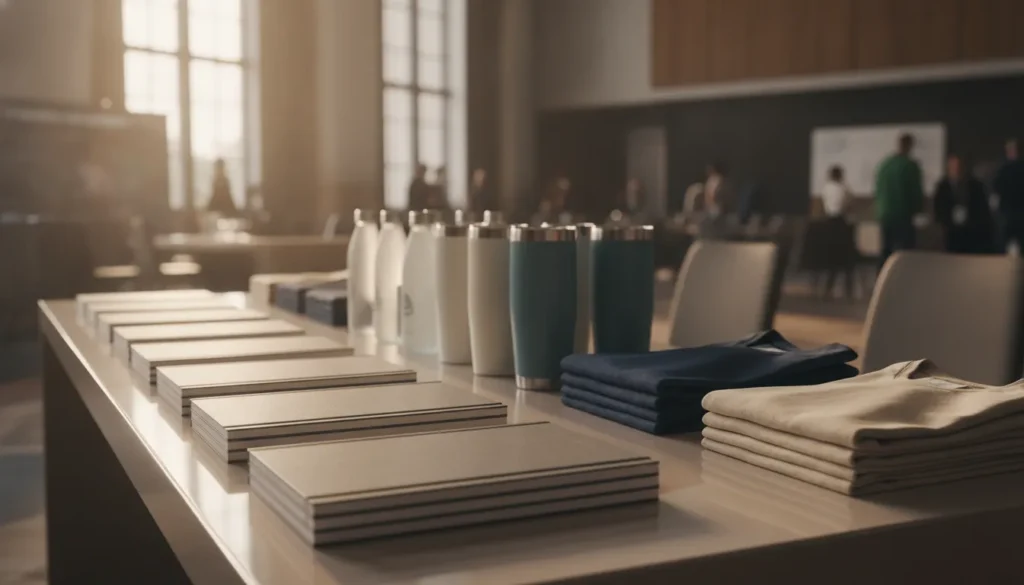
Custom promo products earn their place when the item, the room, and the handoff are planned together. A booth giveaway, a recruiting hoodie, a client dinner gift, and an employee program piece can share a logo and still fail for different reasons. One is too bulky to carry. One arrives after the interview day. One feels generic in front of a customer. One never reaches the people who were supposed to use it.
Call Brand Vessel at (408) 384-9910
This guide compares those four uses. It does not repeat the broader quality and fulfillment process in Custom Promotional Products: Quality and Fulfillment Guide. Use that page for decoration standards, approvals, storage, and partner evaluation. Use this one to decide what belongs in each moment, how long the plan needs, and how the product should reach people.
Which custom promo products fit each audience?
Match custom promo products to the person who receives them, not to a single catalog favorite. Conference visitors need something easy to carry. Candidates need a piece that still feels useful after the interview. Clients need a considered item, not a leftover booth giveaway. Employees need approved products they can reorder through a program, not a one-time surprise that never repeats.
Brand Vessel plans branded merchandise around those real moments: onboarding, recruiting, events, and customer relationships. The assortment can include custom apparel, hats, bags, drinkware, and accessories, with embroidery, screen printing, or patch work chosen for the garment and the setting. Campbell-based operations then connect that assortment to storage, kitting, in-house shipping, and customs brokerage when the program leaves one location.
A useful planning brief names four things before anyone picks a product:
- Who receives it, and what they already carry or wear in that setting.
- Where the handoff happens: a booth, an interview room, a client dinner, or a shipment to a desk.
- How long the item should stay in use after the moment ends.
- Whether this is a one-time run or a product the team will reorder.
That brief keeps a conference tote from being reused as an executive gift, and it keeps a premium client piece from being ordered in booth quantities with no plan for leftovers.
How should conference merchandise differ from recruiting kits?
Conference merchandise should be light, recognizable, and easy to hand over in a crowded aisle. Recruiting kits should feel personal enough to keep after the conversation, with sizing and delivery planned around the candidate or the campus date. The same notebook can work in both places. The quantity, packaging, and backup plan should not.
At a conference, people are already carrying a badge, a phone, and a bag. A useful item fits that reality. Drinkware, a slim notebook, or a tote that replaces a flimsy show bag tends to travel better than a bulky kit. Staff also need a count for the booth, a reserve for the last afternoon, and a receiving plan so the shipment is in the room before the doors open. For the packed-kit version of this job, see Branded Event Kits for Trade Shows | Brand Vessel Guide.
Recruiting is a different room. A candidate may receive one item during an interview day, a career fair, or an offer conversation. Apparel only works when sizes are confirmed or a simple exchange path exists. A kit should still look intentional if the candidate opens it later at home. Brand Vessel can kit those pieces so the apparel, the note, and the smaller items leave together instead of arriving as separate parcels.
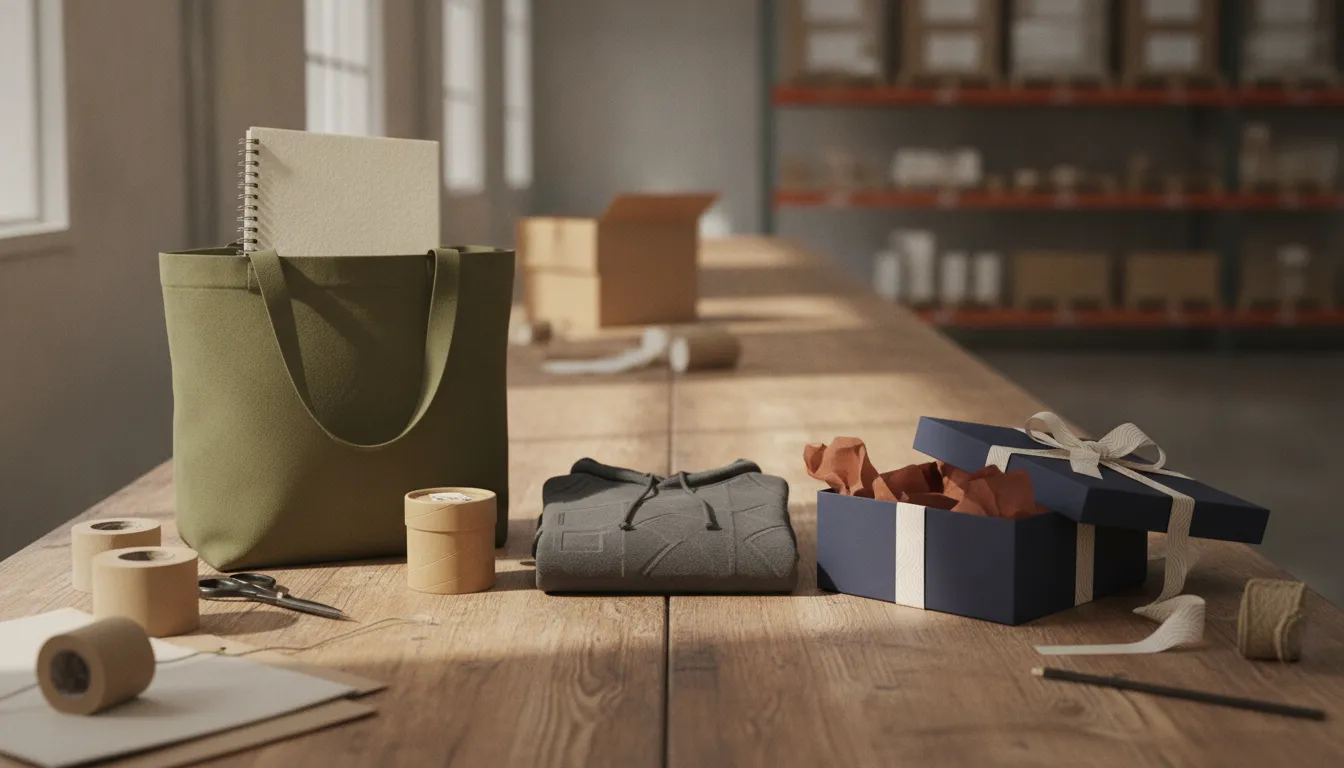
Keep the two programs separate in the brief even when they share a season. A spring career fair and a May user conference can use related branding without sharing the same product list, carton count, or ship-to address.
What changes for client events and employee programs?
Client events call for fewer, more considered pieces with presentation that matches the relationship. Employee programs call for an approved assortment people can request again, with rules for who orders, where it ships, and how inventory is replenished. Treating both as leftover conference product makes the client gift feel cheap and the employee item impossible to reorder.
A client dinner, executive briefing, or customer conference is a small audience with a long memory. The item should be useful in that person’s work life and packed so it does not look like a bulk giveaway. Tissue, a simple note, and a clean outer box matter more here than a large decoration area. Custom Corporate Gifts for Clients: A Premium Merch Guide covers gift tiers and presentation. This comparison only needs the planning point: client pieces should be ordered and addressed on their own timeline.
Employee programs are the opposite scale. Onboarding, recognition, internal kickoffs, and a company store all depend on products people will actually wear or use more than once. Custom Company Store: Build One Employees Use is the ongoing path. A kickoff can still have a one-time kit. The core apparel and everyday items should stay in an approved catalog. The next hire or the next office should not have to start from a new email.
Brand Vessel’s Branded Merchandise Services & Company Stores page shows that split in the service menu. Creative decorating covers events and recruiting. Stores, storage, kitting, fulfillment, and global distribution cover programs that continue.
Do not let a client list borrow the employee size run. A dinner for twelve and a kickoff for four hundred share a logo, not a carton plan. Write the ship-to, the pack-out, and the backup count on separate lines before the decorator starts.
How do lead time and delivery model change the choice?
Lead time decides which products are still realistic, and the delivery model decides whether those products arrive as a booth shipment, a pre-packed kit, a personal gift, or a store order. A six-week conference plan can support decorated apparel and coordinated kits. A ten-day plan should stay with confirmed blank goods, simple decoration, and a ship-to that is already booked.
Build the date backward from the moment someone must hold the item. For a booth, that is receiving at the venue, not the morning the show opens. For recruiting, it is the interview day or the mail date that still leaves the candidate time to wear the piece. For a client gift, it is the dinner, the meeting, or the desk delivery. For employees, it is the start date or the store’s promised ship window. Quick Promotional Items for Corporate Events is the right page when that window is already short.
| Use | Setting | Practical lead time | Delivery model |
|---|---|---|---|
| Conference booth. | Aisle or hosted reception. | Count back from venue receiving. | Bulk show shipment plus a reserve. |
| Recruiting. | Career fair, interview, or offer. | Leave time for sizes and kitting. | Kits or sized apparel to a person. |
| Client event. | Dinner, briefing, or meeting. | Leave time for presentation. | Packed gifts to host or recipient. |
| Employee program. | Onboarding, kickoff, or daily use. | Set a reorder point first. | Store orders or scheduled kits. |
The delivery model also decides who owns the exception. A booth shipment needs a receiver name and a backup carton. A recruiting kit needs a size-exchange path. A client gift needs a correct address and a plain outer pack. An employee order needs an approval rule so one office cannot empty the inventory meant for new hires. When kits are the delivery model, Swag Kitting for Corporate Events: A Logistics Guide covers packing and shipping in more depth than this comparison.
How do you keep one event season from becoming four disconnected orders?
Keep one shared brand standard, then run separate product, quantity, and delivery plans for each audience. A single purchase order can still cover the season. It should not force one product list onto every room. The shared standard is the logo treatment, the approved colors, and the quality bar. The separate plans are the carton counts, size runs, pack-out, and ship-to dates.
A practical season plan has five checks:
- One owner for artwork, so booth, recruiting, client, and employee pieces use the same approved files.
- Separate quantity notes, so booth volume does not inflate a client gift run.
- A reserve for the event that can actually use leftovers, named before the order is placed.
- One view of in-house storage and shipping, so a late conference carton does not borrow employee inventory.
- A reorder decision for any item that should live in the company store after the event.
Brand Vessel can hold that work as one merchandise program: decorating, kitting, fulfillment, and shipping stay with the same partner instead of moving across a decorator, a pack-out vendor, and a carrier. Teams comparing budget shape for the season can use Corporate Swag Budget Planning Guide without turning this page into a cost model. Published program examples live on Branded Merchandise Work & Case Studies | Brand Vessel.
What should the booth, recruiting, and client handoff include?
Each handoff needs a receiver, a count, and a backup. The product choice fails when those three are missing, even if the item itself is right. Write them into the order notes so the warehouse and the host are looking at the same plan.
A conference handoff is a place and a person, not a hotel name. Name the exhibit hall, the booth number, the receiver, and the date the freight desk will still accept cartons. Split the order into the cartons staff need on the first morning and the reserve they open only if the count runs low. A single mixed carton is harder to find on a loading dock than two labeled cartons.
A recruiting handoff is usually a person or a campus contact. List sizes as a range plus a small exchange set, not as a guess that every candidate wears the same medium. If the kit includes a note, approve the note with the artwork so the pack-out does not wait on a last email. Brand Vessel can assemble those kits in Campbell and ship them with the in-house fulfillment team instead of asking the recruiting lead to pack boxes the night before.
A client handoff is an address and a presentation check. Confirm the recipient name, the host who should receive a spare, and whether the gift is handed over in the room or delivered to a desk. Keep the outer pack plain for shipping, and keep the finished presentation inside. Do not put a conference price sheet or a booth insert in a client box.
- Confirm the date someone must hold the item, then count backward to receiving.
- Name the receiver and the backup receiver before production starts.
- Separate booth bulk, recruiting kits, and client gifts into different pack-outs.
- Label cartons by audience so a dock team cannot mix them.
- Hold a counted reserve for the audience that can actually use it.
- Record what returns to storage after the event and what should be reordered.
How should product choice follow the room?
Choose the item for the room first, then for the logo. A crowded aisle rewards a light tote, a slim notebook, or drinkware someone will carry out. An interview room rewards one useful piece, often apparel, that still looks right a month later. A client table rewards fewer pieces with a cleaner finish. An employee program rewards products people already asked to reorder.
Use this short list when the team is tempted to order one hero product for every audience:
- Conference aisle: light, recognizable, and easy to hand across a table.
- Hosted reception: one better item for invited guests, separate from the aisle count.
- Career fair: a useful takeaway that does not require a size.
- Interview or offer: sized apparel or a small kit with a confirmed address.
- Client dinner: a packed gift with a note, not a booth leftover.
- Employee kickoff: a kit tied to the day, plus catalog items for later orders.
- New-hire desk: a store order or a scheduled kit, not a rush from event leftovers.
- Multi-office program: the same approved products, with local ship-to rules.
Decoration should follow that room too, without turning this page into a methods guide. Embroidery suits apparel people wear repeatedly. A simpler mark suits a high-volume booth item. Patch work can fit uniforms and field teams. The quality and fulfillment guide owns the method comparison. Here, the only rule is to pick the method the audience will live with after the event.
Global programs add one more check. If a client dinner or a recruiting weekend sits outside the United States, customs brokerage and in-house shipping have to be on the calendar with the decoration date. Brand Vessel includes both in the logistics service, so the plan should name the destination country before anyone treats the ship date as a domestic truck window.
Frequently asked questions
Can one product serve a conference and a client event?
Only if it still feels right in both rooms. A sturdy notebook can. A bulk tote usually cannot. If you share an item, change the pack-out and the quantity rather than pretending the audiences are the same.
When should recruiting apparel be kitted instead of handed out on site?
Kit it when candidates are remote, sizes are known, or the piece should arrive with a note and a smaller item. Hand it out on site only when staff can manage sizes and the event has a secure place to store the cartons.
What should be ordered first when several events share a month?
Order the piece with the longest decoration and freight path first, usually sized apparel or a multi-item kit. Booth extras that use in-stock blanks can follow once the venue address and receiving window are confirmed.
Where should leftover conference product go?
Name the next use before you order. Suitable leftovers can refill a company store or an employee kit. Client gifts should not be filled from leftover booth cartons unless the item and the packaging were planned for that audience.